

























































Vancouver and Banff Shape the Future of Booming Travel, Where Every Journey Becomes a Celebration of Canada’s Soul
-
Blogs, Entertainment, Culinary, Nature & Wildlife, History & Art, Travel
-
-
7 mins
-
Travel and Tour World
-
Upasana Chatterjee
-


National Geographic names Québec, Vancouver, and Banff among 2026’s top destinations, highlighting Canada’s leadership in sustainable, cultural, and nature-rich travel.
It was being widely discussed that the recognition of Québec, Vancouver, and Banff among the world’s most captivating travel destinations for 2026 represented far more than a simple acknowledgment of beauty. It was seen as a redefinition of travel itself—a collective statement by travelers and destinations alike that exploration should now be rooted in purpose, awareness, and connection.
Experts from across the tourism sector suggested that these three Canadian gems reflected a major transformation in global travel behavior. No longer were tourists chasing only luxury or convenience; instead, they were seeking meaning, cultural respect, and sustainability. The recognition symbolized how travel had evolved from sightseeing into soul-seeing, where every journey was about learning, feeling, and preserving.
It was believed that Canada’s triumph lay not only in its landscapes but in its values. The country was presenting a model for future tourism—one where luxury was measured by depth, not decadence. Travelers around the world were said to be turning northward, eager to experience the magic of Québec’s wilderness, Vancouver’s vibrance, and Banff’s alpine elegance, each of which embodied the changing spirit of exploration.
The Global Ripple Effect on Travelers
Analysts pointed out that this recognition could spark a profound shift in global tourism flows. When destinations like Banff, Vancouver, and Québec gain international attention, they don’t just attract visitors—they inspire behavior. Travelers were expected to move away from over-touristed regions and toward more authentic, lesser-explored areas.
Interest in northern landscapes, cold-climate retreats, and Indigenous-led cultural tourism was forecast to grow rapidly. Experts predicted that international travelers would soon favor places offering quiet luxury, raw natural beauty, and environmental ethics over mainstream resorts.
They believed the travel industry could witness these outcomes:
- Expansion of eco-lodges and sustainable accommodation in remote regions.
- A global rise in Indigenous-guided experiences promoting cultural respect.
- Development of year-round tourism in traditionally seasonal destinations.
- Strengthened awareness of travel as a tool for education and conservation.
This growing trend reflected how global tourists were now identifying themselves not as consumers of destinations but as participants in preservation. They wished to leave behind not footprints, but understanding. As a result, destinations that emphasized authenticity, heritage, and ecological responsibility were likely to see sustained success, while those dependent on mass-market tourism might gradually lose relevance.
Banff’s Timeless Elegance and Alpine Allure
At the heart of Alberta, the town of Banff had captured the world’s imagination with its exceptional combination of refinement and wilderness. It was named the Readers’ Choice Winner, an honor that celebrated its ability to maintain cosmopolitan charm amid the rugged grandeur of the Canadian Rockies.
Travelers had long described Banff as a place where luxury met nature. Streets lined with cozy chalets, art galleries, and artisan cafés mirrored the warmth of the surrounding peaks. In winter, snow-draped slopes transformed the town into a fairytale landscape, attracting visitors from every continent to its famed ski resorts—Mount Norquay, Lake Louise, and Banff Sunshine Village.
Each resort offered its own character—Mount Norquay for serenity, Lake Louise for sweeping alpine panoramas, and Banff Sunshine Village for thrill-seekers craving challenge and beauty combined. But Banff’s allure extended far beyond skiing. Its architectural elegance, Indigenous art spaces, and vibrant nightlife had turned it into a haven for travelers who desired both sophistication and authenticity.
Banff’s leadership in eco-conscious tourism was equally significant. Its emphasis on wildlife protection, waste reduction, and community stewardship demonstrated that luxury and sustainability could coexist. Tourism experts suggested that Banff was setting a new global benchmark for mountain travel, blending environmental ethics with comfort and cultural depth.
It was anticipated that Banff’s model—eco-luxury built on respect—could influence other alpine destinations across Europe, Asia, and South America, signaling a universal transition toward responsible high-altitude tourism.
Vancouver’s Global Moment of Transformation
On the western edge of British Columbia, Vancouver was preparing for one of its most dynamic years ever. Ranked No. 12 among global destinations, it was poised to shine on the world stage during the FIFA World Cup in June and July 2026. This event was projected to not only bring sports enthusiasts from across continents but also redefine urban tourism itself.
With a favorable exchange rate, improved European flight routes, and simplified visa access, Vancouver was expected to welcome a surge of international travelers. Yet, what truly set the city apart was its ability to merge urban sophistication with wild nature. Towering skyscrapers met misty mountains, and lush rainforests flowed into sparkling harbors—all within minutes of each other.
The city’s commitment to outdoor living, complemented by Indigenous cultural experiences, offered visitors a rare duality: the vibrancy of city life intertwined with the serenity of nature. Indigenous-led tours and cultural programs were opening windows into First Nations heritage, allowing visitors to gain insight into centuries-old traditions and the region’s enduring connection to the land.
Experts believed that Vancouver’s spotlight during the World Cup would transform how large-scale events influence travel. Traditionally, sports tourism was fleeting—fans arrived, celebrated, and left. But in Vancouver’s case, analysts anticipated extended stays, as visitors combined sports enthusiasm with cultural discovery, culinary exploration, and eco-tourism.
This shift could become a new model for event-based travel, one that merges entertainment with education and sustainability. For the global travel industry, it was being viewed as a blueprint for hosting—a reminder that the cities of tomorrow must entertain the world without exhausting their environment or losing their soul.
Québec’s Nibiischii Park: The Northern Wilderness Crown
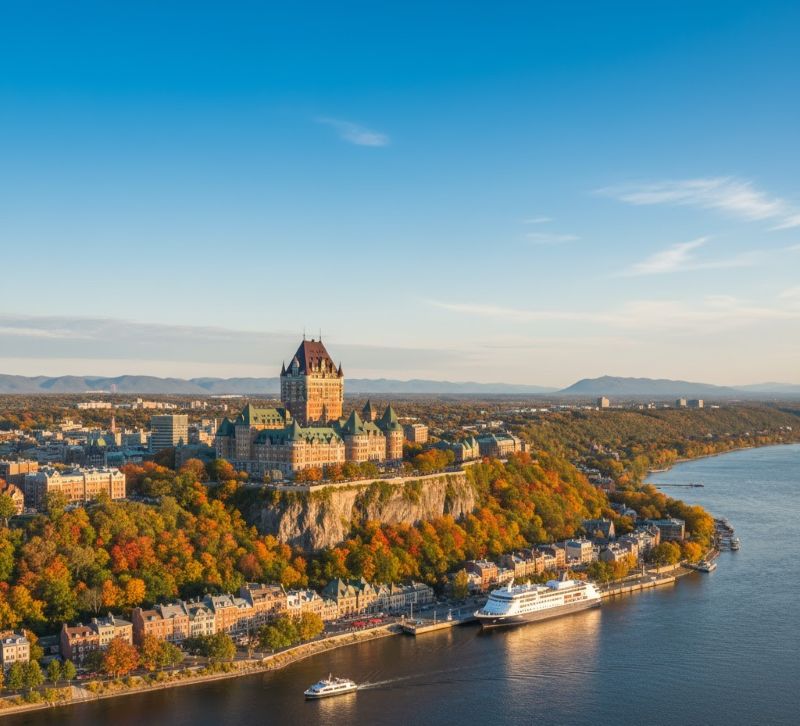
Holding the No. 2 spot globally, the province of Québec had drawn immense attention for its commitment to Indigenous-led conservation and wilderness tourism. The centerpiece of this recognition was Nibiischii Park, located in the Eeyou Istchee–James Bay region of Northern Québec.
It was seen as a historic milestone in the evolution of tourism—the first national park managed entirely by a First Nation. Spanning over 4,000 square miles, this vast landscape of untouched forests, mirror-like lakes, and ancient rock formations had become an international example of how Indigenous stewardship could guide sustainable travel.
At the park’s heart lay the majestic Albanel–Mistassini–and–Waconichi Lakes, forming Québec’s largest wildlife reserve. Visitors could immerse themselves in nature through experiences that blended adventure with serenity. Highlights included:
- Floating chalets and lakeside cabins offering peaceful retreat and privacy.
- Saunas by the lake, where travelers could reflect amid endless horizons.
- Suspension bridges and cliffside walkways granting breathtaking panoramic views.
Those who explored Nibiischii Park spoke of a feeling of timelessness—as though the land itself whispered lessons about respect, coexistence, and balance. The Cree Nation’s deep connection to these territories was evident in every guided walk and every shared story.
For the global travel industry, Nibiischii Park represented a new era of eco-tourism, one that emphasized education, empathy, and empowerment. Its success was being hailed as proof that preservation and prosperity can thrive together. It had inspired international policymakers to explore similar community-led conservation models, reinforcing the idea that the future of tourism must begin with local voices.
A Turning Point in Global Travel Philosophy
The inclusion of Québec, Vancouver, and Banff in the world’s leading destinations was being regarded as a watershed moment in tourism. Experts interpreted it as evidence of an ideological shift—a move away from mass consumerism toward mindful, purpose-driven exploration.
Three key trends were believed to define this evolution:
- Sustainability and Indigenous leadership had become the foundation of responsible tourism.
- Authentic cultural immersion was now considered the new definition of luxury.
- Nature-centered travel was leading the revival of the post-pandemic tourism landscape.
It was observed that travelers increasingly valued depth over distance. They wanted to learn from cultures, not simply photograph them. They sought journeys that fostered connection, reflection, and personal renewal.
This philosophical transformation was expected to reshape tourism economics worldwide. Governments and local industries were likely to focus more on preserving heritage and restoring ecosystems than on rapid expansion. In turn, destinations that championed sustainability, inclusivity, and culture could expect lasting prosperity, while those ignoring these principles might struggle to stay competitive.
Canada’s example was being praised globally as a blueprint for sustainable success, showing that profit and preservation could indeed go hand in hand.
Canada’s Expanding Role in Global Sustainable Tourism
Industry observers described Canada’s inclusion in this prestigious ranking as a powerful affirmation of its eco-conscious leadership. The acknowledgment wasn’t seen as a marketing victory but as recognition of the nation’s genuine commitment to ethical tourism and cultural stewardship.
Across Québec, Vancouver, and Banff, travelers were discovering a consistent message: travel should give back more than it takes. From Indigenous-managed wilderness sanctuaries to multicultural urban hubs and protected alpine environments, Canada had woven sustainability into its identity.
This focus was expected to spark long-term benefits. Economic experts anticipated that eco-lodges, heritage tours, and cultural collaborations would see steady growth. Local communities, empowered through tourism, could become custodians of both economy and ecology.
The recognition also symbolized a shift in traveler priorities. Visitors from around the world were no longer chasing grand hotels alone—they were pursuing authenticity, humility, and human connection. Canada had shown that the most luxurious experience might simply be breathing unspoiled air, hearing Indigenous stories, or watching sunrise over glacial lakes.
As 2026 approached, this transformation hinted at the emergence of a new kind of traveler—one guided by conscience rather than convenience.
Canada’s Northern Triumph in Global Travel
In a landmark acknowledgment, Québec, Vancouver, and Banff were recognized among the world’s most extraordinary destinations for 2026—a moment that many described as transformative for the global travel industry. This recognition celebrated Canada’s breathtaking diversity, its Indigenous leadership, and its unwavering commitment to sustainability and culture.
From Québec’s tranquil wilderness in the north to Vancouver’s cosmopolitan coast and Banff’s alpine majesty, travelers were being invited to explore more than scenery—they were being urged to rediscover meaning in movement. Experts viewed this as a turning point that could reshape how the world travels, with Canada setting a powerful example for tourism rooted in respect, balance, and purpose.
Through these three destinations, the world was witnessing a reawakening of travel’s soul—a reminder that the journey matters as much as the destination.
The post Vancouver and Banff Shape the Future of Booming Travel, Where Every Journey Becomes a Celebration of Canada’s Soul appeared first on Travel and Tour World














































Comments and Responses
Please login. Only community members can comment.