
















































US Joins Canada, Mexico, Chile, Colombia, Brazil as More American Business Travellers Storm with Easy Visa Rules, This is a New Era of Travel Supremacy
-
Immigration, Culinary, Travel
-
-
14 mins
-
Travel and Tour World
-
Tuhin Sarkar
-


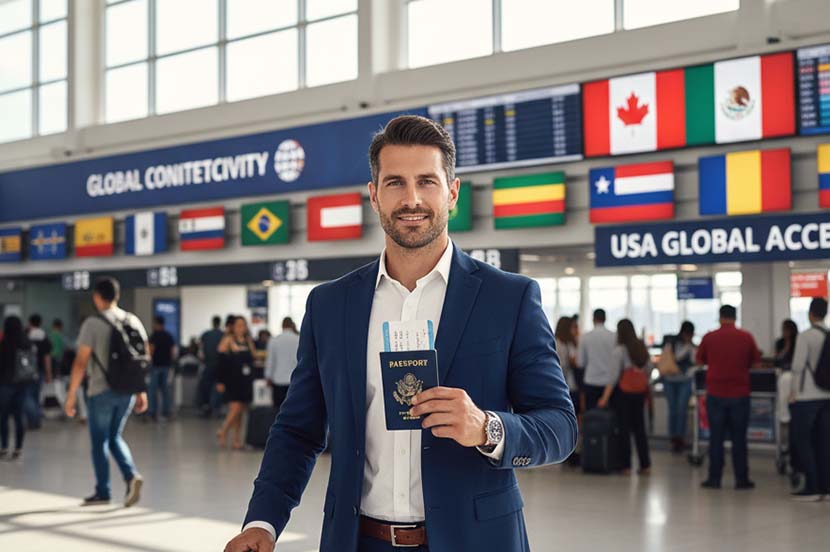
US has now joined Canada, Mexico, Chile, Colombia, and Brazil in rewriting the rules of global business travel. With easy visa rules transforming how American business travellers move across borders, a new era of travel supremacy has begun.
The US has now joined Canada, Mexico, Chile, Colombia, and Brazil in rewriting the rules of global business travel. With easy visa rules transforming how American business travellers move across borders, a new era of travel supremacy has begun. The US is not just travelling — it’s storming the world’s markets with unmatched confidence and opportunity. From Canada to Mexico, and from Chile to Brazil, the rise of flexible visa policies is turning business trips into global missions. As Travel And Tour World urges readers, this story defines the power, pride, and unstoppable momentum of America’s new travel age.
The Changing Face of Work and Travel in the United States
The way people work has changed forever. In the age of laptops, Wi-Fi, and flexible schedules, remote work is no longer a luxury — it is a lifestyle. But as millions of digital workers and freelancers move around the world, one big question remains: how does remote work fit into the US visa and passport system?
The United States has always been a dream destination for entrepreneurs, digital professionals, and global travellers. From tech workers who code on beaches to freelancers managing clients from co-working spaces, the US remains a magnet for talent. Yet, when it comes to visa rules, remote workers often face confusion.
There is no dedicated digital nomad visa for the US yet. This has created a grey area for those who want to live temporarily in America while working online for foreign employers. As countries like Portugal, Spain, and Thailand launch special digital work visas, the US is still using older visa pathways like the B-1 Business Visitor Visa to manage this new class of travellers.
This article explains in simple language how these pathways work, what the current rules say, and how the US could soon create a clearer future for global remote workers.
Understanding How US Visa and Passport Systems Handle Remote Work
The US has one of the world’s most detailed visa systems. Every visitor — whether a tourist, student, or worker — must fit into a specific visa category. The challenge for digital workers is that they don’t fit neatly into any of these boxes.
The B-1 Business Visitor Visa and B-2 Tourist Visa are the most common options for short-term stays. These visas allow visitors to enter the US temporarily for meetings, conferences, or tourism. But the official rule is very strict: holders cannot perform active work or receive income from a US company while in the country.
According to the US Department of State, a visitor visa does not allow employment or any “productive work” inside the country. This means a person can attend meetings or explore business opportunities, but they cannot work for pay from a US source.
However, as the modern workforce shifts towards cross-border freelancing and international projects, many travellers wonder if remote work for foreign employers while in the US is allowed. The truth is, it exists in a legal grey zone.
Immigration lawyers explain that if a person is working online for a company based outside the US, and they are not being paid by a US entity, the activity might not violate visa terms. Still, it’s risky — because immigration officers could interpret the rule differently.
The World Opens its Doors to US Business Travellers
Business travel is returning stronger than ever in 2025. From Asia’s financial capitals to Europe’s trade corridors, nations are making it easier for American travellers to fly in for business. The global competition for investment, innovation, and partnerships has pushed governments to simplify visa rules.
For US citizens, this means one thing — the world is wide open. With one of the strongest passports in global mobility rankings, Americans can now reach over 180 countries without complex paperwork. Whether attending conferences, signing contracts, or exploring new ventures, getting a business visa or short-term entry has never been easier.
This report takes a deep look at the easiest destinations for US business visitors as of October 2025, analysing policies, durations, and visa-free advantages that make international travel faster and smoother.
Europe Leads the Way with Effortless Business Access
Europe continues to stand as the heart of global trade diplomacy and business travel. For US citizens, the entire Schengen Zone offers visa-free travel for up to 90 days within any 180-day period. This includes powerhouse economies like Germany, France, Italy, Spain, and the Netherlands.
Business travellers can attend meetings, trade shows, and conferences with no need for prior visa approvals. All that’s required is a valid passport, proof of accommodation, and travel plans.
The European Commission confirms that Americans fall under the “visa not required” category, making Europe one of the most accessible regions for US travellers.
Even with the upcoming ETIAS (European Travel Authorisation System) expected soon, the process remains simple — a quick online form replacing traditional visa applications.
Key advantages:
- 90-day visa-free business travel across 26 countries
- Unified Schengen policy streamlining entry
- Digital systems like ETIAS replacing older paperwork
Europe’s unified visa policy keeps the continent at the forefront of open travel and global business mobility.
United Kingdom and Ireland: Business Made Effortless
Beyond the Schengen area, the United Kingdom and Ireland remain two of the most straightforward destinations for American entrepreneurs.
US citizens don’t need a visa for short business trips to the UK, staying up to six months under the “Standard Visitor” route. The rules allow travellers to attend meetings, sign contracts, and negotiate deals — as long as they are not directly employed by a UK company.
Ireland follows a similar pattern. Visitors from the United States can enter visa-free for up to 90 days for business or tourism. With booming sectors in fintech, aviation, and renewable energy, both nations are key markets for short-term American business travel.
Key advantages:
- UK allows up to 6 months stay for business visitors
- Ireland offers 90-day visa-free access
- No pre-departure approvals for US citizens
These easy-entry policies are vital as the US strengthens trade ties with both countries following Brexit-era adjustments.
Canada and Mexico: North America’s Easy Business Neighbours
For US passport holders, Canada and Mexico provide two of the smoothest and most familiar business pathways.
Canada operates a well-defined Business Visitor Visa policy that allows short-term business activity without needing a work permit. US travellers simply need to apply for an Electronic Travel Authorization (eTA) if entering by air — a quick, online step that takes minutes.
Business activities such as after-sales service, meetings, or trade events are allowed for stays of up to six months.
Mexico, meanwhile, allows visa-free entry for up to 180 days. US travellers can attend meetings, explore partnerships, or attend conventions without a visa. It’s part of Mexico’s ongoing push to deepen economic cooperation with its northern neighbour.
Key advantages:
- Canada: Fast online eTA approval, 6-month business stay
- Mexico: Visa-free for 180 days, easy cross-border travel
- Shared trade ecosystems under USMCA
Together, Canada and Mexico represent the most practical, fast, and profitable options for US-based executives conducting regional business travel.
Asia’s Smart Business Gateways: Singapore, Japan, and South Korea
Asia is transforming into a hub of technology-driven trade and digital opportunity. For American business travellers, nations like Singapore, Japan, and South Korea make entry quick and efficient.
Singapore is known for its simple, visa-free entry for 90 days. Business visitors can meet partners, visit offices, and attend global events like ITB Asia or fintech expos without red tape.
Japan allows 90-day visa-free access under its short-stay visitor category. It’s ideal for meetings or site inspections, and Japan’s immigration authorities clearly define business-related visits as permissible without a formal visa.
South Korea adds a digital twist with its K-ETA (Korea Electronic Travel Authorisation), a fast online approval for travellers staying up to 90 days. US citizens apply online, receive confirmation usually within hours, and enjoy smooth immigration clearance on arrival.
Key advantages:
- Singapore: 90-day visa-free, regional business hub
- Japan: Clear 90-day short-stay business rules
- South Korea: K-ETA system for seamless digital entry
These countries lead Asia’s post-pandemic travel recovery, creating smart policies that welcome remote workers, tech investors, and trade professionals from the United States.
Middle East Powerhouses: UAE and Qatar Simplify Business Travel
The United Arab Emirates (UAE) and Qatar have emerged as two of the most business-friendly destinations in the Middle East.
For US citizens, the UAE offers a 30-day visa on arrival, extendable once. This simple process lets American travellers land in Dubai or Abu Dhabi and complete formalities within minutes. Business meetings, trade fairs, and investment visits are fully permitted under this scheme.
Qatar, meanwhile, has introduced a visa-free entry for US nationals, allowing stays up to 30 days, often extendable. The government uses digital pre-registration systems and streamlined border checks to make business travel efficient.
Key advantages:
- UAE: Visa on arrival in minutes, renewable stays
- Qatar: 30-day visa-free access, seamless travel tech integration
Both countries have invested heavily in tourism and business infrastructure, making them essential destinations for global conferences and corporate meetings.
Fast-Track Access in South and Southeast Asia
South Asia and Southeast Asia have modernised their visa systems, offering quick e-Visas or ETAs that make it simple for US business visitors to travel.
India allows US citizens to apply for an e-Business Visa entirely online. This visa permits meetings, negotiations, and exploring partnerships for up to 180 days per visit.
Vietnam has become one of Asia’s fastest-growing markets and now provides 90-day e-Visas for US citizens, allowing both tourism and business entry.
Thailand gives 30-day visa-free access, extendable, while Indonesia allows e-VOA (Electronic Visa on Arrival) for short business visits.
Malaysia, Philippines, and Sri Lanka also operate simple digital authorisation systems — all allowing American travellers to enter quickly for meetings or short-term trade activities.
Key advantages:
- India: 180-day e-Business visa
- Vietnam: 90-day e-Visa
- Thailand: 30-day visa-free entry
- Indonesia: e-VOA for instant approval
- Sri Lanka: ETA for business visits
This wave of digitisation has turned Asia into a model of how technology can simplify global mobility.
Emerging Eurasian and Eastern Destinations
Beyond Asia’s major hubs, several nations between Europe and Central Asia are making strong moves to attract American investors and entrepreneurs.
Georgia allows visa-free stays of up to one year — one of the longest in the world for US passport holders. Business visitors can register companies, open bank accounts, and explore investment opportunities easily.
Armenia provides 180-day visa-free entry, offering flexibility for extended stays.
Turkey, straddling Europe and Asia, has one of the world’s fastest e-Visa systems, typically approved within 15 minutes online.
These flexible policies are attracting digital workers and investors looking to operate between Europe and Asia with minimal bureaucracy.
Key advantages:
- Georgia: 365-day visa-free stay
- Armenia: 180-day visa-free stay
- Turkey: Rapid online e-Visa system
These countries are rising as new business frontiers for American professionals seeking growth beyond traditional markets.
Latin America’s Open Door to US Business
Latin America is one of the most accessible regions for US travellers in 2025. Chile, Colombia, and Brazil all provide easy or visa-free access for short business trips.
Chile allows 90-day visa-free stays for business or tourism. Colombia also offers up to 90 days per entry, renewable to 180 per year. Business travellers are a key part of its expanding trade ecosystem.
Brazil, after years of policy changes, currently offers either visa-free entry or a quick e-Visa system, depending on government schedules. The process is simple, and approval is fast.
Key advantages:
- Chile: 90-day visa-free access
- Colombia: 90 to 180 days total per year
- Brazil: Flexible e-Visa or visa-free entry
With growing trade between the Americas, Latin nations are prioritising easier mobility for US business visitors.
A Global Map of Opportunity for US Passports
The modern business world is built on mobility, and the US passport remains among the strongest in the world. In 2025, Americans can enter more than 180 countries with little to no visa hassle — a major advantage for professionals and entrepreneurs.
Governments are simplifying their visa rules not just to attract tourists, but to welcome investors, innovators, and start-ups. Digital authorisation systems like eTA, K-ETA, ETIAS, and e-Visa are replacing slow, paper-based systems.
This shift represents a new era in travel — one where speed, security, and simplicity define the future of global business.
Key global benefits for US travellers:
- Over 180 destinations accessible with visa-free or e-Visa systems
- Standard business activities (meetings, negotiations, events) widely accepted
- Reduced processing times with automated digital platforms
- Clearer online guidance from official immigration websites
Final Word: Business Travel Reimagined for 2025
The world in 2025 is not about barriers — it’s about bridges. From the skyscrapers of Singapore to the trade fairs of Frankfurt and the start-up hubs of Georgia, the US traveller now moves with unprecedented ease.
Every continent has opened its doors wider to business travellers, and American passport holders are at the centre of this transformation. The modernisation of visa and passport systems is fuelling global trade, creating faster collaborations, and making travel smarter than ever.
As technology continues to reshape mobility, the power of the US passport has become more than a travel document — it’s a key to global opportunity.
The Rise of Digital Workers and New Travel Patterns
Remote work has changed how people see travel. Professionals now travel for lifestyle, not just for work. Many prefer to spend weeks or months in different countries while keeping their jobs online. This trend has fuelled global discussions about visa and passport reforms to match the modern economy.
Across Europe, Asia, and Latin America, over 60 countries have introduced special visas for digital nomads — long-term travellers who work remotely. These visas allow people to stay longer, pay taxes locally, and contribute to the economy without taking jobs from locals.
The United States, however, is taking a slower approach. There are no official remote work visas yet, but experts believe that policy discussions are happening behind the scenes. Immigration specialists and business groups have started pushing for a “Digital Worker Visa”, similar to models seen in Estonia or Dubai.
They argue that this would bring benefits for tourism, housing, and entrepreneurship. A visa designed for remote professionals could attract tech freelancers, investors, and global companies seeking flexible talent.
How Remote Workers Are Using the B-1 Business Visa
Since the US does not yet have a digital nomad visa, many remote workers use the B-1 Business Visa as a short-term solution. This visa is valid for temporary stays, usually up to six months, and allows visitors to:
- Attend meetings or conferences
- Consult with business associates
- Negotiate contracts
- Participate in short-term training
- Explore investment or start-up opportunities
But this visa comes with a warning: working remotely for extended periods, even for a non-US company, could raise questions at the border.
US Customs officers often ask travellers about their purpose of visit. If a person says they are “working remotely,” officers may assume they are working for a US company, which could lead to a denial of entry. That’s why experts suggest travellers describe their purpose clearly — for example, “attending meetings” or “business planning” — and ensure all earnings are from non-US sources.
This highlights a gap in the system: people are travelling and working in ways that the law was never built to handle.
The Fine Line Between Legal and Risky Remote Work
In simple terms, the US visa system divides visitors into those who can work and those who cannot. Business visitors under B-1 are not allowed to perform what immigration law calls “productive work.” But technology has blurred what work really means.
For example, imagine a marketing consultant from Spain visiting the US for two months. She continues managing her clients in Europe online. She doesn’t get paid by a US company and doesn’t do any work for US clients. In theory, she isn’t breaking any rule. But if an immigration officer interprets “work” broadly, even answering emails for pay could be viewed as unauthorised employment.
This is why many immigration experts describe remote work from the US as a grey area — not entirely illegal, but not officially permitted either. It depends on each traveller’s situation and how they explain their visit.
The confusion also extends to tax and residency laws. Spending long periods in the US, even without a work visa, could make a person liable for income tax under the “substantial presence test.” Many remote workers don’t realise this, which can cause serious problems later.
No Digital Nomad Visa Yet — But Pressure Is Rising
In 2025, countries around the world are rewriting their visa rules to welcome the remote work revolution. From Italy’s “Digital Nomad Visa” to Japan’s new pilot scheme, governments see this as a chance to boost tourism, housing, and local business.
The US government is aware of these global changes but has not yet taken similar action. Creating a new visa category requires major legislative reform and coordination between the Department of Homeland Security, State Department, and Congress.
However, growing interest from international entrepreneurs is putting pressure on policymakers. Legal experts predict that in the next few years, the US could consider launching a special “Remote Worker Visa” or a long-term business visitor programme.
Such a programme could allow professionals to live in the US temporarily, pay taxes where they earn, and contribute to the economy without competing for local jobs. It would also align the US with the future of travel and work — a space already shaped by digital mobility.
What Remote Workers Should Know Before Travelling to the US
Until new pathways emerge, travellers must follow existing visa rules carefully. Here’s what experts advise for those planning to live temporarily in the US while working online:
- Choose the right visa: Apply for a B-1 Business Visa or enter under the Visa Waiver Programme (if your country qualifies).
- Keep your work foreign: Only work for a company based outside the US. Do not receive any payment from a US source.
- Be transparent but careful: When entering the country, clearly explain that your purpose is business or meetings, not employment.
- Stay temporary: Keep proof of your residence abroad and show that you plan to leave after your stay.
- Avoid long stays: Spending too much time in the US can trigger visa or tax scrutiny.
- Consult legal experts: Always get advice before mixing travel and remote work.
These steps help travellers avoid problems at airports and consulates. They also ensure that visitors stay within the legal boundaries of US visa and passport law.
The Broader Impact on Tourism and the US Economy
The rise of global digital workers is reshaping travel in powerful ways. More travellers now combine business with leisure — a trend known as “bleisure travel.” This has created new opportunities for destinations that can adapt their visa systems quickly.
For the US, this trend means a new wave of long-term visitors who spend on housing, food, and transport while continuing their jobs online. Economists say the potential is huge. If the US introduced a digital worker visa, it could attract thousands of professionals every year, injecting billions into local economies.
Cities like Austin, Miami, and Los Angeles are already becoming magnets for global remote talent. They offer vibrant tech ecosystems, great weather, and strong internet infrastructure — all vital for digital work.
By adapting its visa rules, the United States could become the world’s most desirable destination for remote professionals.
The Legal and Ethical Challenges Ahead
While the potential benefits are clear, the legal landscape remains complex. The United States must balance border control, employment protection, and fair taxation while keeping its travel system open to innovation.
Creating a digital work visa would require clear definitions of what “remote work” means. It would also need new systems for monitoring tax compliance, employer responsibility, and visitor rights.
There are also national security and data concerns. As remote work relies on online access, cybersecurity and identity verification will play a big role in any future visa programme.
Experts believe that the future of US visa and passport systems will involve biometric technology, digital identity verification, and AI-powered application processes. The aim would be faster screening, better compliance, and a smoother experience for travellers.
The Future: A New Era for US Travel, Visa and Passport Systems
Every revolution begins with a small step. Just as the internet reshaped business, the remote work wave is reshaping travel, visa rules, and national borders. The United States stands at the edge of this transformation.
Although there is no digital nomad visa yet, the signs of change are clear. Lawmakers, immigration lawyers, and business leaders are discussing how to create a fair system that reflects today’s global workforce.
A new category of remote worker or digital entrepreneur visa could emerge in the near future — one that combines flexibility, accountability, and innovation. Such a step would make the United States not only the centre of global business but also the world’s most forward-thinking travel destination.
The US remains a dream for travellers, innovators, and professionals alike. Its powerful economy, cultural influence, and digital infrastructure make it a natural hub for the global workforce. Yet its visa and passport system still operates under rules designed for an older world.
Remote work is no longer an exception. It is the new normal. And as the line between work and travel disappears, the United States will need to modernise its visa rules to match global reality.
For now, business visitors and travellers must navigate the current system carefully — but hope is on the horizon. The next few years could mark the birth of a new visa pathway that redefines how the world works, travels, and connects.
The post US Joins Canada, Mexico, Chile, Colombia, Brazil as More American Business Travellers Storm with Easy Visa Rules, This is a New Era of Travel Supremacy appeared first on Travel and Tour World














































Comments and Responses
Please login. Only community members can comment.