























































Uncover the Ancient City of Xanthos: Antalya’s Rich History and Archaeological Treasures
-
Blogs, Culinary, History & Art, Travel
-
-
3 mins
-
Travel and Tour World
-
Abhirup Gan
-


Explore the ancient city of Xanthos in Antalya, known for its remarkable ruins and the powerful story of its people, now a UNESCO World Heritage site for travelers.
The ancient city of Xanthos, located in the Kaş district of Antalya, stands as a testament to the resilience and bravery of its people. A UNESCO World Heritage site, Xanthos draws visitors from around the globe, not only for its remarkably preserved ruins but also for its poignant and powerful history. The city’s most notable story is that of its inhabitants who chose death over captivity, a tale that continues to captivate travellers and scholars alike.
Nestled in the stunning region of Antalya, a renowned tourism hotspot on Turkey’s Mediterranean coast, Xanthos is an important archaeological site offering visitors a glimpse into the ancient world. The city, once a thriving center of the Lycian civilization, has an extensive archaeological record that showcases its advanced engineering, unique tombs, and vibrant culture. Today, Xanthos serves as both a historical destination and a major draw for those interested in ancient civilisations and cultural tourism.
The Rich History of Xanthos
Xanthos holds a place of importance not only in the history of Antalya but also in the greater Lycian heritage. The city’s people were known for their courage and defiance against foreign invaders, particularly during their resistance against the Persians. The most tragic and heroic chapter of Xanthos’ history is when the city’s inhabitants chose to end their lives rather than surrender to the Persians in 540 BC. As the Persians closed in on the city, the people of Xanthos set fire to their city and committed mass suicide, an act that has resonated through the ages as a symbol of resistance.
The remains of Xanthos, including its impressive city walls, monumental tombs, and public buildings, tell the story of a community that valued freedom and courage above all else. The city’s history is intricately tied to its architecture, with several stunning tombs and reliefs that depict the city’s past.
Archaeological Significance: Xanthos’ Remains
One of the key reasons travelers visit Xanthos is its remarkably preserved ruins, which provide insight into the city’s former grandeur. The most iconic feature of the site is the Nereid Monument, an elaborate tomb built in the 4th century BC. The monument, which features intricate carvings of mythological figures, is thought to have been constructed for the family of a Lycian king. Today, the monument’s well-preserved friezes are housed in the British Museum, offering a glimpse of Xanthos’ artistic achievements.
Another key feature of the site is the Lycian rock-cut tombs that can be found in the area surrounding the city. These tombs are carved into cliffs and are an important part of the region’s unique burial customs. Visitors can explore the ancient burial sites, which offer not only historical significance but also stunning panoramic views of the surrounding landscape.
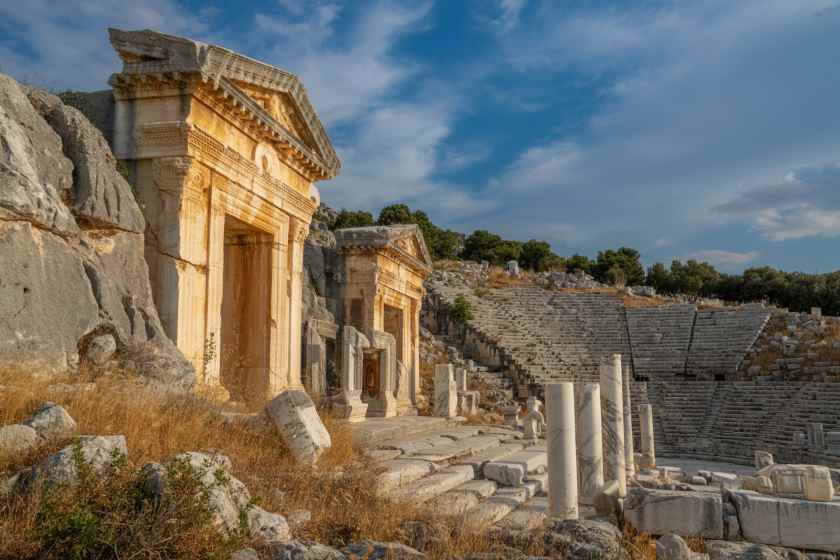
The Xanthos Theatre, with its seating capacity for thousands of people, is another significant structure at the site. It is one of the best-preserved examples of ancient Greek theatre in the region, reflecting the cultural exchange between the Lycian people and other ancient civilisations.
Visiting Xanthos: A Journey Through Time
Travelers to Xanthos can expect a unique blend of history, archaeology, and natural beauty. The site is set against a backdrop of the Lycian mountains, providing a picturesque setting for exploration. Visitors can wander through the remains of the ancient city, taking in its well-preserved public buildings, streets, and monuments.
In addition to the ruins, the surrounding Kaş district offers plenty of opportunities for cultural exploration and outdoor activities. The region is known for its stunning natural landscapes, including Lycian Way hiking trails, which pass by Xanthos and offer travelers the chance to experience the natural beauty of the area while learning about its rich history.
For those with an interest in ancient civilisations, Xanthos offers an opportunity to connect with the past in a meaningful way. The site is also conveniently located near Antalya’s modern attractions, making it easy to combine a visit to the ancient city with other cultural and tourist activities in the region. Visitors can enjoy local food, shop for traditional crafts, and explore nearby beaches, which make the area a perfect blend of history and relaxation.
Sustainable Tourism and Preservation
As a UNESCO World Heritage site, Xanthos is subject to strict preservation efforts, ensuring that its historical and archaeological significance is maintained for future generations. Sustainable tourism is a key focus of local authorities, who are committed to balancing the growth of tourism with the preservation of the site. Visitors are encouraged to respect the area and follow guidelines designed to protect the ruins from further damage.
Educational programs, guided tours, and exhibitions help visitors gain a deeper understanding of Xanthos’ historical context. These efforts not only enhance the tourist experience but also contribute to the long-term sustainability of the site as a key destination in Turkey’s cultural tourism landscape.
Conclusion
Xanthos is a must-visit destination for those seeking to explore the rich history and culture of Antalya and Turkey. Its combination of ancient architecture, tragic yet heroic history, and stunning natural surroundings make it one of the most fascinating historical sites in the region. As a UNESCO World Heritage site, Xanthos offers travelers the chance to step back in time and witness the strength and resilience of a community that chose death over captivity, a story that continues to inspire visitors today. Whether for its historical significance, its architectural wonders, or its breathtaking views, Xanthos remains a top destination for those exploring the wonders of ancient Lycian civilization.
The post Uncover the Ancient City of Xanthos: Antalya’s Rich History and Archaeological Treasures appeared first on Travel and Tour World














































Comments and Responses
Please login. Only community members can comment.