























































Tongtian Rock Grottoes Jiangxi Elevate Regional Tourism Growth Through Heritage and Nature
-
Blogs, Nature & Wildlife, History & Art, Travel
-
-
4 mins
-
Travel and Tour World
-
Akash Bagchi
-


Tongtian Rock Grottoes in Jiangxi drive tourism growth by blending ancient cliff‑carvings and Danxia landscapes, boosting local economy and cultural heritage.
Discovering Tongtian Rock Grottoes, Jiangxi as a Tourism Engine
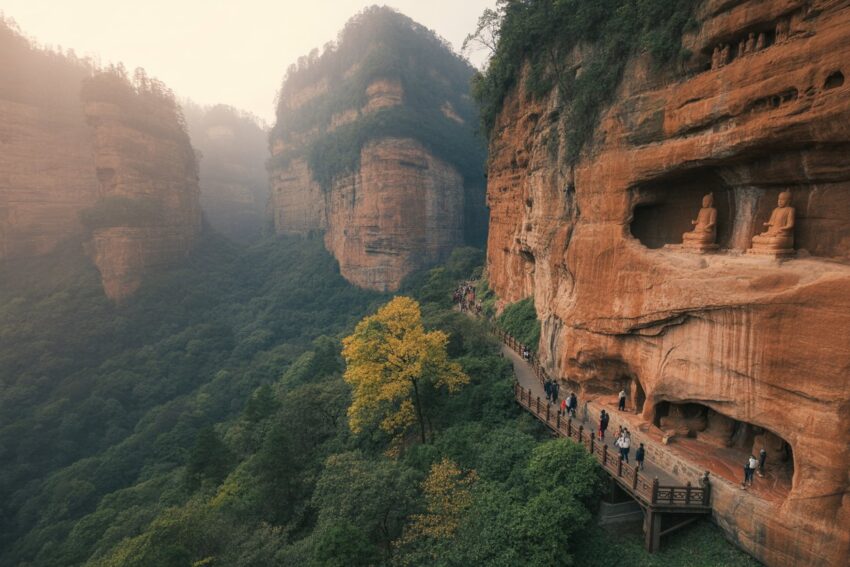
Located in Shuixi Town, Zhanggong District of the city of Ganzhou in the southern part of Jiangxi Province, the Tongtian Rock Grottoes area stands at the intersection of cultural heritage and natural spectacle. Nestled within the distinctive Danxia‑type red sandstone cliffs known locally as the “Tongtian Cliff”, the site features extensive ancient grotto‑carvings, forested slopes, and panoramic vistas. This destination is emerging as a compelling tourism proposition for domestic and international visitors who seek immersive heritage and landscape experiences.
Heritage Meets Landscape: A Unique Proposition
The Grottoes site combines significant historical rock‑carvings with dramatic Danxia landforms. It preserves hundreds of stone niche statues from the Tang through Song dynasties and a large volume of cliff inscriptions from the Song period through the early twentieth century. The intertwining of this cultural layer with steep red‑cliff terrain, forest canopy, and scenic trails creates a dual appeal—both as a heritage attraction and a natural landscape destination. The local tourism authority recognises the area as a “treasure house of ancient grotto art in south China”.
Because of this blend, the tourism angle is strong: visitors are no longer choosing between history or nature—they can experience both in a single location, which enhances the length of stay, depth of experience, and the value per visitor.
Tourism Development and Infrastructure Advancements
The local government has advanced infrastructure and visitor services to support increased visitation. While exact visitor figures for the grottoes alone are limited, data from Ganzhou city indicates a peak visitor arrival of roughly two hundred and eight thousand visitor‑days in two thousand nineteen. The broader tourism sector in Ganzhou was estimated to contribute around four per cent of regional GDP in planning documents.
On the ground, the Grottoes area is accessible via roads from city‑centres, and the scenic zone is rated at the AAAA level by the national tourism authority. Visitor circuits, hiking trails, and interpretative signage have been introduced to support the mix of culture and nature tourism.
Economic and Community Impacts
The increasing visibility of the Tongtian Rock Grottoes draws tourist expenditure into the local economy—lodging, dining, local transport, guiding service, and cultural‑product sales all benefit. For communities around Shuixi Town and Zhanggong District, this shift helps diversify incomes beyond traditional agriculture or light industry. The development of visitor amenities, improved access roads, and transfer services delivers broader livelihood uplift.
From a regional policy standpoint, the growth of tourism in this area contributes to provincial goals of stimulating peripheral regions, rural revitalization, and cultural heritage utilisation. The lever‑effect of a heritage‑nature destination like the Grottoes thus has implications beyond simple sightseeing—it becomes part of an integrated development strategy.
Sustainability, Conservation, and Visitor Management
With delicate rock‑carvings embedded in red sandstone cliffs and forested Danxia landforms vulnerable to erosion and visitor impact, the site requires mindful management. The combination of heritage artefacts (the grotto statues and inscriptions) and natural terrain means that visitor traffic needs to be balanced with conservation protocols. Official classification as a protected site and tourist attraction rating implies that monitoring, infrastructure like boardwalks, and visitor flow control are integral to maintaining sustainability.
Furthermore, the tourism authority points to the requirement of preserving both heritage and ecology—avoiding large‑scale development that could compromise the very authenticity that attracts visitors in the first place.
Why the Tourism Angle Works
Several factors make this destination particularly effective for tourism growth:
- Integrated attraction: Heritage rock‑carvings and Danxia geology produce a “two‑in‑one” experience.
- Underserved region: Southern Jiangxi receives less “crowd‑tourism” compared to major coastal or metropolitan areas, offering visitors more space and authenticity.
- Accessible yet immersive: While accessible from the city of Ganzhou, the site retains a mountain/wilderness feel—attractive to travelers seeking depth rather than mass‑tourist experiences.
- Cultural branding: By positioning the site as the “First Grotto in the South of China” (a heritage‑branding phrase used in tourism materials), the local authority taps niche cultural tourism markets.
- Policy backing: Provincial and municipal planning documents include tourism and rural revitalisation as core elements, giving long‑term support for infrastructure and marketing.
Broader Regional Implications
The tourism upshift at Tongtian Rock Grottoes has ripple effects beyond the immediate site:
- It helps reposition the broader Ganzhou and southern‑Jiangxi region on the national tourism map.
- It contributes to rural development and livelihood diversification in peripheral areas.
- It supports cultural preservation by driving economic value from heritage artefacts and local traditions rather than allowing neglect or degradation.
- It encourages infrastructure improvements (transport, accommodation, signage) which benefit broader community access and connectivity.
Thus, the Grottoes function as a growth node in regional tourism strategy rather than just an isolated attraction.
Challenges and Strategic Considerations
While promising, the development path includes notable challenges:
- Carrying capacity: Managing visitor numbers such that the heritage carvings, cliff face, and forest trails are not overburdened.
- Seasonality: Visitor flows may concentrate into peak months; diversifying offers (off‑peak, wallet‑friendly, educational tourism) will help smooth revenue and reduce environmental pressure.
- Community benefit distribution: Ensuring that smaller villages, rather than only larger hotels or external operators, capture economic gains.
- Authenticity maintenance: As tourism grows, retaining the intangible qualities (local culture, slower pace, heritage authenticity) becomes harder—commercialisation may erode uniqueness.
- Marketing beyond domestic: While domestic tourism is growing, further attracting international travellers may require multilingual services, overseas promotion, and improved connectivity.
Outlook and Next Steps
Given the current trajectory, the Tongtian Rock Grottoes are well‑placed to consolidate their role in regional tourism. Key next steps include:
- Developing themed visitor programmes (heritage + nature trails, guided heritage tours, photography tourism) to deepen engagement.
- Promoting multi‑day stays and lodging near the scenic zone to increase the length of stay and local economic benefit.
- Enhancing interpretation (digital guides, VR/AR experiences) to elevate the heritage narrative for younger travellers.
- Expanding marketing to niche segments (eco‑tourism, heritage tourism, educational tourism) domestically and internationally.
- Strengthening sustainable management frameworks to protect both the natural and cultural assets, while expanding access.
If these are executed in coordination with provincial tourism strategy and local community participation, the grotto zone can evolve into a benchmark destination for heritage‑nature tourism in inland China.
Tongtian Rock Grottoes, Jiangxi, as a Model of Sustainable Destination Growth
The Tongtian Rock Grottoes in Jiangxi now stand as more than a picturesque heritage site—they are an engine of tourism‑led regional development, cultural preservation, and nature‑based visitor experience. By leveraging its rare combination of ancient rock‑cut art, dramatic Danxia landforms, and hillside forests, the site provides a compelling proposition to modern travellers seeking authenticity and depth. At the same time, for the local region, the growing tourism stream supports livelihoods, infrastructure improvement, and cultural revitalisation. With mindful planning, stakeholder participation, a nd management, this destination is poised to demonstrate how heritage‑nature destinations in less‑visited areas can drive high‑value, responsible tourism growth.
The post Tongtian Rock Grottoes Jiangxi Elevate Regional Tourism Growth Through Heritage and Nature appeared first on Travel and Tour World














































Comments and Responses
Please login. Only community members can comment.