
















































Greece and Italy Reveal the New Appeal of Repeat Travel as Tourists Look Beyond Iconic Sights
-
Blogs, Wellness, Culinary, Children, Nature & Wildlife, History & Art, Travel
-
-
8 mins
-
Travel and Tour World
-
Ankita Neogi Khan
-


Repeat travel is gaining appeal as travellers return to Greece, Italy and Europe for deeper cultural experiences.
For travellers with the means to explore almost anywhere, the urge to keep moving is losing some of its appeal. A growing travel mindset now places greater value on returning to favourite places, building familiarity and discovering experiences missed on an earlier visit. The trend comes into sharper focus as European tourism reaches record levels, with the EU recording almost 3.1 billion tourist accommodation nights in 2025. Greece alone recorded 43.3 million inbound travellers and €23.6 billion in travel receipts during the year. Meanwhile, Italy accounted for 476.9 million tourism nights, underlining its enormous role in European travel. These figures show a market still expanding, while traveller behaviour is becoming more nuanced. For some visitors, the next journey is no longer about finding somewhere unfamiliar. It is about understanding somewhere already loved.
When Familiar Places Become New Again
The latest travel conversation is moving beyond the traditional race to collect destinations. Increasingly, travellers are choosing to return to places they already know, discovering that familiar streets, landscapes and local connections can reveal a destination in ways a first visit cannot. Rather than simply adding another location to a travel list, repeat visits can create a deeper relationship with a place, bringing richer experiences, stronger connections and a growing sense of belonging.
That idea challenges the assumption that experienced travellers must constantly seek novelty. Instead, returning travellers often approach familiar destinations differently. They already understand the transport system, major sights and basic geography. Therefore, they can devote more time to neighbourhoods, food, local traditions and personal connections.
A first visit often revolves around orientation. Travellers see the famous museum, photograph the landmark and follow the established sightseeing route. A later visit can remove that pressure and create space for slower, more deliberate exploration.
This distinction matters for the travel industry. A repeat visitor is not necessarily buying the same trip again. Instead, that traveller may be purchasing a different version of the same destination.
Europe’s Tourism Market Keeps Expanding
The wider market provides a powerful backdrop to this changing travel mindset. Eurostat estimates that tourists spent nearly 3.1 billion nights in EU accommodation during 2025, an increase of 2.2% from 2024. International guests accounted for much of that growth, with international overnight stays rising 3.4%.
The scale is significant because tourism demand is no longer simply recovering. Europe has moved into a period of sustained high-volume travel, although individual destinations experience very different patterns.
Four countries captured 61.7% of all EU tourism nights in 2025. Spain recorded 513.6 million nights, followed by Italy with 476.9 million, France with 471.7 million and Germany with 442.1 million.
| EU tourism indicator | 2024 | 2025 | Change |
|---|---|---|---|
| Tourism accommodation nights | Nearly 3.0 billion | Nearly 3.1 billion | +2.2% |
| International guest nights | — | Higher by 49.7 million | +3.4% |
| Domestic guest nights | — | Higher by 16.7 million | +1.1% |
| Spain | — | 513.6 million | Largest national total |
| Italy | — | 476.9 million | Second-largest national total |
| France | — | 471.7 million | Third-largest national total |
| Germany | — | 442.1 million | Fourth-largest national total |
The figures do not prove that visitors are returning to the same destinations. Eurostat does not provide a single EU-wide indicator in this dataset that measures repeat visitation directly. They do, however, demonstrate the enormous scale of the European tourism market in which destination loyalty is developing.
Greece Shows the Value of Returning
Greece offers a particularly useful case study because the country’s tourism economy combines iconic destinations with substantial regional diversity.
According to the Bank of Greece, inbound traveller flows increased 6.4% in 2025, reaching 43.3 million visitors. Travel receipts climbed 9.4% to €23.63 billion, while total overnight stays increased 1.6%.
The spending figures are especially revealing. Average expenditure per trip rose 2.8% to €545.50. Average expenditure per overnight stay climbed 7.7% to €96.60. At the same time, the average stay shortened from 5.9 nights to 5.6 nights.
That combination suggests a market generating stronger receipts without requiring longer average stays. For tourism businesses, the quality and composition of visitor spending therefore matter alongside raw arrival numbers.
| Greece tourism indicator | 2024 | 2025 | Change |
|---|---|---|---|
| Inbound travellers | 40.69 million | 43.31 million | +6.4% |
| Travel receipts | €21.59 billion approx. | €23.63 billion | +9.4% |
| Average expenditure per trip | €530.60 | €545.50 | +2.8% |
| Average expenditure per night | €89.70 | €96.60 | +7.7% |
| Average length of stay | 5.9 nights | 5.6 nights | -4.5% |
| Total overnight stays | 240.8 million | 244.7 million | +1.6% |
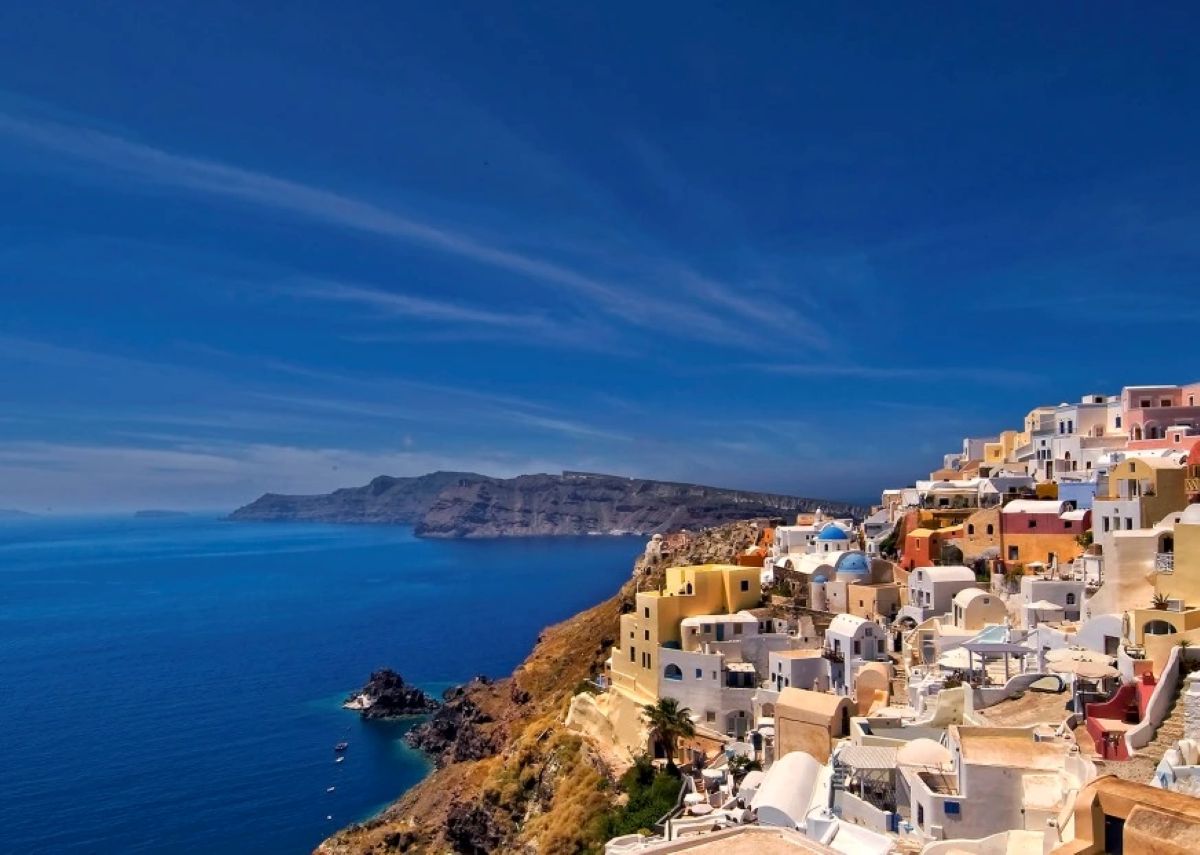
Greece also demonstrates why a return visit can offer a substantially different product. A traveller might first choose Athens and Santorini. A subsequent journey could focus on Crete, the Peloponnese, the Ionian Islands or mainland cultural routes.
The destination therefore does not need to reinvent itself for every visitor. It can offer different layers to the same traveller over time.
Italy Offers Far More Than One Visit
Italy presents an even broader proposition. Its 476.9 million tourism nights in 2025 placed it second among EU countries, behind Spain. The figure also reflects the country’s remarkable geographical variety, from major cities to Alpine resorts, Mediterranean islands and rural regions.
Rome, Florence, Venice and Milan can dominate first-time itineraries. Yet returning visitors can explore a different Italy without abandoning the destination itself.
A traveller might return to Rome for archaeology and neighbourhood dining rather than landmark sightseeing. Another could revisit Tuscany for vineyards, smaller towns and countryside stays. A previous Venetian visitor might return during a quieter season and spend more time outside the standard itinerary.
This is where destination familiarity becomes commercially significant. A repeat visitor already understands the headline attractions, allowing tourism operators to sell depth rather than introduction.
The same principle applies across Europe. Paris can become a food-focused journey after a first cultural visit. Greece can shift from island sightseeing towards heritage and gastronomy. Spain can move from Barcelona and Madrid towards regional routes. The destination remains familiar, but the travel proposition changes.
France Shows How Travel Patterns Diversify
France offers another useful comparison. INSEE recorded 465.4 million overnight stays across hotels, campsites and other collective tourist accommodation in 2025. Hotels generated 220.2 million nights, while campsites contributed 147.6 million. Other collective tourist accommodation recorded 97.6 million nights.
Foreign visitors accounted for 148.8 million of those nights. Hotels recorded 83.5 million foreign nights, while campsites recorded 45.1 million.
The figures highlight another important feature of returning tourism. Familiarity does not necessarily mean repeating the same accommodation type. Travellers can move from hotels to campsites, holiday residences or other lodging formats during subsequent visits.
| France accommodation type | 2025 nights | Foreign nights | Occupancy |
|---|---|---|---|
| Hotels | 220.2 million | 83.5 million | 62.3% |
| Campsites | 147.6 million | 45.1 million | 43.5% |
| Other collective accommodation | 97.6 million | 20.2 million | 59.3% |
| Total | 465.4 million | 148.8 million | 56.6% |
INSEE also recorded stronger hotel demand from international visitors in the final quarter of 2025. Non-resident hotel nights increased 7.3% year on year during the quarter.
That diversity gives destinations an opportunity to build longer-term visitor relationships. A traveller’s second trip can therefore differ in accommodation, geography, season and purpose.
The Real Value Lies Beyond Landmarks
For travellers, returning can solve one of the biggest problems created by modern tourism: limited time.
A first-time visitor often spends valuable hours moving between famous attractions. Transport, queues and unfamiliar neighbourhoods can consume much of the itinerary. A returning visitor already understands those practical details and can allocate more time to experiences that require patience.
Local food, small museums, markets, festivals and neighbourhoods can become more accessible. So can conversations with residents and repeat visits to businesses discovered previously.
There is also an emotional dimension. Familiar streets can acquire personal meaning. A restaurant can become associated with a family memory. A hotel can become part of an annual tradition. A neighbourhood can become a place where the traveller recognises people rather than simply passing through.
This does not make repeat travel inherently superior to first-time exploration. Instead, the two forms serve different purposes. One prioritises discovery, while the other can prioritise depth and continuity.
What Returning Visitors Mean for Tourism
The industry implications extend beyond individual travellers. Destination management organisations have increasingly focused on encouraging visitors to disperse geographically and seasonally. Returning visitors can fit naturally into that strategy because they may already be willing to explore beyond the most famous sites.
For hotels, this creates opportunities for personalised repeat-guest experiences. A returning customer can receive recommendations based on previous interests rather than generic destination information.
Airlines and travel agencies can also build itineraries around deeper regional exploration. Instead of selling a single city break, they can connect return journeys with food, heritage, wellness, nature or seasonal events.
Tourism boards can similarly market different versions of a familiar destination. The first campaign may promote iconic attractions. Later campaigns can focus on lesser-known regions and experiences.
This approach can also help address overtourism pressures. If experienced visitors move beyond the busiest locations, spending can spread into secondary destinations and smaller communities.
However, there is no guarantee that repeat visitors automatically disperse. Popular destinations can attract returning guests just as strongly as first-time visitors. Effective destination management therefore still depends on infrastructure, transport capacity and coordinated visitor planning.
Digital Travel Makes Returning Easier
Technology has also changed the economics of familiarity. Travellers can save restaurants, hotels, routes and activities between visits. Digital maps allow visitors to build personal destination databases long before they return.
Online accommodation data shows how strongly travel behaviour is diversifying. Eurostat recorded 951.6 million nights in EU short-stay accommodation booked through online platforms during 2025, up 11.4% from 2024.
That growth does not measure repeat visitation. It does, however, demonstrate the expanding range of accommodation choices available to travellers.
For returning visitors, such choice can make familiar destinations feel new. A previous hotel guest might choose an apartment next time. A city visitor might move into a residential neighbourhood. A family might return with children and select a completely different accommodation format.
The destination remains the same. The experience does not.
How Travellers Can Plan a Deeper Return
Travellers considering a second or third visit can benefit from resisting the temptation to reproduce the first itinerary. Instead, the strongest starting point is to identify what the original trip failed to reveal.
That could mean travelling in another season, staying in a different neighbourhood or exploring a nearby region. Food travellers can build a regional culinary itinerary, while history enthusiasts can move beyond headline monuments.
Timing can also change the character of a destination. Shoulder-season travel may provide different conditions from a summer visit. However, travellers should check local opening periods, transport schedules and seasonal operating hours before booking.
Returning travellers should also consider supporting smaller local businesses. Independent restaurants, guides, craft producers and cultural organisations can provide experiences that large-scale tourism cannot always replicate.
The practical advantage is straightforward. Familiarity reduces uncertainty, but thoughtful planning preserves discovery.
Europe’s Next Opportunity Is Deeper Loyalty
The continuing strength of European tourism creates a new challenge for destinations. Attracting visitors remains important, but encouraging meaningful engagement can create a more durable relationship.
The latest travel discussion around returning visitors reflects that wider shift. Travellers with extensive experience are not necessarily abandoning exploration. Some are redefining exploration itself.
The numbers from Greece, Italy, France and the wider EU show an exceptionally large tourism market. Yet the statistics do not capture the emotional value of returning to a place, recognising a street or rediscovering a favourite meal.
That is where repeat travel becomes more than a booking pattern. It becomes a relationship between traveller and destination.
For tourism businesses, the opportunity lies in recognising that relationship. For travellers, it offers another way to see the world.
Sometimes, going back is not travelling less. It is finally seeing more.
The post Greece and Italy Reveal the New Appeal of Repeat Travel as Tourists Look Beyond Iconic Sights appeared first on Travel and Tour World














































Comments and Responses
Please login. Only community members can comment.