















































Europe’s Night Train Travel Revolution Faces a Cross Border Track Tariff Crisis as Germany, France And Other Countries Battle Rising Costs
-
Blogs, Travel
-
-
21 mins
-
Travel and Tour World
-
Shreya Saha
-


Europe’s night train revival faces rising cross-border track tariffs as Germany, France and other countries battle costs threatening rail growth.
The European dream of displacing short-haul flights is known to be dependent on the return of night train corridors through Europe but non-harmonised track charges are considered a hurdle to the sustainable transport revolution. Given the tightening of emission caps under the EU Emission Trading Scheme, the introduction of sleeper rail is said to be a zero-carbon mode of transport that can connect key economic nodes in the middle of the night. However, rail network operators persist in charging exorbitant track access charges based on daytime capacity requirements rather than overnight services which have smaller capacity needs. Failure to implement policies to remove national track access charges would render such operators unsustainable and lead to severed trans-European transport links.
Economic Asymmetry and the Track Access Arbitrage
The financial architecture governing European transport infrastructure contains a structural bias that penalises international rail while insulating commercial aviation. Long-haul passenger trains operate under a cost-recovery paradigm where every wheel revolution incurs direct infrastructure tolls paid to national infrastructure managers. Conversely, commercial airlines crossing the continent pay no fuel excise duties on kerosene under long-standing international exemptions reaffirmed by the 1944 Chicago Convention, and cross-border flight tickets remain broadly exempt from value-added tax (VAT). This fiscal divergence is shown to severely distort intermodal competition along major transit corridors.
Track access charges (TACs) represent between 12% and 40% of total train operating costs for European railway undertakings. Directive 2012/34/EU, establishing the Single European Railway Area, mandates under Article 31(3) that infrastructure charges for the statutory minimum access package must be set at the cost directly incurred as a result of operating the train service. However, Article 32 permits infrastructure managers to levy market-based mark-ups to achieve full cost recovery, provided the market segment possesses the ability to pay. In practice, infrastructure managers across Western Europe have categorised international night trains under general long-distance passenger traffic, exposing low-margin overnight operations to heavy capital mark-ups designed for high-yielding daytime commercial services.
The Geometric Payload Penalty of Sleeper Rolling Stock
The fundamental vulnerability of sleeper trains is derived from geometry and passenger density. A standard daytime high-speed trainset, such as an ICE 4 or a TGV Duplex, accommodates between 450 and 900 seated passengers into a 200-metre to 400-metre envelope. These high-density configurations are known to generate substantial passenger-kilometre yields over high-frequency multi-trip daily cycles.
A long-distance overnight sleeper train cannot replicate this volumetric density. To provide horizontal sleeping accommodations, berths, individual hygiene facilities, and luggage space, overnight coaches accommodate far fewer passengers per carriage. For example, ÖBB’s seven-car NextGeneration Nightjet trainset, engineered on the Siemens Viaggio platform, carries a maximum of 254 passengers across a 185.8-metre formation, translating to an average of only 36 passengers per coach. Traditional refurbished couchette and sleeping carriages operated by open-access providers carry similarly constrained payloads of 30 to 45 passengers per coach.
Because infrastructure managers calculate track access charges predominantly on gross train weight, overall train length, and track occupancy time, a night train is charged infrastructure fees roughly identical to an intercity day train of equivalent mass. Consequently, the infrastructure toll per available seat-kilometre or passenger-kilometre for an overnight train is calculated to be roughly double that of a daytime service, where the unit infrastructure toll is derived by dividing total train-kilometre track charges by total passenger capacity. As passenger capacity contracts by 50% to 65% in a sleeper configuration, the unit infrastructure toll is doubled, creating an insurmountable margin deficit on routes where fares must remain competitive with low-cost airlines.
| Operational Metric | Daytime High-Speed Train (e.g. ICE 4 / TGV) | NextGen Sleeper Set (ÖBB Nightjet / Siemens Viaggio) | Refurbished Classic Sleeper (Open-Access Cooperative) |
| Train Length | 200 – 346 m | 185.8 m (7 cars) | 250 – 300 m (10–12 cars) |
| Passenger Capacity | 450 – 830 passengers | 254 passengers | 320 – 420 passengers |
| Average Density per Car | 65 – 85 passengers/car | 36 passengers/car | 32 – 40 passengers/car |
| Daily Equipment Utilisation | 12 – 16 hours (multiple trips) | 10 – 14 hours (single overnight run) | 10 – 14 hours (single overnight run) |
| Average TAC Burden per pkm | €0.012 – €0.022 / pkm | €0.035 – €0.058 / pkm | €0.030 – €0.052 / pkm |
| Turnaround Capital Intensity | Low (rapid terminal reversal) | Low (push-pull control car) | High (requires shunting locos) |
Fiscal Distortions Across Modes
The fiscal asymmetry between transport sectors is seen to compound this infrastructure cost deficit. European long-distance passenger transport represents a single contestable market where consumers substitute flight legs of 600 to 1,500 kilometres for overnight rail journeys. However, intra-European aviation operates with systematic indirect subsidies. In addition to jet fuel duty exemptions under Council Directive 2003/96/EC (the Energy Taxation Directive), cross-border aviation tickets bear zero VAT across nearly all EU member states.
Rail operators, by contrast, are exposed to both cumulative track access tolls and a fragmented cross-border VAT patchwork. An international sleeper train traversing France, Belgium, Germany, and Austria must navigate four distinct national VAT rates on passenger transport: 10% in France, 6% in Belgium, 19% on long-distance travel in Germany, and 10% in Austria. It has been documented by the European Commission that track charges and national taxation comprise up to 40% of the passenger ticket price on long-distance international rail services. In contrast, civil society assessments by Transport & Environment and the Back-on-Track coalition indicate that waiving track access charges and zero-rating VAT for night trains would reduce retail ticket prices by 15% to 20%, unlocking immediate consumer parity with commercial aviation.
| Cost Component | Long-Distance Cross-Border Sleeper Train | Intra-European Commercial Flight |
| Direct Fuel / Energy Taxation | Subject to national traction electricity levies | Fully exempt from excise fuel duties (Council Directive 2003/96/EC) |
| Value-Added Tax (VAT) | National patchwork (6% to 19%) across borders | Zero-rated across international European flight sectors |
| Direct Infrastructure Tolls | Track access charges paid per kilometre (12% to 40% of OpEx) | Airport landing and terminal fees (predominantly passenger-fee offset) |
| Market Mark-Up Exposure | Subject to national rail mark-ups up to 80% of track toll | None; airlines face no network capital amortisation charges |
| Carbon Compliance Pricing | Indirectly via power generation emissions under ETS 1 | Rapid phase-out of free allowances under Directive (EU) 2023/958 |
Regulatory Divergence Across National Infrastructure Managers
The single European rail market remains fragmented by conflicting national charging methodologies. While the European Commission advocates for transparent, marginal-cost pricing, divergent charging frameworks are deployed by national infrastructure managers to plug domestic budget deficits or recoup heavy state equity injections.
On a typical international transit run, a fragmented cost stack is encountered by operators, consisting of direct train operating expenses (50% comprising traction, crew, and rolling stock capital), marginal direct track costs (15%), national market mark-ups (20%), and station dwelling and traction power surcharges (15%). The wide variation in how national entities assess that 20% mark-up layer dictates whether a cross-border sleeper route can survive commercially.
Germany: DB InfraGO and the Capital Equity Spiral
In Germany, the rail network is managed by DB InfraGO, the public-benefit infrastructure subsidiary established within Deutsche Bahn in January 2024. Germany has emerged as one of the most commercially hostile territories for open-access long-distance operators due to surging track tariffs (Trassenpreise).
The primary catalyst for elevated German track fees was identified as the federal government’s fiscal decision to fund network maintenance through multi-billion-euro equity injections (Eigenkapitalzuführungen) into DB InfraGO rather than direct non-repayable grants (Zuwendungen). Under German corporate and regulatory accounting rules, equity-financed assets generate depreciation schedules and regulatory return-on-equity claims that must be recovered through track access fees.
An overall track charge hike averaging nearly 16% for the 2026 timetable period was initially applied for by DB InfraGO to the Federal Network Agency (Bundesnetzagentur), seeking a total cost ceiling of €9,290 million. To prevent a total commercial crisis, the Gesetz zur Abmilderung des Trassenentgeltanstiegs bei den Eisenbahnen des Bundes was passed by the German legislature, artificially capping DB InfraGO’s regulatory return on equity at 1.9% and reducing the recoverable cost pool by nearly €700 million. A moderated cost ceiling of €6,991 million was approved by the Bundesnetzagentur on 12 December 2025, limiting average tariff increases to 2.4%.
However, this regulatory compromise was upended on 19 March 2026, when the European Court of Justice (CJEU) ruled that Germany’s statutory price brake on regional passenger rail track access (SPNV-Trassenpreisbremse) violated EU Directive 2012/34/EU. Because regional transit price increases had been legally restricted, overhead burdens had historically been shifted by DB InfraGO onto long-distance passenger transport (Schienenpersonenfernverkehr – SPFV) and freight. Following the CJEU judgment, a revised decision was issued by the Bundesnetzagentur on 22 July 2026, forcing a +9% tariff hike on regional transit and recalculating long-distance passenger track fees downwards by 17%.
Despite this retroactive correction, substantial market mark-ups remain laden within German track charges. Mark-ups in Germany can account for up to 80% of the total track toll levied on non-subsidised long-distance services, creating a prohibitive financial barrier for private sleeper operators transiting the critical east-west and north-south German transit corridors.
France: SNCF Réseau and Maximum Cost Recovery
France represents an even more prohibitive charging environment for open-access sleeper trains. Rail access tariffs that exceed direct marginal costs by substantial margins are charged by SNCF Réseau, an entity tasked with amortising historic rail debt and modernising a heavily centralised network, thereby driving the cost-coverage ratio of rail infrastructure above 100% through aggressive mark-ups (redevances de marché).
Maximum rent is extracted from lucrative high-speed TGV corridors through the toll structures applied by SNCF Réseau, which imposes heavy access levies across all mainline paths. For night trains, this pricing strategy is commercially destructive. While domestic French night trains (SNCF Voyageurs / Intercités de Nuit) survive through direct Public Service Obligation (PSO) operational subsidies funded by the French transport ministry (Trains d’équilibre du territoire), international open-access night trains do not receive these domestic offsets. When path allocations on classic main lines traversing France are requested by commercial operators, the per-kilometre charges frequently exceed the revenue potential of a 250-passenger sleeper train. The excessive fee regime in France was a principal factor in the collapse of the Paris–Venice sleeper operated by Thello in 2021, and continues to restrict international night operations connecting Paris to Brussels and Berlin.
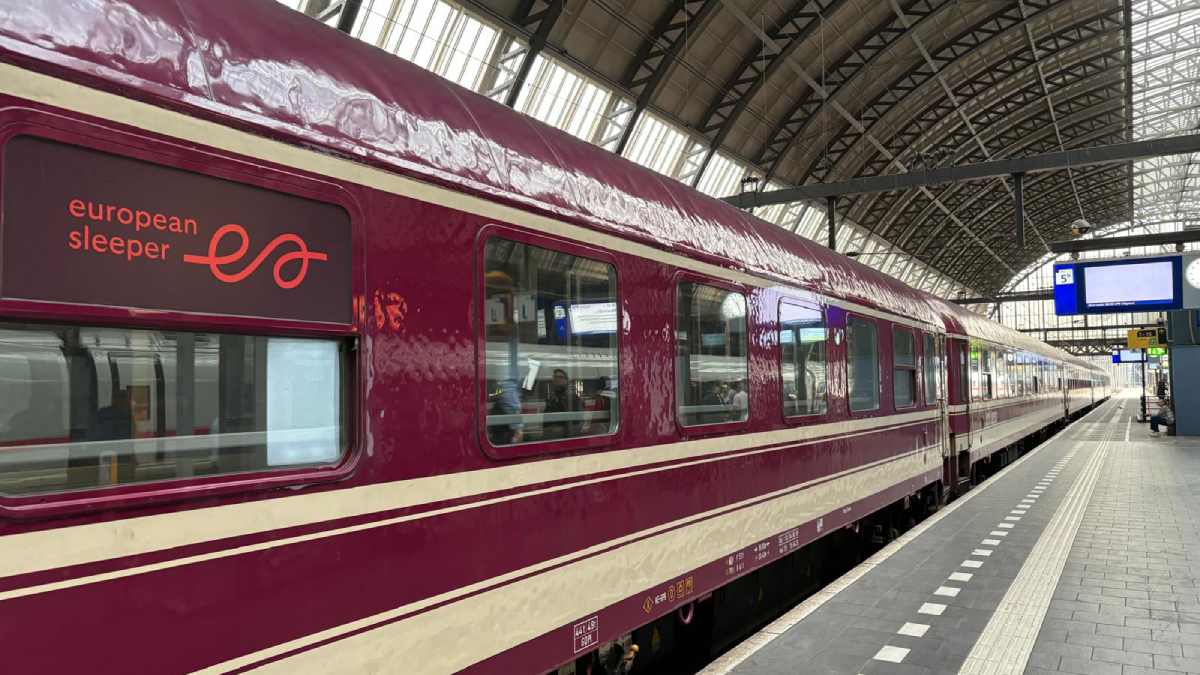
Image Credit: European Sleeper
Austria, Italy, and Belgium: Divergent National Interventions
In contrast to Germany and France, the environmental value of cross-border night train corridors has been recognised by certain European states, leading to the implementation of targeted mitigation mechanisms.
Reduced base tariffs and low mark-ups for overnight operations are maintained by Austria’s infrastructure manager, ÖBB Infrastruktur, to support the national carrier’s Nightjet expansion strategy. Furthermore, domestic night train route segments are heavily subsidised by the Austrian federal government through formal public service contracts, allowing cross-border services originating in Vienna to achieve domestic solvency before crossing frontiers.
Regulatory oversight from ART (the Italian Transport Regulation Authority) governs Rete Ferroviaria Italiana (RFI) in Italy. While substantial tolls are faced by high-speed day services along the Turin–Milan–Rome–Naples spine, differentiated tariff profiles that provide lower marginal path costs for cross-border conventional services are utilised along classic Alpine crossing routes (via Domodossola/Simplon and Chiasso/Gotthard).
An exemplary legislative model for night train support is offered by Belgium. A dedicated financial compensation scheme for night trains transiting the national network was instituted through the Law of 7 June 2023 and the Royal Decree of 28 November 2023. Railway undertakings are reimbursed by the Belgian state for 100% of their track access charges and traction electricity distribution tariffs incurred by night trains operating on Belgian soil, an administration managed via infrastructure manager Infrabel. This targeted intervention has established Brussels-Midi as a thriving western hub for overnight rail connectivity.
| Country | Infrastructure Manager | National Regulator | Night Train TAC Treatment | Share of Mark-ups in Toll | Specific Night Train Support Scheme |
| Germany | DB InfraGO AG | Bundesnetzagentur (BNetzA) | Standard SPFV segment; no night train exemption | 60% – 80% of total toll | None; temporary equity-return cap (1.9%) |
| France | SNCF Réseau | Autorité de régulation des transports (ART) | High baseline tolls; excessive cost coverage | > 50% on classic trunk lines | Domestic PSO subsidies for Intercités de Nuit only |
| Austria | ÖBB Infrastruktur | Schienen-Control | Differentiated market segment with lower mark-ups | Moderate (< 30%) | Heavy PSO co-funding for international legs |
| Italy | RFI (Ferrovie dello Stato) | Autorità di Regolazione dei Trasporti (ART) | Differentiated tariffs on classic cross-border axes | Low to Moderate on classic lines | Domestic night train PSO; lower access charges |
| Belgium | Infrabel | Service de Régulation du Transport Ferroviaire | Complete track charge and power fee reimbursement | 0% net burden to operator | Law of 7 June 2023 / Royal Decree Nov 2023 |
Technical Interoperability Bottlenecks and Operational Friction
Beyond discriminatory economic tariffs, international night trains encounter a maze of technical and regulatory barriers at national borders. While dedicated, homogeneous corridors benefit daytime high-speed networks, complex legacy infrastructure across multiple jurisdictions must be navigated by night trains, encountering conflicting signaling protocols, voltage systems, operational languages, and route construction works.
A patchwork of legacy systems must be navigated by a locomotive traversing a standard Western European corridor. Seamless interfacing with Belgian TBL1+, German PZB 90 and LZB, Swiss ZUB/Integra, Italian SCMT, and French KVB or TVM 430 is required by the vehicle’s onboard computer, all while synchronising with European Train Control System (ETCS) Baseline 3 Level 2. The engineering and financial burden of maintaining these multi-system stacks continues to stifle cross-border market entry.
Locomotive Signalling and Safety Certification
Running a continuous locomotive-hauled sleeper train from Brussels or Amsterdam to Vienna, Berlin, or Milan requires traction units compatible with up to four distinct national signalling systems alongside ETCS.
Equipping locomotives with multi-system Specific Transmission Modules (STMs) and obtaining national safety homologations is an exceptionally expensive, multi-year engineering process. Retrofitting a single multi-system locomotive (such as a Siemens Vectron or Alstom Traxx) with ETCS Baseline 3 Release 2 and national Class B legacy systems requires upwards of €300,000 to €500,000 per unit, severely restricting the supply of cross-border traction.
Under the technical pillar of the Fourth Railway Package, responsibility as the single EU authority for issuing Single Safety Certificates (SSCs) and vehicle authorisations for cross-border operations under Directive (EU) 2016/798 was assumed by the European Union Agency for Railways (ERA). While the overarching administrative framework has been streamlined by the ERA’s One-Stop Shop, divergent legacy rules on border sections and stations are still enforced by national safety authorities.
Under Article 10(8) of Directive (EU) 2016/798, an SSC is theoretically valid up to border stations of neighbouring member states without extending the formal geographic area of operation. However, it is noted by the ERA that the lack of harmonised operational rules at border stations continues to trigger administrative disputes, delaying route authorisations for open-access entrants.
| Operational Corridor | National Jurisdictions | Catenary Voltage Systems | Onboard Signalling Requirements (Class B & Class A) | Traction Complexity Rating |
| Paris – Brussels – Berlin | France, Belgium, Germany | 25 kV AC, 3 kV DC, 15 kV AC | KVB, TVM 430, TBL1+, PZB 90, LZB CE I, ETCS Baseline 3 | High (3 power systems, 5 signalling standards) |
| Brussels – Cologne – Milan | Belgium, Germany, Switzerland, Italy | 3 kV DC, 15 kV AC, 3 kV DC | TBL1+, PZB 90, LZB, ZUB/Integra, SCMT, ETCS Level 2 | Severe (Alpine tunnel clearance, 4 signalling regimes) |
| Przemyśl – Vienna – Munich | Poland, Czechia, Austria, Germany | 3 kV DC, 25 kV AC, 15 kV AC | SHP, Mirel, LS 06, PZB 90, LZB, ETCS Baseline 3 | High (multi-system voltage transitions at Bohumín) |
| Vienna – Rome / Milan | Austria, Italy | 15 kV AC, 3 kV DC | PZB 90, LZB, SCMT, ETCS Baseline 3 Release 2 | Moderate to High (Brenner / Tarvisio Alpine traction) |
Driver Certification and the Operational Language Barrier
Operating cross-border rail requires qualified drivers, yet rigid linguistic restrictions are imposed by the European regulatory framework governing driver certification. Under Directive 2007/59/EC (the Train Drivers’ Directive), Annex VI dictates that train drivers operating on European railway infrastructure must demonstrate Level B1 operational language proficiency in the official language of every member state they enter.
Cross-border operational flexibility is crippled by this requirement. A night train running from Brussels to Vienna via Germany requires drivers fluent in Dutch/French and German; extending a service from Paris to Berlin via Brussels requires French and German certification. In practice, a single driving crew cannot be used across an entire long-haul shift by railway undertakings. Instead, mandatory crew-change stops at national frontiers must be executed by operators, adding significant operational delays and doubling staffing costs.
Deep division remains within the railway sector over reforming Directive 2007/59/EC. Lobbying for the adoption of English as a single harmonised operational language on Trans-European Transport Network (TEN-T) core corridors, or at least the relaxation of language rules to Level A2 on designated border sections through digital translation tools, has been pursued by the Community of European Railway and Infrastructure Companies (CER) and independent operator associations.
However, a single operational language has been firmly opposed by the European Transport Workers’ Federation (ETF), with the argument that Level B1 local language proficiency is non-negotiable for railway safety during emergency situations and trackside communications with national dispatchers. As long as this impasse persists, cross-border sleeper operations are subjected to artificial crew shortages and high labor overheads.
Corridor Disruptions and Night-Time Maintenance Scheduling
Night trains operate in a temporal window that directly conflicts with infrastructure renewal. Major track reconstruction, catenary maintenance, and tunnel works are concentrated between 22:00 and 06:00 by national infrastructure managers to minimise disruptions to high-volume daytime commuter and intercity traffic. Consequently, overnight services are regularly subjected to severe speed restrictions, extended detours, or outright path cancellations.
The operational fragility of overnight routes is illustrated by two prominent infrastructure crises:
- Gotthard Base Tunnel Derailment and Prolonged Closure: Following a severe freight train derailment in August 2023, the 57-kilometre Gotthard Base Tunnel was closed to regular passenger traffic, reopening fully only on 2 September 2024. During this extended disruption, overnight services connecting Switzerland and Italy were forced onto the legacy Gotthard panorama route or diverted via the Simplon Pass corridor, adding up to two hours to journey times and triggering steep detour mileage surcharges.
- Germany’s “Generalsanierung” Corridors: Complete closures of vital trunk corridors for six-month intervals are involved in DB InfraGO’s multi-year general overhaul programme. Total blockades, such as that of the Riedbahn (Frankfurt–Mannheim) in late 2024, followed by rolling overhauls on the Hamburg–Berlin and Hanover–Hamburg lines through 2025 and 2026, have severely disrupted night train path availability. Sleepers are routinely diverted onto poorly electrified freight lines, increasing transit times, compromising morning arrival punctuality, and forcing operators to incur extra locomotive-kilometre charges.
Case Studies in Cross-Border Sleeper Train Execution
The divergent regulatory and economic realities across Europe are reflected in the contrasting operational models adopted by incumbent state operators and independent open-access pioneers.
| Operating Parameter | ÖBB Nightjet (Incumbent Fleet Model) | European Sleeper (Open-Access Cooperative Model) | EuroNight Pool (Multilateral State Alliance) |
| Capital Financing Source | Sovereign-backed balance sheet & state equity | Crowdfunded equity, member shares & private debt | Shared state rail budgets (PKP, ČD, ÖBB, MÁV) |
| Rolling Stock Strategy | Brand-new Siemens Viaggio 7-car push-pull rakes | Leased and refurbished classic UIC couchette/sleeper stock | Pooled legacy international RIC sleeper and seat carriages |
| Traction & Crew Execution | Self-operated multi-system locomotives (Siemens Vectron) | Third-party traction contracts (SNCB, RegioJet, Arenaways) | Bilateral traction handovers at frontier junction stations |
| Terminal Operations | Push-pull control cars eliminate station shunting | Locomotive run-around or terminal shunting engines required | Complex mid-route carriage shunting and portion splits |
| Margin Vulnerability | High fixed capital depreciation; vulnerable to subsidy cuts | Acute exposure to un-subsidised TAC mark-ups and leases | Moderate; costs distributed across participating national railways |
European Sleeper: Navigating Open-Access Friction and Traction Alliances
Founded in 2021 as a Belgian-Dutch cooperative by entrepreneurs Elmer van Buuren and Chris Engelsman, European Sleeper illustrates the challenges of running cross-border overnight rail entirely without state equity injections.
The flagship commercial service between Brussels-Midi and Berlin Central was launched by European Sleeper in May 2023, with a subsequent extension of the route to Prague (Praha hlavní nádraží) via Dresden in March 2024. A thrice-weekly Paris–Brussels–Berlin night train was inaugurated in March 2026 to expand the cooperative’s portfolio, restoring a direct overnight link between France and Germany. An ambitious Brussels–Cologne–Milan service, slated to run via the Gotthard corridor into Milano Porta Garibaldi, was also scheduled by the operator to further expand connectivity across the Alpine barrier.
A web of third-party traction agreements is relied upon by European Sleeper to navigate cross-border traction hurdles without a multi-system locomotive fleet of its own. Traction is coordinated through SNCB in Belgium, while operations in Germany and Czechia initially partnered with Czech open-access operator RegioJet. An operational alliance with Arenaways (Longitude Holding Srl), the independent Italian rail operator, was formed for Italian operations into Milan. Certified Italian driving crews, local safety management system coverage, and homologated multi-system traction to haul the trainsets between the Swiss-Italian border and Milan are provided by Arenaways.
Despite robust consumer demand and strong load factors, European Sleeper remains acutely vulnerable to national infrastructure charges. Full, un-discounted track access fees and station stop charges are paid to Infrabel, DB InfraGO, SNCF Réseau, and Správa železnic by the cooperative, which lacks public service obligation operational subsidies. Access charges represent over 30% of European Sleeper’s gross trip revenues in Germany and France, where track mark-ups are severe.
Furthermore, severe capital hurdles have been presented by the procurement of rolling stock. Aging UIC-standard 200 km/h couchette and sleeper carriages have had to be leased, refurbished, and maintained across disparate workshops by the cooperative, highlighting the desperate absence of an open European rolling stock leasing market.
ÖBB Nightjet: Industrial Scale with Siemens Viaggio Trainsets
The opposite strategy has been pursued by Österreichische Bundesbahnen (ÖBB): an industrial-scale, capital-intensive expansion backed by the Austrian state. Operating under the ÖBB Nightjet brand, the carrier rescued Europe’s night train network in 2016 following Deutsche Bahn’s exit from the City Night Line segment.
Landmark orders for 33 custom-built, seven-car NextGeneration Nightjet trainsets based on the Siemens Viaggio platform were placed with Siemens Mobility by ÖBB to replace life-expired carriages and eliminate reliance on shunting operations, representing an investment exceeding €700 million.
Specific technological innovations designed to circumvent systemic operating bottlenecks are incorporated into the NextGeneration Viaggio sets:
- Push-Pull Configuration: A dedicated driving control car (Bfmpz) is featured in each seven-car rake. Costly, time-consuming locomotive shunting at terminal dead-end stations such as Munich Hbf, Frankfurt Hbf, Rome Termini, and Zurich HB is thereby eliminated, drastically cutting station dwelling fees and terminal shunting locomotive lease costs.
- Innovative Density Partitioning: Space optimisation while meeting modern passenger demands for privacy is achieved by partitioning the 254-passenger set into two seated/PRM coaches, two traditional sleeping cars with ensuite bathrooms, and three couchette coaches featuring 28 individual “mini-cabin” sleep capsules alongside standard four-berth compartments.
- Fixed Multi-System Consist: Integrated head-end power is operated with these trainsets, which are certified for 230 km/h operation on high-speed rail lines and equipped with Siemens Trainguard 200 ETCS Baseline 3 Release 2, Austrian/German PZB/LZB, and Italian SCMT.
These NextGen sets were progressively deployed by ÖBB on high-demand trunk lines, including Vienna–Hamburg (December 2023), Vienna/Munich–Rome (September 2024), and subsequent routes linking Austria, Germany, and Northern Italy.
However, cross-border regulatory economics continue to constrain even ÖBB’s capital-backed model. The discontinuation of premier Vienna–Paris and Berlin–Paris Nightjet services effective 14 December 2025 was announced by ÖBB in late 2025. The termination was driven by the withdrawal of operating subsidies by the French government that had previously offset SNCF Réseau’s high track access fees and night-time pathing surcharges. This abrupt withdrawal underscored that commercial overnight rail across France cannot be maintained by Europe’s largest national incumbent without explicit fiscal offsets or radical track access fee reform.
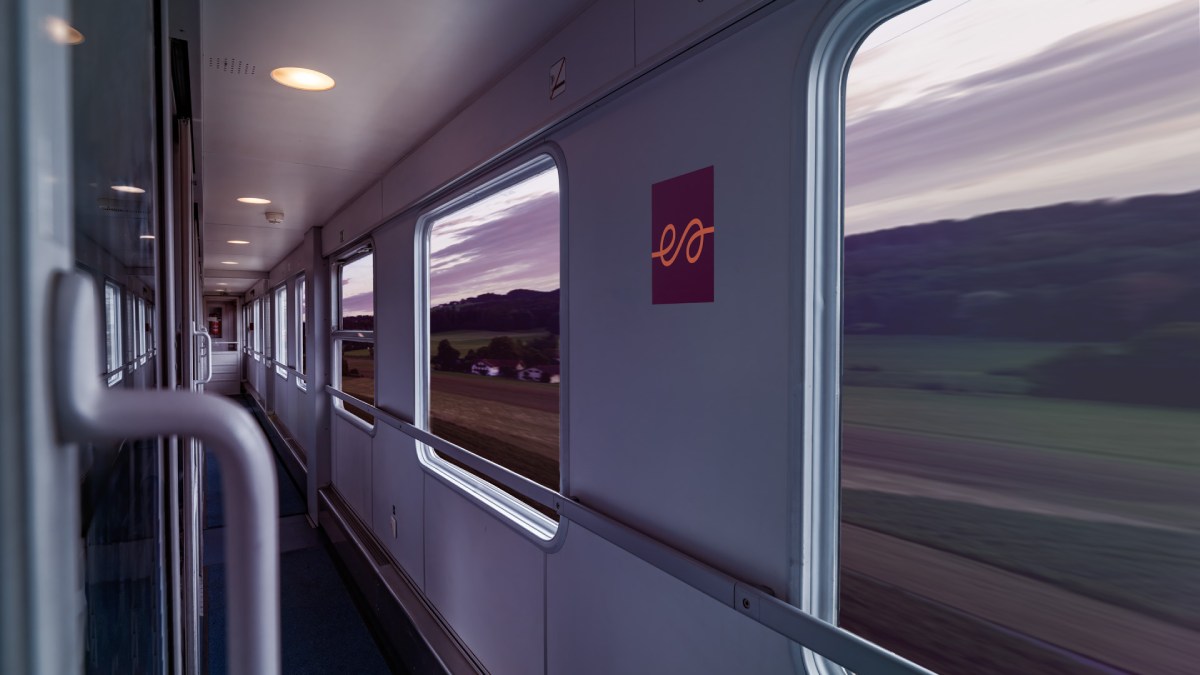
Image Credit: European Sleeper
EuroNight Carpatia and SNCF Intercités de Nuit: Hybrid Alliances
Beyond pure open-access and single-carrier incumbent models, cross-border night rail is sustained through multilateral pool agreements and domestic public service conventions.
Operating as a joint venture linking Eastern Poland directly with Czechia, Austria, and Germany, the EuroNight Carpatia (EN 40456 / 40476) originates in Przemyśl—a vital geopolitical transit junction on the Ukrainian border—and runs via Kraków Główny, Bohumín, and Vienna Central into Munich Hbf. Rolling stock pooling and traction-sharing agreements between PKP Intercity (Poland), České dráhy (ČD, Czech Republic), and ÖBB are utilised to execute this operation. Couchette, sleeper, or seating stock are provided by each national carrier through this multilateral arrangement, while cross-border locomotives are supplied via shared fleet rosters. Infrastructure risk is thereby distributed, though vulnerability to cumulative cross-border path delays during border shunting at Bohumín remains.
A state-subsidised domestic fortress is represented by the SNCF Intercités de Nuit network in France. Revitalisation of lines connecting Paris-Austerlitz to Nice, Briançon, Toulouse, and Latour-de-Carol followed the French government’s 2020 national recovery plan (France Relance) through a €100 million state overhaul of aging Corail sleeper stock. Operating deficits are covered by the French state through a multi-annual Public Service Obligation contract, which fully funds the heavy track charges levied by SNCF Réseau. However, this domestic protectionism contrasts sharply with France’s reluctance to provide structural track fee relief or co-funding for international open-access sleepers crossing its borders, creating an infrastructure blockade around the French perimeter.
Policy Frameworks, Carbon Pricing, and Regulatory Roadmaps
The long-term viability of cross-border night train corridors will be decided not only in rail regulatory chambers, but also in European carbon markets and network infrastructure mandates.
EU ETS Aviation Phase-Out: Directive (EU) 2023/958
Intermodal carbon equity is enforced through the revised EU Emissions Trading System (EU ETS), which serves as the European Union’s primary legislative mechanism. An aggressive phase-out of free greenhouse gas emission allowances historically gifted to commercial aircraft operators is executed by the European Union under Directive (EU) 2023/958, enacted as a central pillar of the Fit for 55 package.
Prior to 2024, commercial airlines received the vast majority of their carbon emission permits free of charge, insulating short-haul flying from the true cost of fossil fuel combustion. This benefit is systematically dismantled across flights departing from or arriving at European Economic Area (EEA) airports by Directive (EU) 2023/958:
- 2024: Free carbon allowances allocated to commercial aircraft operators were cut by 25%.
- 2025: Free carbon allowances were cut by 50%.
- 2026: Free allowances are 100% eliminated, instituting full auctioning of all carbon permits for commercial aviation within the EEA.
Significant cost increases are imposed on European low-cost carriers by full auctioning amidst carbon allowance prices fluctuating between €70 and €90 per tonne of CO2. It is calculated by analysts that the elimination of free allowances, paired with mandatory Sustainable Aviation Fuel blending mandates under the ReFuelEU Aviation initiative, will add €12 to €25 to the operating cost of an intra-European economy flight ticket by 2026/2027.
Furthermore, it is mandated by Directive (EU) 2023/958 that the environmental efficacy of the International Civil Aviation Organization’s (ICAO) CORSIA offset scheme must be assessed by the European Commission by the end of 2026. Legal empowerment is granted to the Commission to extend the full EU ETS cap-and-trade mandate to all flights departing the EEA to third countries if CORSIA is judged insufficient to meet Paris Agreement objectives, further closing the carbon pricing gap between air and rail.
According to data published by the European Environment Agency (EEA) and Eurostat, electrified European rail operations produce an average of 14 to 20 grams of CO2 per passenger-kilometre, compared to 83 to 130+ grams of CO2 per passenger-kilometre for commercial jet aviation (excluding additional non-CO2 radiative forcing effects such as high-altitude contrail cirrus and nitrogen oxides). European rail passenger transport was reported by Eurostat to have peaked at 443 billion passenger-kilometres in 2024, yet international rail journeys accounted for only 23 billion passenger-kilometres, underscoring the massive unexploited modal shift potential.
| Transport Mode & Energy Profile | Average Direct CO2 (g/pkm) | Full Radiative Forcing (CO2e/pkm) | Primary Regulatory Carbon Compliance Mechanism |
| Intra-EEA Commercial Jet Aviation | 83 – 130 g | 160 – 250+ g | Full ETS allowance auctioning from 2026 (Directive 2023/958) |
| Electric High-Speed Rail (Grid Average) | 14 – 28 g | 14 – 28 g | Upstream ETS 1 compliance on electricity generation |
| NextGen Electric Nightjet (Renewable) | 14 – 20 g | 14 – 20 g | Zero direct emissions; green traction power contracts |
| Legacy Diesel Locomotive-Hauled Train | 45 – 70 g | 45 – 75 g | National fuel taxation and future ETS 2 road/rail fuel pricing |
TEN-T Revision and Single European Railway Area Mandates
The infrastructural baseline of the European Union was updated through Regulation (EU) 2024/1679, establishing revised Union guidelines for the development of the Trans-European Transport Network (TEN-T).
Strict, legally binding infrastructure parameters are imposed across the TEN-T Core Network by Regulation (EU) 2024/1679, which must be fully realised by 2030, and the Extended Core Network by 2040:
- Network Electrification: 100% of core passenger railway lines must be fully electrified.
- Line Speeds: Minimum operational speeds of 160 km/h must be guaranteed by core passenger lines.
- Freight and Slot Interoperability: Standard 750-metre freight trains and axle loads of at least 22.5 tonnes must be accommodated by corridors.
- ERTMS/ETCS Migration: National Class B legacy signalling systems must be phased out in favour of unified ETCS trackside deployment, enabling seamless multi-national train control without national safety module retrofitting.
Ten cross-border pilot services were designated in 2023 by the European Commission’s Directorate-General for Mobility and Transport (DG MOVE) under its Action Plan to Boost Long-Distance and Cross-Border Passenger Rail to stimulate real-world cross-border services ahead of infrastructure completion. European Sleeper’s proposed Amsterdam–Barcelona night train and joint sleeper proposals connecting Stockholm, Berlin, and Zurich were included among these pilot initiatives. Administrative mediation between operators and infrastructure managers was provided by these pilot projects, though no direct capital funding was offered by the Commission, highlighting that regulatory harmonisation must be accompanied by financial restructuring.
The Policy Reform Agenda: Three Pillars for Continental Scale
Targeted regulatory reforms must be enacted by the European Parliament and Council to transition cross-border sleeper trains from a precarious commercial niche into a scalable, high-capacity transport network capable of absorbing aviation demand.
| Reform Pillar | Core Regulatory Target | Proposed Policy Mechanism | Expected Operational & Financial Impact |
| Pillar 1: Track Access Charges | Directive 2012/34/EU (Articles 31 & 32) | Mandate a distinct “Night Train” segment; ban Article 32 mark-ups; cap tolls at marginal direct cost; enforce state reimbursement | Cuts infrastructure tolls by 50% to 70%, immediately lowering retail ticket prices by 15% to 20% |
| Pillar 2: Rolling Stock Leasing | EIB & Connecting Europe Facility (CEF) | Establish an EU-backed rolling stock leasing company (ROSCO) or loan guarantee facility for interoperable 230 km/h sleeper coaches | Eliminates residual asset risk for open-access operators; shortens procurement lead times from 5 years to leasing turnarounds |
| Pillar 3: Fiscal & Labour Interoperability | Directive 2003/96/EC & Directive 2007/59/EC | Enforce zero-rated cross-border rail VAT; introduce English/A2 border language exceptions and automated operational translation tools | Equalises tax treatment with international aviation; removes mandatory frontier crew changes, reducing crew costs by 30% |
- Mandatory Track Access Charge Caps under Directive 2012/34/EU: Directive 2012/34/EU must be amended by the European Commission to mandate a harmonised, distinct market segment for cross-border passenger night trains across all national Network Statements. National infrastructure managers must be legally prohibited from levying Article 32 market mark-ups on overnight services under this amendment. Direct marginal cost of operation under Article 31(3) should serve as the strict cap for night train tolls, with member states legally required to compensate infrastructure managers for any resulting revenue shortfall, replicating Belgium’s successful national compensation model.
- Establishment of an EU Rolling Stock Guarantee and Leasing Pool: The single greatest physical barrier to market entry is represented by the acute scarcity of compliant sleeper rolling stock. Massive residual value risk of purchasing specialised, multi-system 230 km/h sleeper trains that take five years to manufacture cannot be absorbed by open-access startups or private financiers. A rolling stock leasing facility or state-backed rolling stock company (ROSCO) should be capitalised by the European Investment Bank (EIB) in coordination with the Connecting Europe Facility. Standardised, interoperable sleeper trainsets would be procured by this entity and leased on non-discriminatory open-access terms to both public and private operators.
- Tax Equalisation and Border Operational Simplification: Fiscal distortion must be eliminated by enforcing zero-rated VAT across all international rail passenger tickets throughout the European Union, mirroring international aviation. Concurrently, the revision of the Train Drivers’ Directive (2007/59/EC) must be completed to permit the use of standardised English operational terminology and AI-assisted real-time translation tools on designated TEN-T border corridors, eliminating mandatory frontier crew-change stops and dramatically reducing operating overheads.
European cross-border night trains have been identified as an absolute necessity to reaching net zero transit targets on the continent, but their financial viability requires structural market reform to become sustainable. Intermodal fairness can be guaranteed through the actions of Brussels by removing the costly fiscal imbalance that exists between untaxed aviation fuel and kilometre-based track access charges. Required night train market segmentations have to be implemented by regulatory authorities, markups restricted to marginal costs, and the multi-system traction of such trains recognized. With the increasing cost burden of meeting EU ETS targets making fossil aviation more expensive, a consistent track access pricing system will ensure that overnight rail becomes Europe’s dominant and environmentally friendly backbone mode.
The post Europe’s Night Train Travel Revolution Faces a Cross Border Track Tariff Crisis as Germany, France And Other Countries Battle Rising Costs appeared first on Travel and Tour World






















































Comments and Responses
Please login. Only community members can comment.