























































MANIPUR, ASIA’S LOST WORLD – Fossil Bamboo Unlocks Ice Age Secrets of Resilience
-
Blogs, Culinary, Nature & Wildlife, History & Art, Travel
-
-
4 mins
-
Travel and Tour World
-
Tathyik Bhattacharjee
-


Manipur 37,000-year-old fossil bamboo discovery proves it was a unique Ice Age sanctuary. Explore the ancient history and resilience of Asia's lost world
MANIPUR, land of jewels, now holds a secret from the last Ice Age. A single, ancient bamboo stem has rewritten history. It offers travelers a new reason to explore this stunning state. Imagine touching a past nearly 40,000 years old. This tiny fossil is a testament to survival. It proves the natural beauty of Manipur is truly timeless. The discovery transforms Manipur into a global scientific destination. This ancient story waits for you in the Imphal Valley.
The 37,000-Year-Old Secret Revealed
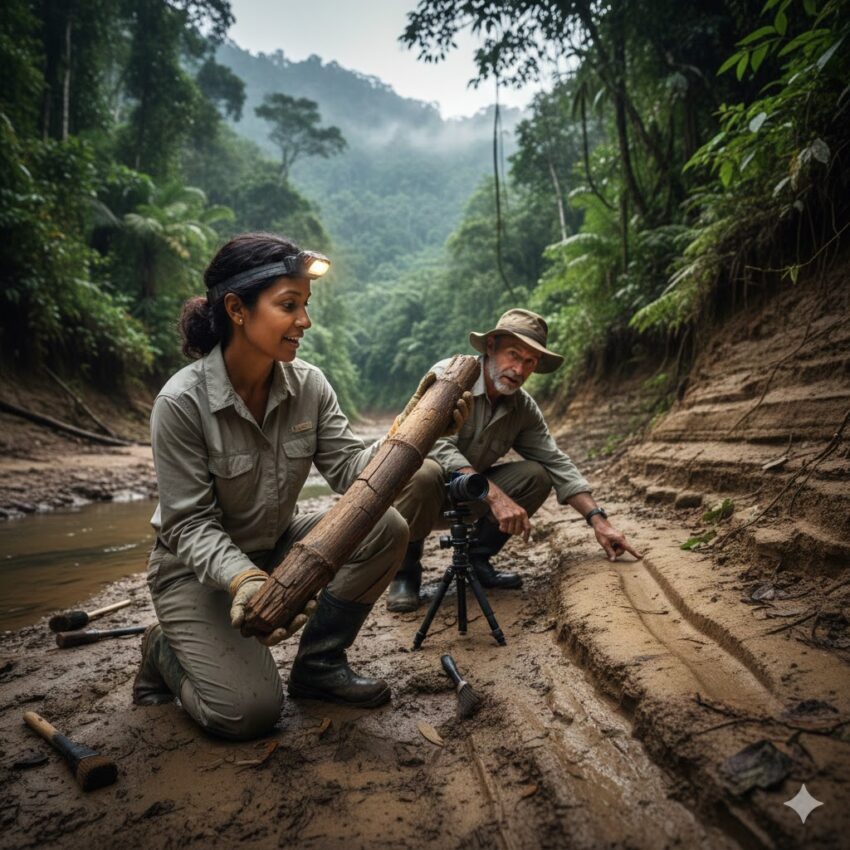
Scientists made a profound discovery in Manipur. They found an intact fossil bamboo stem. The finding was in the silt deposits of the Chirang River. This area is within the beautiful Imphal Valley. Government researchers examined the specimen closely. It is approximately 37,000 years old. This dates it to the Late Pleistocene epoch. That time is better known as the Ice Age.
Bamboo fossils are exceptionally rare globally. Their hollow stems and fibrous tissues decay very quickly. This makes their preservation an incredible event. Scientists from the Birbal Sahni Institute of Palaeosciences (BSIP) studied the remains. They identified it as a new species. It was formally named Chimonobambusa manipurensis. The name honors its place of discovery.
The researchers highlighted the quality of preservation. They said the fossil retained its nodes and buds. These fragile features seldom survive fossilization. This makes the Manipur fossil unique. It is a stunning piece of the Earth’s natural history. This scientific marvel is set to greatly boost tourism.
Bamboo’s Ancient Armor: Defense Against Megafauna
The most remarkable detail is the thorn scars. These marks are clearly visible on the ancient stem. They are the ghostly remnants of long-vanished thorns. This is the first thorny bamboo fossil found in Asia. It offers direct proof of an ancient defense mechanism. Thorny structures were an armor for the plant. They protected young bamboo shoots from hungry animals.
This implies a fierce ecological negotiation. Ancient herbivores roamed the Imphal Valley. These creatures included giant wild cattle and rhinos. Young bamboo was a favored food source for them. The plant evolved this defense to survive constant browsing. Thorniness was a successful strategy. It ensured the bamboo’s persistence in the face of megafauna.
A BSIP scientist noted the importance of the scars. They explained that thorn scars are direct evidence of plant-animal interaction. They further stated that this interaction is rarely preserved in stone. This discovery shows that evolutionary adaptation happened right here. It was happening tens of thousands of years ago in Manipur.
Manipur: Cradle of Ice Age Life
The discovery changes global scientific maps. It proves Manipur was a unique sanctuary during the Ice Age. Global temperatures were drastically cold and dry then. This forced many plant species to retreat. Bamboo was completely wiped out from places like Europe. Asia also saw a major reduction in bamboo habitats.
However, the fossil confirms a different story for Northeast India. It shows that bamboo populations endured in Manipur. The region acted as a climatic refugium. This means it was a safe zone for life. Its geography played a crucial role. The state retained essential warmth and humidity. This was sustained by the monsoonal influence. This microclimate provided a critical buffer. It protected the flora from global extremes.
The Indo-Burma biodiversity hotspot proved its resilience. This region safeguarded life during a time of global stress. This discovery is a botanical milestone. It is also an important contribution to palaeoclimatic studies. It highlights Manipur’s unique role in Earth’s history.
A New Dawn for Ecotourism
This scientific breakthrough offers a massive tourism opportunity. Manipur is already known for its scenic beauty. Now, it will draw visitors seeking ancient ecological stories. The state can now promote palaeotourism. Travelers can explore the very landscape that provided refuge. They can see where the ancient river deposited its secrets.
The government is considering showcasing the fossil. A dedicated exhibit is expected at a state museum. Visitors will soon be able to see Chimonobambusa manipurensis. This will be a huge draw for nature lovers. It will also attract students and researchers. Science tourism is a growing, high-value segment. This fossil puts Manipur at the center of this movement.
Travelers can also explore the living descendants of this ancient plant. They can witness the modern, thorny varieties of bamboo. Local guides can explain the area’s geological past. They can share the importance of this resilient species. The entire Imphal Valley becomes an open-air history book.
Explore the Refugium’s Resilience
The story of the fossil is a story of resilience. It mirrors the spirit of Manipur itself. Visitors are invited to experience this legacy firsthand. They can trek through the state’s beautiful forests. They can witness the vibrant biodiversity. They can see the impact of the monsoon-fed environment.
Tour operators can now create unique itineraries. These trips will focus on the state’s natural history. Imagine a tour following the ancient Chirang River. Tourists can also visit nearby cultural and heritage sites. The fossil adds a profound deep-time layer to the state’s rich culture.
This finding emphasizes the region’s uniqueness. It underscores its role as a botanical guardian. The discovery provides a new and powerful identity for tourism. Manipur is not just a beautiful place. It is a place where life conquered the Ice Age.
Looking Ahead
We stand at the precipice of a profound realization. The ground beneath our feet in Manipur is hallowed ground. It is sacred to science and to history. This single bamboo stem connects us to a distant, cold world. Yet, it reminds us that life, like the people of Manipur, is resilient. Plan your visit to this lost world. Come and walk the same soil that sheltered life 37,000 years ago. Discover the ancient secrets etched in the rocks and the soil. Your adventure in the land of jewels awaits this incredible chapter in Earth’s history.
The post MANIPUR, ASIA’S LOST WORLD – Fossil Bamboo Unlocks Ice Age Secrets of Resilience appeared first on Travel and Tour World














































Comments and Responses
Please login. Only community members can comment.