
















































British Airways UAE Flights Face Deep Cuts as Emirates and Etihad Gain Ground Across the UK Market
-
Blogs, Travel
-
-
9 mins
-
Travel and Tour World
-
Ankita Neogi Khan
-

British Airways UAE flights return to Dubai in November while Abu Dhabi remains suspended, reshaping UK-Gulf travel choices.
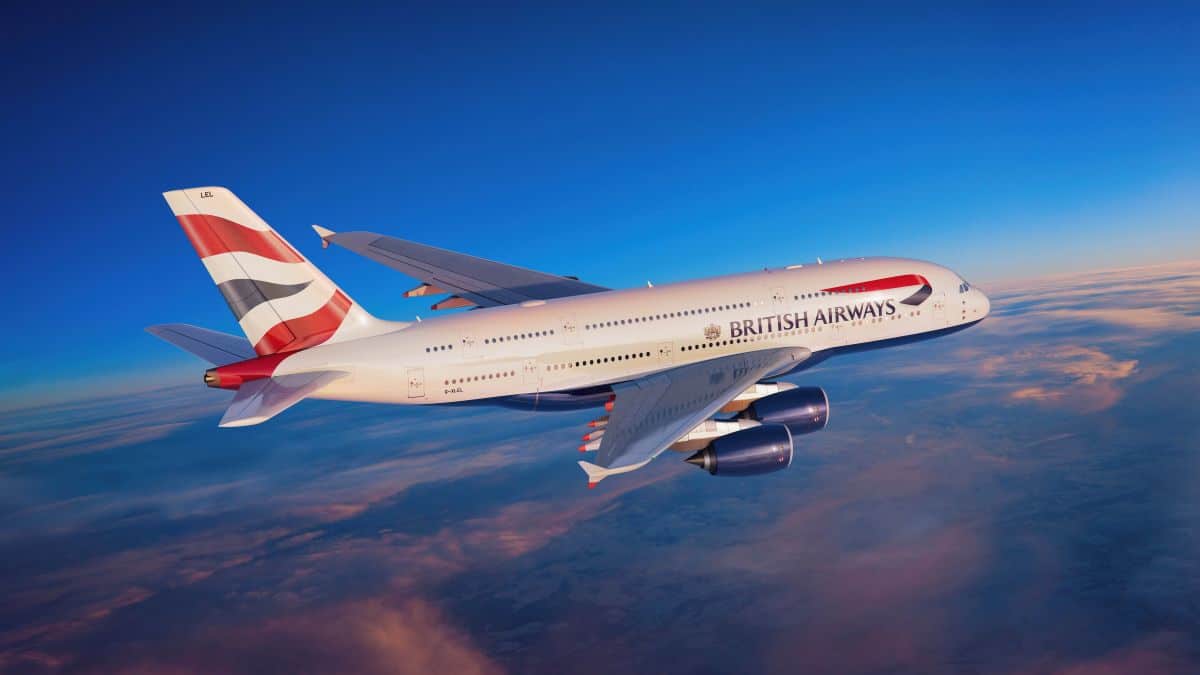
British Airways will resume Dubai flights on November 3, 2026, but the UK carrier will return with a much smaller UAE operation. The airline plans one daily London-Dubai service during winter, rising to two daily flights in summer 2027. However, Abu Dhabi will remain outside its network until winter 2027-28, creating a significantly longer gap for travellers to the UAE capital. Before the February disruption, British Airways operated 28 weekly round trips to the UAE, including three daily Dubai services and one daily Abu Dhabi flight. The revised schedule therefore restores connectivity cautiously rather than returning to previous capacity. Meanwhile, Emirates and Etihad Airways operate in a market where British capacity remains materially reduced.
Dubai Returns With A Smaller Footprint
The November restart marks an important step in British Airways’ gradual return to the UAE market. Yet the schedule also shows how differently the airline is treating Dubai and Abu Dhabi.
British Airways will initially operate one daily flight to Dubai from November 3. The carrier plans to raise the frequency to two daily services during summer 2027. That remains below its previous three-daily Dubai operation.
The difference is significant for passengers because frequency influences more than seat availability. Multiple daily departures give travellers greater flexibility around business meetings, connections, family trips and disrupted itineraries.
The airline’s revised schedule also provides a clearer planning horizon. British Airways said the changes aim to give customers greater clarity while it continues reviewing its Middle East network.
| British Airways UAE operation | Previous operation | Winter 2026-27 | Summer 2027 |
|---|---|---|---|
| Dubai | 3 daily | 1 daily | 2 daily |
| Abu Dhabi | 1 daily | Suspended | Suspended |
| Total UAE round trips | 28 weekly | Substantially lower | Below previous level |
| Abu Dhabi restart | Existing service | Not scheduled | Not scheduled |
| Expected AUH return | — | — | Winter 2027-28 |
The contraction is therefore not simply a temporary reduction in frequency. It represents a reconfigured UAE network, with Dubai retaining priority while Abu Dhabi faces a much longer absence.
For travellers, that distinction matters. A passenger looking specifically for a British Airways itinerary to Abu Dhabi cannot assume that the Dubai restart signals an imminent return to the capital.
Abu Dhabi Faces The Longer Wait
The most consequential change concerns Abu Dhabi. British Airways has moved its expected return to the winter 2027-28 season, leaving Etihad with a prolonged period without direct British Airways competition on the route.
That does not mean Abu Dhabi has lost UK connectivity. Etihad continues to serve London and currently advertises up to four non-stop London-Abu Dhabi flights daily, depending on the schedule. The airline also operates direct Manchester-Abu Dhabi services.
This distinction is crucial when assessing the effect on travellers. British Airways’ absence does not remove direct access between Britain and Abu Dhabi. Instead, it changes the competitive mix available to passengers.
Etihad’s existing London operation gives travellers an established alternative. The airline’s own timetable indicates that the London-Abu Dhabi market remains a substantial part of its network strategy.
The market effect may therefore be more pronounced in choice, schedule flexibility and competitive positioning than in basic connectivity.
Emirates Watches UK Demand Closely
Dubai presents a different competitive picture because Emirates has a particularly large presence at DXB. British Airways’ reduced schedule leaves more room for the Dubai-based carrier to capture passengers seeking alternative departure times or connecting itineraries.
Emirates has also reported stronger UK demand. According to the information cited in the original report, Emirates Deputy President and Chief Commercial Officer Adnan Kazim said UK bookings for the October mid-term break were 10 per cent higher year on year.
That demand signal is particularly relevant because the British Airways reduction arrives ahead of the important winter travel period. Emirates has indicated that it already has substantial UK capacity and can add capacity when required.
The combination of strong demand and reduced competitor capacity creates an unusual market dynamic. Emirates does not need British Airways to disappear from Dubai to gain relevance. Instead, every reduction in competing frequency potentially gives the incumbent Dubai hub carrier more room to serve schedule-sensitive travellers.
Dubai’s airport data reinforces the scale of the underlying market. Dubai International welcomed 95.2 million passengers in 2025, a 3.1 per cent annual increase and its busiest year on record. The UK ranked among DXB’s leading country markets, generating 6.3 million passengers during the year.
Dubai’s Connectivity Makes Capacity Critical
The significance of the British Airways decision becomes clearer when viewed through Dubai’s wider aviation ecosystem.
DXB connected passengers to 291 destinations through 108 international carriers in 2025, according to Dubai Airports. London was also the airport’s leading city destination, with 3.9 million passengers recorded during the year.
That scale makes Dubai more than a conventional leisure destination. It operates as a major transfer hub linking Europe with Asia, Africa, Australasia and the wider Middle East.
Consequently, a reduction in London-Dubai frequency can affect both point-to-point travellers and passengers using Dubai as a connecting gateway.
| Dubai aviation indicator | Latest reported figure |
|---|---|
| DXB passengers in 2025 | 95.2 million |
| Annual growth | 3.1% |
| UK passenger traffic | 6.3 million |
| London passenger traffic | 3.9 million |
| International destinations | 291 |
| International carriers | 108 |
| 2025 flight movements | 454,800 |
| Annual seat load factor | 77.6% |
The figures underline why even a relatively small change by one airline deserves attention from travel sellers.
British Airways’ Dubai operation forms only one part of a much larger market. However, its frequencies contribute to the range of options available between the UK and one of the world’s most connected airports.
Travellers Could See More Choice Elsewhere
For travellers, the immediate consequence is not necessarily fewer ways to reach the UAE. Instead, passengers may need to shift airline, airport or schedule preferences.
A London traveller heading to Dubai will have multiple airline choices, while a passenger targeting Abu Dhabi may find Etihad particularly relevant during British Airways’ extended absence.
The distinction between the two cities also matters for onward travel. Dubai and Abu Dhabi are geographically close, but they serve different airport and destination ecosystems.
Travellers with a fixed hotel booking should therefore consider the arrival airport before purchasing a replacement ticket. Changing from Abu Dhabi to Dubai can introduce additional ground-transfer time and transport costs.
The same principle applies to business travellers. A flight arriving at a different UAE airport may affect meetings, hotel locations and onward domestic or regional travel.
For passengers with existing disrupted bookings, the safest approach is to check the airline’s latest timetable before making separate arrangements. British Airways maintains an online timetable and warns that schedules can change for operational reasons.
Dubai Tourism Still Shows Strong Momentum
The airline capacity story also intersects with a robust tourism market.
Dubai welcomed 19.59 million international visitors in 2025, according to the Dubai Department of Economy and Tourism. It was the city’s third consecutive record year, while December alone exceeded two million international visitors for the first time.
That performance matters because airline capacity and destination demand reinforce each other. Strong visitor numbers encourage carriers to maintain or increase frequencies, while reliable connectivity supports hotel occupancy, attractions, retail spending and business travel.
Dubai’s first-half 2025 performance already showed this momentum. The destination welcomed 9.88 million international overnight visitors between January and June, representing six per cent growth over the same period of 2024. Western Europe supplied 22 per cent of visitors during that period.
The UK is particularly important within Dubai’s aviation network. DXB recorded 6.3 million passengers connected with the UK market in 2025. That provides a substantial underlying passenger base even when individual airlines modify their schedules.
A Wider Gulf Recovery Remains Uneven
British Airways is not making its UAE adjustment in isolation. Other international airlines have also adopted staggered approaches to restoring Gulf capacity.
The pattern matters because airlines rarely rebuild networks uniformly after major operational disruptions. They assess security conditions, aircraft availability, crew planning, passenger demand, insurance considerations and the commercial viability of each route.
Recent industry reporting indicates that several international carriers have pushed their UAE restarts into October, November or 2027. Lufthansa Group airlines, Air France and other carriers have continued to review schedules as the regional operating environment evolves.
This produces a fragmented recovery rather than a single reopening date.
| Market factor | Effect on travellers |
|---|---|
| Reduced British Airways Dubai frequency | Fewer BA departure choices |
| Delayed Abu Dhabi restart | Longer absence of BA service |
| Etihad London-AUH capacity | Alternative direct connectivity |
| Emirates’ Dubai hub | Extensive alternative network |
| Staggered international returns | Schedules vary significantly by airline |
| Continued regional uncertainty | Timetables may remain subject to revision |
For travel advisers, this means inventory should be checked at the time of booking. A route that appears available several months ahead can still change when airlines update seasonal schedules.
What The Change Means For Travel Sellers
The development has implications beyond individual passengers. Travel management companies and tour operators must consider how airline schedule changes affect inventory, connections and customer communications.
A reduced full-service carrier presence can shift demand towards competing airlines. However, travel sellers should avoid assuming that every displaced British Airways passenger will automatically move to Emirates or Etihad.
Price, departure time, loyalty programmes, baggage allowances, cabin products and onward connections all influence airline selection.
Corporate travellers may place greater importance on schedule reliability and frequency. Leisure passengers may focus more heavily on price and hotel location.
The Dubai market also has a substantial connecting component. Passengers travelling from the UK to South Asia, Southeast Asia or Africa may evaluate Dubai-based connections against other hubs.
Consequently, the capacity change could influence markets beyond the UAE itself.
What Travellers Should Check Before Booking
Travellers planning a UAE trip during the transition period should pay close attention to the operating date and airport, rather than relying solely on an airline’s route listing.
For Dubai, the announced British Airways restart begins on November 3, followed by the planned summer increase. For Abu Dhabi, passengers should not expect a British Airways return before the winter 2027-28 season based on the current schedule.
Travellers should also check whether their itinerary depends on a connection. A schedule change on one sector can affect the entire journey, particularly when separate tickets are involved.
The same applies to families and groups travelling during school holidays. Demand can rise sharply around UK half-term periods, Christmas and New Year, potentially narrowing the availability of preferred departure times.
Passengers should therefore compare alternative services early and monitor their booking after purchase.
The Competitive Picture Is Changing
The revised British Airways schedule creates a different competitive landscape across the two major UAE gateways.
Dubai retains British Airways, but at a lower frequency. Abu Dhabi loses the carrier for considerably longer, leaving Etihad with a more prominent role in direct UK-Abu Dhabi connectivity.
At the same time, Emirates enters the winter period with a major Dubai hub and reported UK booking growth. The airline also has the ability to adjust capacity if market conditions require it.
That does not establish a guaranteed shift in market share. Passenger behaviour, pricing, capacity decisions and regional conditions will determine the eventual outcome.
What is clearer is that British Airways is returning cautiously rather than restoring its previous UAE schedule wholesale.
The decision also illustrates how airline networks can remain altered long after an initial disruption. Seasonal schedules, commercial exposure and operating conditions can shape route decisions well into subsequent years.
The UK-UAE Market Enters A New Phase
British Airways’ revised UAE schedule gives travellers more certainty, but it also confirms that the UK-Gulf market has not fully returned to its previous configuration.
Dubai will regain British Airways connectivity from November 3, initially with one daily service. Summer 2027 will bring two daily flights, still below the previous three-daily Dubai schedule. Abu Dhabi, meanwhile, faces a much longer wait until winter 2027-28.
For travellers, alternatives remain substantial. Emirates continues to anchor Dubai’s international network, while Etihad provides strong direct connectivity between London and Abu Dhabi. DXB’s record 95.2 million passengers in 2025 and Dubai’s 19.59 million international visitors demonstrate the depth of demand underpinning the market.
The next phase will depend on how airlines balance demand with operational risk. For now, passengers should treat the published schedule as a planning guide and verify flight details before travel.
The post British Airways UAE Flights Face Deep Cuts as Emirates and Etihad Gain Ground Across the UK Market appeared first on Travel and Tour World























































Comments and Responses
Please login. Only community members can comment.