























































Kagoshima Gunkanjima (Hashima Island) – From Coal Town to Tourism Icon Driving Heritage Travel
-
Blogs, Nature & Wildlife, History & Art, Travel
-
-
5 mins
-
Travel and Tour World
-
Akash Bagchi
-


Kagoshima’s Gunkanjima (Hashima Island) offers eerie industrial ruins, UNESCO status and tourism-driven regional regeneration on a former coal‑mine island.
Gunkanjima Hangs Its Legacy Above the Sea of Japan
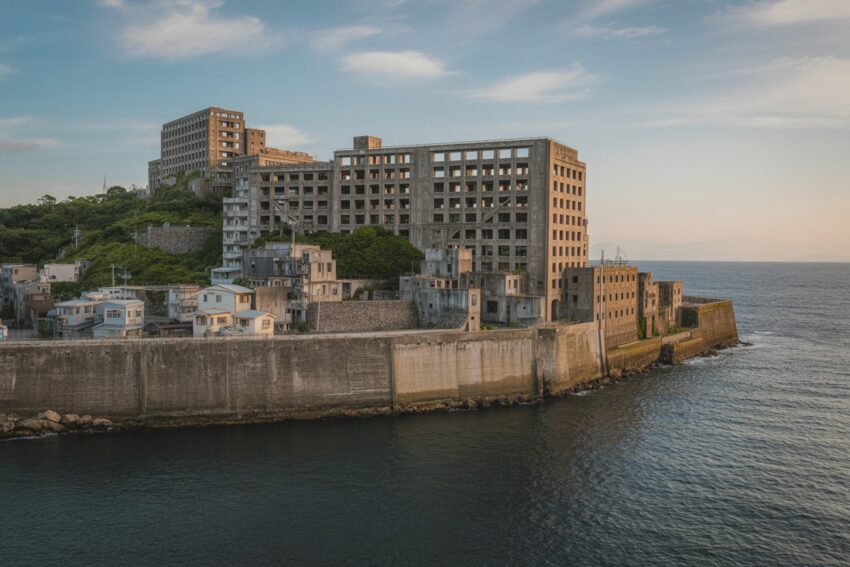
Located just off the coast of Nagasaki Prefecture, the island known as Gunkanjima—formally Hashima Island—has transformed from a closed industrial site into a compelling heritage tourism destination. Situated within the broader Kyūshū region, the island is drawing visitors through its distinctive narrative: dense urbanisation born of coal mining, subsequent abandonment, and now revival as a tourism landmark. The tourism appeal couples dramatic visual ruin, industrial history, and controlled visitor access, giving the destination an edge in Japan’s evolving heritage tourism sector.
From Coal Hub to Abandoned Landscape
Hashima Island’s story begins with the discovery of coal under its seabed in the early nineteenth century. Over the subsequent decade, the island developed into a heavily built‑up urban complex: at its peak, the island housed several thousand residents in high‑rise concrete buildings built upon reclaimed land. The dense architecture and surrounding seawalls gave the island a silhouette resembling a warship—hence the nickname “Battleship Island”. When the coal mines closed in nineteen‑seventy‑four, the island was vacated almost overnight and remained off‑limits for decades. In April two‑thousand and nine, designated portions of the site reopened to visitors under regulated tours, and in two‑thousand and fifteen it gained inscription on the UNESCO World Heritage list as part of Japan’s industrial revolution sites.
Tourism Angle: Why Visitors Are Drawn
Heritage and industrial‑site tourism
Gunkanjima’s appeal is rooted in its unique combination of historic significance and visual drama: the island appears as a decaying vertical town set offshore, offering a rare access point to the urban‑industrial past of Japan. The official tourism portals highlight the necessity of joining organised tours which depart from Nagasaki Port and sometimes include landings on the island; this controlled access sustains both the visitor experience and safety standards.
Exclusive, regulated access
Visitors cannot explore independently. Landing is permitted only via authorised operators, fulfilling Nagasaki City’s safety ordinance, given the deteriorating condition of many structures. Tours typically depart from Nagasaki early in the day, take about thirty minutes one way, and include viewing zones on the island or full entry to designated areas. This limitation adds a sense of exclusivity and value to the experience.
Visual and media significance
The island’s post‑apocalyptic aesthetic has attracted a global audience. Its concrete façades, encroaching vegetation, and deserted corridors are popular with photographers, urban explorers, and cultural tourists. The “ruin aesthetic” becomes a storytelling tool, combining tourism with conservation and memory of industrialisation.
Regional tourism diversification
For Nagasaki Prefecture, Gunkanjima adds a different dimension to its tourism product: beyond war history, port city culture, and natural scenery, the island brings industrial‑heritage tourism. This helps extend visitor interest and length of stay in the region, thereby strengthening local lodging, transport, and ancillary services.
Tourism Impact on the Region
Economic stimulus and visitor spend
The development of landing and cruise tours to Gunkanjima has supported a growing circle of business: ferry operators, guided‑tour services, museum and interpretative centres, port‑area hospitality and merchandise providers. The curated nature of the experience increases per‑visitor yield relative to free‑access sites.
Branding and global reach
Its UNESCO status gives the island international visibility. Travel‑industry descriptions now position the site among unique heritage experiences in Japan, raising Nagasaki’s profile among discerning travellers. That visibility also attracts domestic visitors seeking lesser‑known heritage journeys.
Infrastructure and services upgrades
The regulated access and infrastructural needs (port facilities, safety walkways, digital interpretation) have encouraged investment in visitor facilities. Cruise and landing tours represent a structured way of managing high‑interest but sensitive destinations.
Conservation and sustainability framing
Tourism to the island is being aligned with heritage‑preservation goals. Safety regulations, restricted zones, and interpretation centres outside the island (such as the digital museum in Nagasaki city) help manage visitor impact and protect fragile ruins. This supports a sustainable tourism model rooted in protection rather than unrestricted access.
Challenges and Strategic Considerations
Visitor access and weather dependency
The island lies in the open sea, and conditions (sea state, wind speed, visibility) often lead to landings being cancelled. Tours may operate by boat only, without landing, or be suspended. This unpredictability limits visitor numbers and complicates scheduling and yield forecasting.
Preservation of structures and visitor safety
Many buildings remain in an advanced state of decay; only specified viewing zones are open. Balancing access with safety is complex. The fragile structures limit the extent of visitor freedom and require ongoing investment in monitoring, walkways, and barriers.
Market positioning and visitor experience depth
While the ruin aesthetic draws curiosity, ensuring the visitor experience becomes meaningful (rather than purely spectacular) is key. Interpretation, storytelling, and links to broader themes of industrialisation, labour history, and local community benefit are important to elevate value.
Community benefit and rural‑urban spillover
Although the tourism draw is offshore, ensuring that the economic benefits are felt locally (in Nagasaki Port city, transport services, lodging, crafts, and interpretation) is essential for regional development. Integrating Gunkanjima into wider Nagasaki itineraries supports the spread of benefits.
Sustainability of novelty appeal
The island’s visual and novelty appeal is strong, but long‑term viability relies on maintaining conservation integrity, interpretative evolution, and visitor loyalty rather than transient trendiness.
Future Opportunities and Growth Path
Experience diversification
Opportunities exist to expand the marine‑heritage tourism offer: enhanced virtual‑reality access for inaccessible zones, night‑views or twilight cruises, interpretative walk‑throughs of industrial infrastructure, and themed guided‑tours focusing on specific aspects (labour history, maritime safety, Meiji‑era industrialisation).
Integrated regional itineraries
By linking Gunkanjima with other Nagasaki area attractions—port city heritage, wartime history, island‑hopping, natural scenery—the region can encourage longer stays and greater dispersal of visitor spend.
Premium heritage tourist segment
Positioning the island for more premium traveller segments—heritage enthusiasts, photographers, students of industrial history—can enhance yield, especially given the restricted access.
Conservation‑led storytelling
Highlighting the island’s vulnerability, the need for preservation, the industrial legacy, and ecological recovery can resonate with visitors seeking meaningful engagement, not just visual spectacle.
Digital and international access
Expanding multilingual interpretation, online reservations tied to landing statistics, digital‑museum tie‑ins, and marketing to international niche segments (heritage tourism, urban‑exploration fans) will enhance global reach.
A Traveler’s Perspective and the Region’s Benefit
A visitor arriving at Nagasaki Port boards a cruise vessel bound for Battleship Island. As the boat nears the island, the grey‑toned concrete towers rise from the blue sea, the seawall’s shape reminiscent of a warship. There is a sense of stepping into industrial history, walking among ruins once filled with thousands of miners and their families. For Nagasaki and the region, each visitor doesn’t just step into a photograph—they generate spending in port cafés, ferry services, interpretation centres, lodging in the city, and crafts sold before or after the tour. The marriage of a unique heritage site + managed tourism flow + regional economic benefit exemplifies how a formerly inaccessible island can become a catalyst for tourism development, regional branding, and heritage conservation in tandem.
The post Kagoshima Gunkanjima (Hashima Island) – From Coal Town to Tourism Icon Driving Heritage Travel appeared first on Travel and Tour World














































Comments and Responses
Please login. Only community members can comment.