
Journey Through History: Thailand Death Railway Experience from Bangkok to Kanchanaburi, River Kwai Bridge, Museums and Scenic Routes
-
Blogs, Nature & Wildlife, History & Art, Travel
-
-
4 mins
-
Travel and Tour World
-
Poulomi Sinha
-


A deeply emotional journey along Thailand’s Death Railway reveals history, travel insights, memorials and scenic routes from Bangkok to Kanchanaburi.
Thailand’s Death Railway is a hauntingly significant monument commemorating the brutal past of World War II. The railway, built by the Japanese Imperial Army during the war, runs from Ban Pong in Thailand to Thanbyuzayat in Burma (now Myanmar) and served as a critical supply line for the Japanese forces. However, the construction of this railway was associated with immense human suffering because it was built with forced labour, including Allied prisoners of war (POWs) and Asian civilians subjected to inhumane conditions. The railway’s tragic name, “Death Railway”, stems from its history, which includes thousands of deaths.
Today, portions of this historical railway have been preserved and are still operational, allowing visitors to experience the dramatic landscapes and solemn memorials that serve as reminders of the enormous suffering endured by those who built it.
A Historic Journey: Bangkok to Kanchanaburi
The journey along Thailand’s Death Railway begins in Bangkok, where travellers board trains at Thonburi Station. From here, the train travels westwards toward Kanchanaburi, which sits at the heart of the Death Railway’s most visited section. The train ride takes passengers through beautiful countryside, dense jungles, and small villages, providing a peaceful contrast to the grim history that underpins the railway’s construction.
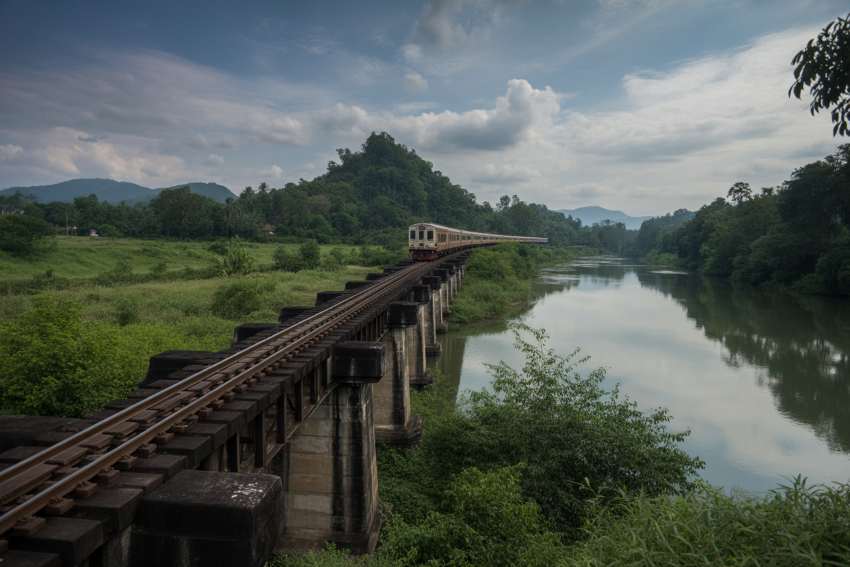
While the journey from Bangkok to Kanchanaburi typically lasts around 2.5 to 3 hours, those who choose to travel further along the route can continue their journey to Nam Tok Station, about 1.5 to 2 hours beyond Kanchanaburi. Along the way, the railway hugs the Khwae Yai River, and travellers can observe the remarkable scenery, including towering cliffs, dense forests, and remote farming communities that still rely on the railway for transportation.
The train ride itself is an experience in its own right. It is a simple, unembellished journey with third-class carriages that have open windows and ceiling fans. Despite the basic conditions, it is precisely this simplicity that adds to the authenticity and historical value of the experience. The train is a reminder that this very route was once used to transport people in forced labour, providing a stark contrast to the comfortable journey that modern passengers experience today.
The Bridge on the River Kwai: A Monument to the Past
One of the most iconic landmarks along the Death Railway is the Bridge on the River Kwai, which has become a symbol of the brutality and resilience of those who were forced to build it. Originally constructed by POWs, the bridge was strategically positioned to connect Thailand and Burma. The original structure was destroyed by Allied bombing during the war but was rebuilt afterward, and the bridge seen today stands as a memorial to the victims of the construction.
Travellers can walk across the bridge and experience the place where thousands of lives were lost during the railway’s construction. The sound of trains crossing the bridge is a constant reminder of the historical significance of this landmark. While the bridge may have become a symbol of war, it also stands as a testament to human endurance, survival, and the long-lasting impact of history.
Historical Sites: The JEATH War Museum and the Thailand-Burma Railway Centre
To fully appreciate the historical context of the Death Railway, visitors can explore the JEATH War Museum in Kanchanaburi. The museum, named after the nationalities of the prisoners who were forced to work on the railway (Japan, England, Australia, Thailand, Holland), offers a detailed exhibition of photographs, artefacts, and personal accounts from those who lived through the harsh conditions of the railway’s construction. The museum provides an emotional and educational experience, giving visitors insight into the challenges faced by the POWs and the civilian labourers.
Another key stop for history enthusiasts is the Thailand-Burma Railway Centre, which offers a more in-depth look into the construction of the railway and the lives of those who were involved. The centre is a research and education facility that provides visitors with access to an extensive collection of photographs, documents, and personal stories related to the railway’s history.
These museums are not just educational stops—they are places of remembrance, where visitors can reflect on the immense suffering and the lives lost during the construction of the railway. The collections preserved in these museums have been carefully curated to tell the story of the railway and its lasting impact on the region.
Hellfire Pass: A Journey to the Heart of the Railway’s History
Further along the railway route is Hellfire Pass, one of the most significant and sobering landmarks. Hellfire Pass was a crucial section of the railway, where workers had to cut through solid rock using hand tools. The conditions here were gruelling, and many workers died from exhaustion, malnutrition, and disease. The name “Hellfire Pass” comes from the eerie sight of workers toiling under the dim light of fire torches, resembling the flames of hell.
Today, visitors can walk along the Hellfire Pass Memorial Walking Trail, which follows the path of the original railway. The trail takes visitors through the same areas where prisoners worked, and several memorial plaques are placed along the route, offering a glimpse into the past and providing a quiet space for reflection. The Hellfire Pass Interpretive Centre is an excellent starting point for those wishing to explore this area, as it offers educational exhibits and audio guides to enhance the experience.
Nam Tok: Beyond the Tracks
For those who wish to venture further along the railway, the journey continues to Nam Tok, the last station on the line. Nam Tok is a quiet, scenic area that offers visitors a chance to explore the lush landscape of western Thailand. The region is home to Sai Yok Noi Waterfall National Park, a popular spot for nature lovers. The area is perfect for a leisurely walk through the forest, where visitors can enjoy the serene beauty of Thailand’s wilderness while reflecting on the journey that has brought them here.
Reflecting on the Past While Embracing the Present
Travelling on Thailand’s Death Railway is more than just a train ride; it is a journey through time. The railway is a place to reflect and remember, where history and nature collide. The experience allows visitors to pay tribute to the lives lost during construction while also enjoying the natural beauty that has grown around the tracks. For anyone interested in understanding the true human cost of war, the Death Railway provides a powerful, unforgettable experience that will last long after the journey is completed.
Visiting Thailand’s Death Railway allows you to connect with history in a deeply personal way, paying tribute to those who faced unimaginable hardship while witnessing the resilience of the human spirit. The railway may have been built under tragic circumstances, but it now stands as a symbol of perseverance, survival, and recollection.
The post Journey Through History: Thailand Death Railway Experience from Bangkok to Kanchanaburi, River Kwai Bridge, Museums and Scenic Routes appeared first on Travel and Tour World
Comments and Responses
Please login. Only community members can comment.