





















































Inside Supreme Court: How Trump heard birthright citizenship arguments
-
Immigration, Children, History & Art, Travel
-
-
3 mins
-
FOX News Media
-


President Donald Trump made history attending Supreme Court arguments on birthright citizenship, where justices voiced strong skepticism over his executive order.
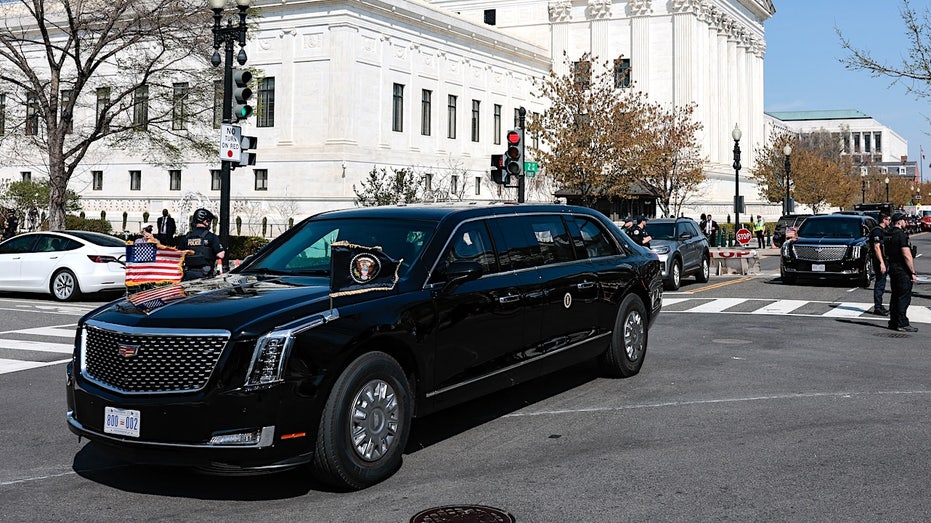
President Donald Trump made an extraordinary appearance Wednesday for Supreme Court arguments — an American presidential first — as his administration seeks to unwind birthright citizenship during two hours of dramatic oral arguments.
The Supreme Court voiced strong pushback against efforts to restrict who can be called an American, a politically divisive case over automatic citizenship for some children born in the United States to foreign nationals.
Trump, wearing a red tie and dark suit, entered the courtroom around nine minutes before the court gaveled into session and did not speak during the session, per court rules.
He closed his eyes for brief times during the session, but looked alert and focused throughout his time in the courtroom, staying for the entire oral presentation by his Solicitor General John Sauer, which lasted about 65 minutes.
THE SUPREME COURT IS GOING TO GIVE PRESIDENT TRUMP A MAJOR OPENING ON IMMIGRATION
Chief Justice John Roberts did not acknowledge the president's appearance.
Trump, Commerce Secretary Howard Lutnick and Attorney General Pam Bondi were in the front row of the public section and passed some notes to one another before Trump left the courtroom around 11:19 a.m. ET, seven minutes or so into the ACLU lawyer Cecilia Wang’s oral presentation. Trump left without commenting.
Trump later issued a Truth Social post saying, "We are the only Country in the World STUPID enough to allow 'Birthright' Citizenship!"
Trump heard a majority of justices taking turns expressing varying levels of skepticism at the administration's claim that the citizenship "privilege" has been historically abused and wrongly granted to those whose mother gave birth while in the country illegally or temporarily.
At issue is the executive order the president signed on his first day back in office to redefine birthright citizenship, part of a broader crackdown on immigration that has led to increased deportations and decreased admittance of refugees and asylum seekers at the border.
JOHN YOO: SUPREME COURT SHOWDOWN EXPOSES SHAKY CASE AGAINST BIRTHRIGHT CITIZENSHIP
In the first Supreme Court argument appearance by a sitting president, most of the bench appeared to agree with the post-Civil War's 14th Amendment — and subsequent congressional laws and Supreme Court precedent — all support the idea of making citizens of everyone born in the country, regardless of immigration status.
Roberts, appointed by Republican George W. Bush, questioned the government's legal position when it came to the 14th Amendment's limited exceptions to citizenship.
"The examples you give to support that strike me as very quirky," Roberts said. "You know, children of ambassadors, children of enemies during a hostile invasion, children on warships — and then you expand it to a whole class of illegal aliens who are here in the country.
"I'm not quite sure how you can get to that big group from such tiny, and sort of idiosyncratic, examples."
Liberal Justice Ketanji Brown Jackson wondered how determining citizenship would be applied in practical terms if immigrant mothers gave birth.
SUPREME COURT'S SHOWDOWN ON BIRTHRIGHT CITIZENSHIP DECISION COULD RESHAPE AMERICA
"How does this work?" Jackson asked U.S. Solicitor General D. John Sauer. "Are you suggesting that when a baby is born, people have to have documents present? Documents? Is this happening in the delivery room?
"How are we determining when or whether a newborn child is a citizen of the United States under your rule?"
Conservative Justices Clarence Thomas and Sameul Alito — both confirmed to the bench before Trump's first administration — sounded mostly likely to back Trump's position.
"How much of the debates around the 14th Amendment had anything to do with immigration?" Thomas asked early in the argument, saying it was designed to give newly freed slaves citizenship, and does not necessarily apply to children of newly arrived immigrants.
All lower federal courts that have heard various challenges to the birthright citizenship order have ruled against the administration.
An expected definitive high-court ruling against Trump by early summer could have sweeping national implications — and possibly slow momentum — for Trump's get-tough immigration agenda, which has become a defining feature of his second White House term.
The post Inside Supreme Court: How Trump heard birthright citizenship arguments appeared first on FOX News Media
























































Comments and Responses
Please login. Only community members can comment.