























































Hundreds of Travellers in Chaos at Denver International Airport, USA as Passengers Stranded with 385 Flights Delayed and 68 Canceled, Impacting Major US Hubs, Europe, and Beyond with Disruptions to New York, Los Angeles, London, Paris, and More
-
Blogs, Children, Travel
-
-
6 mins
-
Travel and Tour World
-
Hrittik Shaw
-


Denver International Airport reports 385 flight delays and 68 cancellations — real‑time FAA data reveals major travel disruptions affecting thousands of passengers.
Denver International Airport (DEN) has emerged as the epicentre of a major travel disruption today, with official Federal Aviation Administration (FAA) data showing 385 flight delays and 68 cancellations across the busiest airport in Colorado. Thousands of travellers from across the United States and beyond found their travel plans unsettled as flight schedules deviated far from planned departure and arrival times. According to real‑time status information published by the FAA’s Air Traffic Control System Command Center, general departure and arrival movements at DEN are experiencing significant hold and taxi delays, and flights across multiple airlines have been disrupted as operational pressure rises.
What the FAA Is Reporting Now
The FAA’s official real‑time airport status dashboard indicates that Denver International Airport is currently enduring an above‑average number of flight disruptions. These delays, defined by the FAA as movements taking off or landing 15 minutes or more beyond scheduled times, have grown throughout the day, adding strain to terminals and departure gates. Additionally, a notable tally of 68 cancellations has been logged, which means hundreds of passengers are now seeking alternative connections, refunds or rebookings through airline portals.
While FAA data does not provide passenger‑specific reports, the aggregated figures paint a clear picture of travel instability that is echoing through one of North America’s busiest aviation hubs.
Why the Delays and Cancellations Are Happening
Officials from the FAA — the U.S. government body responsible for overseeing civil aviation and managing the national airspace — have stressed that flight delays and cancellations can result from a wide range of operational factors. These include constraints in air traffic control sequencing, staffing limitations, aircraft rotations delayed from earlier sectors, and congestion in the en‑route airspace system. The FAA actively manages traffic flow and sequencing to prevent unsafe congestion in crowded skies, which can lead to controlled and staged delays at major airports like DEN.
At high‑volume airports such as Denver, the airport’s infrastructure and volume of flights require precise coordination among multiple federal agencies, airlines, and ground handling teams. When one link in the chain — such as an air traffic control sector — experiences a bottleneck, the effects can cascade across hundreds of flights.
Airport Officials and Airline Responses
Representatives at DEN have not yet issued an official public statement on the specific causes behind today’s pattern of delays and cancellations. However, past situations of similar scale have seen airport leaders coordinate directly with the FAA and airline partners to monitor conditions and ensure travellers are informed.
| Airline | Cancelled (Count) | Cancelled (%) | Delayed (Count) | Delayed (%) |
|---|---|---|---|---|
| SkyWest | 40 | 9% | 81 | 20% |
| United | 19 | 2% | 116 | 17% |
| Delta Air Lines | 4 | 8% | 10 | 20% |
| Frontier | 3 | 2% | 22 | 16% |
| Southwest | 2 | 0% | 131 | 28% |
| Envoy Air (AAL) | 0 | 0% | 3 | 60% |
| JetBlue | 0 | 0% | 2 | 25% |
| Jazz (ACA) | 0 | 0% | 4 | 11% |
| Key Lime Air | 0 | 0% | 2 | 50% |
| Contour Airlines | 0 | 0% | 12 | 25% |
| American Airlines | 0 | 0% | 1 | 7% |
| Alaska Airlines | 0 | 0% | 1 | 33% |
Airlines serving Denver — including major domestic carriers — typically communicate schedule changes directly to passengers via app alerts, SMS messages, and email notifications. Where cancellations occur, travellers are generally offered rebooking options or refunds, in accordance with U.S. Department of Transportation protections.
Impact on Passengers on the Ground
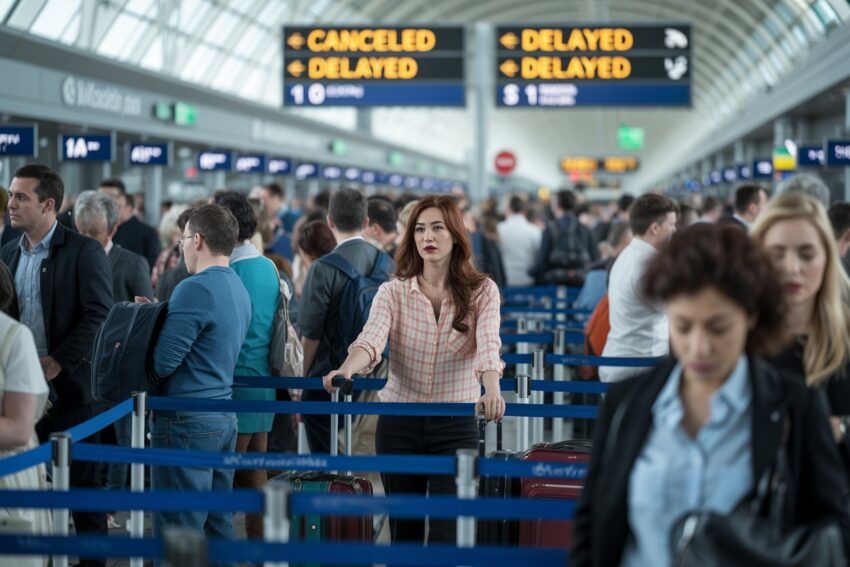
Travellers speaking with media outlets and sharing their experiences on social platforms describe long waits at departure gates, crowded terminals, and frantic rebooking attempts.
One frequent flyer, whose flight was delayed by several hours, described mixed emotions among passengers: “Some people are calm, others are scrambling to find new connections. It’s exhausting.” Others noted that airport staff and airline representatives are actively assisting with alternative travel arrangements.
| Airport (Origin) | Cancelled (Count) | Cancelled (%) | Delayed (Count) | Delayed (%) |
|---|---|---|---|---|
| Denver Intl (DEN) | 15 | 1% | 210 | 22% |
| Colorado Springs Muni (COS) | 3 | 23% | 1 | 7% |
| Hartsfield-Jackson Intl (ATL) | 3 | 21% | 4 | 28% |
| Rapid City Rgnl (RAP) | 1 | 37% | 0 | 0% |
| Aspen-Pitkin County (ASE) | 3 | 30% | 3 | 30% |
| Birmingham-Shuttlesworth Intl (BHM) | 2 | 66% | 0 | 0% |
| Salt Lake City Intl (SLC) | 2 | 9% | 3 | 13% |
| Gunnison Regional (GUC) | 2 | 50% | 0 | 0% |
| Springfield (SGF) | 0 | 0% | 1 | 50% |
| Charleston Intl/AFB (CHS) | 1 | 50% | 1 | 50% |
| Tampa Intl (TPA) | 1 | 8% | 4 | 33% |
| Tulsa Intl (TUL) | 1 | 16% | 1 | 25% |
| Hays Rgnl (HYS) | 1 | 100% | 0 | 0% |
| Northwest Arkansas Ntl (XNA) | 1 | 33% | 1 | 33% |
| Williston Basin International Airport (XWA) | 1 | 33% | 1 | 33% |
Delays of this magnitude often stretch beyond simple inconvenience: they disrupt business schedules, holiday plans, and connecting flights across the national network. For families travelling with children or pets, the uncertainty adds a layer of emotional and logistical strain that few had anticipated when setting off this morning.
Historic and Systemwide Context
Denver International Airport is not only Colorado’s primary aviation gateway but also a major connecting hub for flights across the U.S. Its role amplifies the impact of widespread schedule disruptions. Historically, flight delays and cancellations tend to spike when the national airspace system becomes congested or when systemic pressures — such as air traffic controller staffing shortfalls or unexpected operational challenges — build across regions.
The FAA operates more than 300 air traffic control facilities and manages traffic for thousands of daily flights. When disruptions occur, they are seldom isolated to a single airport. DEN’s current situation reflects broader trends within the aviation network, where delays can propagate from one region to another if coordinated traffic sequencing becomes constrained.
FAA Measures and Traveller Advice
Federal Aviation Administration guidelines emphasise that safety overrides scheduling considerations. Controlled delays — where air traffic is deliberately paced to maintain safety margins — are often preferable to a rushed or overloaded system. At times like these, the FAA’s priority is to maintain separation standards and orderly aircraft flow, even if it means short‑term inconvenience for travellers.
For passengers planning to depart from or arrive at Denver International Airport in the coming days, the FAA and airport officials recommend the following steps:
- Continuously check the official flight status through airline apps or the FAA’s status dashboard.
- Arrive at the airport with extra time to spare.
- Prepare for possible rebooking or refunds from airlines.
- Monitor airspace status and advisories issued by the FAA.
These precautions help passengers stay informed and reduce the risk of missing connections or enduring prolonged waits.
What This Means for Colorado and Beyond
The ripple effects from Denver’s flight disruptions extend beyond local travellers. Airport partners, ground services, connecting flights, and even cargo operations may feel the impact as aircraft and crew cycle through delayed schedules.
A significant portion of DEN’s traffic serves cross‑country and international sectors, meaning that today’s disturbances could influence flight operations in other U.S. cities and international gateways.
For tens of thousands of travellers flying through Denver International Airport, today’s delays and cancellations have transformed routine journeys into unpredictable ordeals. With 385 delays and 68 cancellations now confirmed in official FAA data, passengers find themselves adapting to evolving flight information and seeking clarity in a fluid travel environment. The FAA continues to manage national airspace safely, but the human cost — families waiting in terminals, business travellers rebooking flights, and holiday plans put on hold — reflects the very real impacts of aviation disruption in the United States.
The post Hundreds of Travellers in Chaos at Denver International Airport, USA as Passengers Stranded with 385 Flights Delayed and 68 Canceled, Impacting Major US Hubs, Europe, and Beyond with Disruptions to New York, Los Angeles, London, Paris, and More appeared first on Travel and Tour World














































Comments and Responses
Please login. Only community members can comment.