
Hikers Conquer Fifteen Kilometer Jordan Trail Stretch, Highlighting Natural Beauty and Boosting Sustainability and Eco-Tourism Growth in Petra
-
Blogs, Nature & Wildlife, History & Art, Travel
-
-
4 mins
-
Travel and Tour World
-
Gishan Das
-

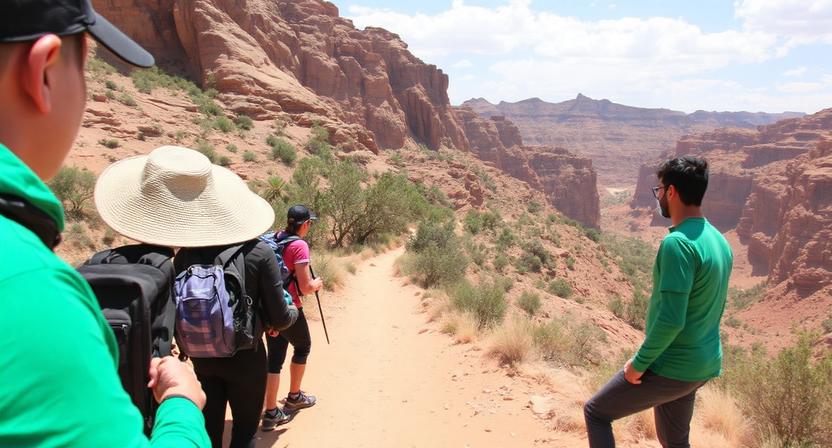
Hikers explore a 15.3-kilometer section of the Jordan Trail, showcasing Petra’s natural beauty and supporting eco-tourism and sustainable tourism initiatives in the region.
This week, eco-tourism enthusiasts took on a 15.3-kilometer segment of the Jordan Trail, hiking through the rugged valleys of Wadi Quseib, the Colored Canyon, and Wadi Aheimer in eastern Wadi Araba, southwest of Petra. Organized by the Jordan Trail Association from November 10 to 19, this segment offers participants a challenging yet rewarding route through rocky valleys and sandy slopes, showcasing the region’s natural beauty and the growing potential of adventure tourism in Jordan.
It takes about five to six hours to complete and thus gives a unique opportunity to experience the diversity of landscapes in Jordan, all while raising awareness for sustainable tourism. The initiative is consistent with wider moves to develop the country’s tourism industry in a manner that will provide maximum benefits to local people and be kind to the environment so that future generations may continue to enjoy the beautiful landscapes.
Eco-Tourism and Local Engagement: A Key Tourism Strategy for Petra and Surrounding Areas
The hike brought together eco-tourism enthusiasts from across the world, as well as local officials and representatives from Petra’s tourism authorities. Dr. Fares Breizat, Chief Commissioner of the Petra Development and Tourism Region Authority, was among those who participated, signaling the region’s commitment to promoting eco-tourism as part of a broader, sustainable development strategy for Jordan.
The growing popularity of eco-tourism is a crucial element of Jordan’s tourism industry, allowing the country to develop its tourism offerings while minimizing the environmental impact. The trail’s promotion of sustainable tourism is especially important in a country like Jordan, where its rich natural landscapes, cultural heritage, and historic sites like Petra are at the heart of its tourism identity.
The Jordan Trail: Connecting Cultural Heritage with Sustainable Tourism
Awakan explained that initiatives like this hike form part of a broader effort to link Petra’s cultural heritage with its surrounding natural landscapes, promoting both the preservation of heritage and the empowerment of local communities. Through community involvement and sustainable tourism practices, Jordan aims to ensure that the economic benefits of tourism are spread across local communities and that the region’s natural and cultural treasures are preserved for future generations.
This focus on sustainable tourism allows visitors to engage deeply with the local culture, history, and environment while simultaneously ensuring that the communities benefit from the tourism industry. For example, local guides, traditional chefs, and craftspeople are integral to the tourism experience, creating economic opportunities for the people of Petra and surrounding areas.
New Trails: Diversifying Jordan’s Tourism Offerings
In addition to the Jordan Trail segment, the Petra Development and Tourism Region Authority has recently launched several new trails, including the Khurma Trail, the Dark Valley Trail between Dlagha and Masoudah, and the Al-Madras to Arqoub Jumaian trail. These new routes are part of a broader effort to diversify Jordan’s tourism offerings and create equitable economic benefits across the local communities.
These new tourism routes aim to not only draw more visitors to the region but also to distribute tourism traffic more evenly, thereby reducing over-tourism in the most visited areas like Petra. By developing new trails, the Petra Authority can offer a more balanced tourism experience that includes hidden gems and local communities that traditionally do not benefit from mainstream tourism.
Ali Barqawi, Director General of the Jordan Trail Association, emphasized that these new trails offer safe, immersive experiences that highlight the region’s natural and archaeological treasures, allowing tourists to explore Petra’s surrounding areas while contributing to the growth of eco-tourism.
The Future of Sustainable Tourism in Jordan: Boosting Local Economies and Cultural Heritage
The launch of these new trails, along with the continued promotion of the Jordan Trail, underscores the importance of sustainable tourism in Jordan’s broader economic strategy. By integrating community-based tourism with the protection of cultural heritage, the Jordan Trail is becoming a cornerstone of the country’s tourism industry. The trail offers not only a unique way for tourists to experience Jordan’s landscapes but also a viable economic model that ensures tourism benefits are shared by all involved, particularly local communities.
As sustainable tourism grows, it will create more job opportunities for locals, from tour guides to artisans selling handmade crafts, while helping preserve Jordan’s stunning landscapes. The continued development of eco-friendly hiking routes like the Jordan Trail will also help reduce the environmental footprint of tourism by encouraging visitors to engage with nature in a low-impact way.
Tourism as a Key Sector for Economic Growth
The Jordan Trail is an integral part of the country’s vision for economic diversification, moving away from oil dependency and focusing on sectors like tourism that can generate sustainable, long-term economic growth. Tourism authorities in Jordan are working to ensure that this sector provides significant economic benefits to rural communities, while preserving cultural and environmental assets.
Awakan emphasized, “President Bola Tinubu is so excited about this sector and is looking at it as a viable alternative to oil.” This emphasis on tourism as a key economic driver highlights its growing importance in the country’s development plan, particularly through eco-tourism and cultural heritage tourism.
The Future of Eco-Tourism: Expanding Jordan’s Role as a Global Destination
The ongoing development of the Jordan Trail is just the beginning of a larger push for Jordan to position itself as a leading eco-tourism destination. The growth of eco-adventure tourism, along with the country’s rich cultural heritage, offers a strong foundation for sustainable tourism growth in the years to come. As the demand for experiential and adventure-based travel rises, Jordan’s offerings will continue to attract tourists who want to explore not just historical landmarks but also natural wonders in an eco-friendly manner.
In the future, sustainable tourism initiatives like the Jordan Trail will help transform the tourism industry into a force that supports both economic growth and cultural preservation. By embracing eco-tourism principles, Jordan is set to offer travelers more than just a vacation; it offers a chance to experience the country’s beauty in a way that supports both the environment and its communities.
The Role of Community-Based Tourism in Jordan’s Tourism Future
The tourism sector will diversify and continue to realize full sustainable potential as Jordan takes center stage in eco-tourism and community-based tourism. The Jordan Trail, among other newly developed trails, forms a foundation for an experience that balances economic opportunity with cultural and environmental preservation. As Jordan promotes sustainable tourism, it will no doubt continue to rise as a key global player in the eco-tourism market, shaping the future of tourism for the benefit of both travelers and the communities being visited.
The post Hikers Conquer Fifteen Kilometer Jordan Trail Stretch, Highlighting Natural Beauty and Boosting Sustainability and Eco-Tourism Growth in Petra appeared first on Travel and Tour World
Comments and Responses
Please login. Only community members can comment.