
















































Egypt’s High-Speed Rail Project: Connecting the Red Sea to the Mediterranean
-
History & Art, Travel
-
-
3 mins
-
Travel and Tour World
-
Aritrika Ghosh
-

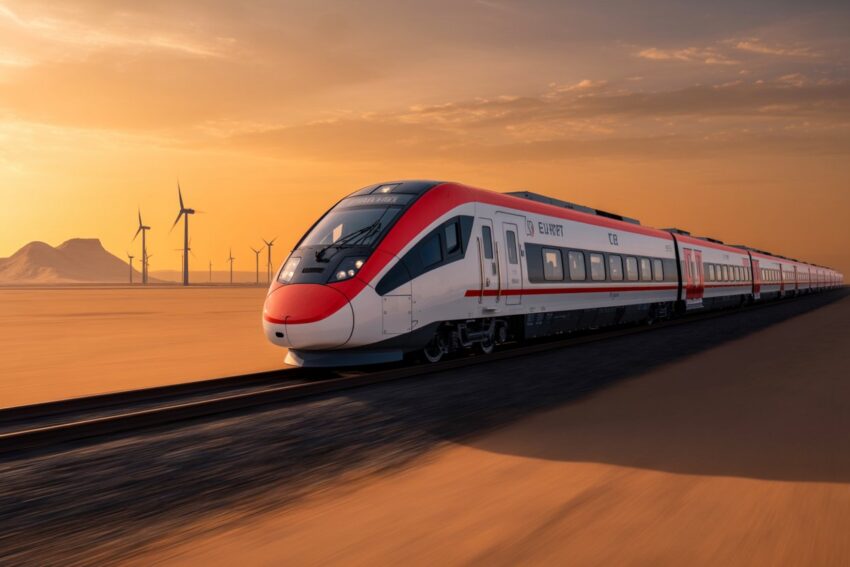
Egypt is transforming its transport infrastructure with a massive high-speed rail project linking the Red Sea and the Mediterranean.
For centuries, Egypt’s Suez Canal has been the world’s primary artery for trade, a watery thread connecting the East and the West. But in late 2025, a new landmark project is capturing the world’s imagination—not on water, but on steel. Egypt is officially moving forward with a massive high-speed railway project designed to connect the Red Sea to the Mediterranean, effectively creating a “Suez Canal on tracks.”
This isn’t just a win for logistics and cargo; it is a transformative moment for human connection, tourism, and the daily lives of millions of Egyptians. As the country looks toward a modernized future, this “Green Line” represents a bold leap into 21st-century mobility.
The Vision: From Sea to Shining Sea
The centrepiece of this infrastructure overhaul is a high-speed electric rail link that will span approximately 660 kilometres (approximately 410 miles) in its initial phase. Starting at the port city of Ain Sokhna on the Red Sea, the line will cut across the desert, pass through the New Administrative Capital, and terminate at the historic Mediterranean ports of Alexandria and Marsa Matrouh.
By linking these two iconic bodies of water, Egypt is doing more than just shortening travel times; it is unifying its economic hubs. What once took a day of driving through heavy traffic and desert heat will soon be a smooth, three-hour journey on some of the most advanced trains in the world.
More Than Just Speed: The “Green” Revolution
The project, being developed in partnership with international giants like Siemens Mobility, is more than a feat of engineering—it’s a commitment to sustainability.
- Fully Electric: The trains will run entirely on electricity, significantly reducing the carbon footprint compared to traditional diesel locomotives or heavy truck traffic on Egypt’s highways.
- Economic Catalyst: Beyond the 15,000 direct jobs created during construction, the railway is expected to spark a localized economic boom. New stations are being built in areas that were previously difficult to access, inviting investment in housing, retail, and regional tourism.
- A New Suez Canal: While the maritime canal remains king for massive container ships, the “land bridge” provided by the high-speed rail offers a faster alternative for time-sensitive cargo, ensuring Egypt remains the undisputed gateway between continents.
Humanizing the Journey: The Traveler’s Perspective
For the average resident or tourist, the implications are profound. Imagine waking up in a resort in Ain Sokhna on the Red Sea, enjoying a morning swim, and then boarding a sleek, air-conditioned train. Within a few hours, you are walking the corniche of Alexandria, taking in the Mediterranean breeze and Greco-Roman history.
“This is about reclaiming our time,” says Ahmed, a commuter who currently navigates the Cairo-Alexandria corridor. “Right now, travel feels like a chore. With the high-speed rail, the journey becomes part of the experience. It makes the country feel smaller and more connected.”
This sentiment is echoed by the tourism sector. With the new rail link, travelers are no longer forced to choose between the Red Sea’s diving spots and the Mediterranean’s cultural heritage. They can do both in a single trip, without the exhaustion of long-haul bus rides.
Technical Prowess: Siemens and the “Velaro”
The technology behind the project is world-class. Egypt has opted for Siemens’ Velaro high-speed trains, which are capable of reaching speeds up to 250 km/h (155 mph).
- Reliability: These trains are designed to handle the unique challenges of the Egyptian climate, including sand and high temperatures.
- Capacity: The network is designed to transport up to 30 million people a year once all phases are complete.
- Safety: State-of-the-art signaling systems (ETCS Level 2) ensure that the high-speed traffic remains safe and efficient, even as the frequency of trains increases.
Challenges and the Road Ahead
Of course, a project of this magnitude ($4.45 billion for the first phase alone) is not without its hurdles. Integrating a high-speed network into a country with a long-standing, traditional rail system requires meticulous planning. There is also the challenge of the “last mile”—ensuring that when passengers step off these futuristic trains, they have easy access to local transport like the Cairo Metro or regional buses.
However, the Egyptian government has shown a relentless drive to complete the project on schedule. The “Suez Canal on rails” is a point of national pride, viewed as a cornerstone of the “Egypt Vision 2030” plan to modernize the nation’s economy and infrastructure.
The Verdict: A Nation on the Move
As the tracks are laid and the stations take shape, the Red Sea-Mediterranean rail link is a symbol of a nation that refuses to stand still. It honors Egypt’s history as a global crossroads while embracing a future that is faster, greener, and more connected.
For the world, it is a reminder that Egypt is still the bridge between worlds. For the people of Egypt, it is a promise of a smoother, brighter path forward.
The post Egypt’s High-Speed Rail Project: Connecting the Red Sea to the Mediterranean appeared first on Travel and Tour World























































Comments and Responses
Please login. Only community members can comment.