























































Basel, Copenhagen and Malmö: New Switzerland–Scandinavia Sleeper Set to Reshape Tourism Flows
-
Blogs, Culinary, History & Art, Travel
-
-
6 mins
-
Travel and Tour World
-
Akash Bagchi
-


Overnight EuroNight from Basel to Copenhagen and Malmö, running thrice weekly from spring two thousand twenty-six, promises cleaner, seamless tourism links across Europe.
Switzerland’s Basel, Denmark’s Copenhagen, and Sweden’s Malmö headline a new cross-border sleeper route that is poised to change how tourists plan multi-country European trips. Swiss Federal Railways has confirmed a EuroNight service from Basel to Copenhagen and onward to Malmö, scheduled to begin in spring two thousand twenty-six with thrice-weekly departures, opening a direct overnight rail bridge between the Alps and Scandinavia.
What is launching—and why it matters for travellers
Swiss Federal Railways has set out plans for a EuroNight sleeper linking Basel to Copenhagen and on to Malmö. The service is scheduled to start in spring two thousand twenty-six and operate three times a week in each direction. This direct, overnight connection re-establishes an alpine-to-Nordic rail corridor and puts city-breaks, coastlines, and culture within a single night’s journey for leisure markets.
Backed by Switzerland’s policy push to strengthen international rail, the Federal Office of Transport has earmarked public support to sustain cross-border services, including new night trains, through to two thousand thirty—explicitly to reduce aviation emissions and to make low-carbon, long-distance travel more viable. In two thousand twenty-five, ten million Swiss francs were made available for such services, with the federal government signalling an intention to maintain subsidies to the end of the decade.
Key service takeaways for tourists
- Direct overnight travel: Basel to Copenhagen and onward to Malmö in one seamless night, three times weekly, from spring two thousand twenty-six.
- Policy-backed reliability: Federal commitment to supporting cross-border night services through to two thousand thirty improves the likelihood of long-term continuity.
Tourism angle: who benefits—and how
A new spine for multi-country itineraries
For travellers, the route invites “sleep-and-arrive” planning: enjoy an evening in Basel’s old town, board after dinner, then wake up ready to stroll Copenhagen’s harbours or cross the Öresund to Malmö. The same logic works in reverse for Scandinavia-based visitors who want Alpine cities, Rhine riverfronts, and Swiss cultural festivals without daytime transit. This hotel-on-rails model turns travel time into rest time, unlocking weekenders, shoulder-season escapes, and longer summer circuits that combine Switzerland, northern Germany, Denmark, and southern Sweden in one loop.
Destination synergies across borders
- Switzerland (Basel region): City-break demand should rise as Scandinavian visitors gain a time-efficient rail option. Museums, design, gastronomy, and nearby wine routes can be packaged with onward Swiss rail to Lucerne, Interlaken, or Zurich.
- Denmark (Greater Copenhagen): As an overnight arrival point, Copenhagen becomes a natural first-day base for canal districts, contemporary cuisine, and castle day-trips, with quick onward links to Zealand’s coastal towns.
- Sweden (Skåne/Malmö): Malmö’s parks, waterfront, and cultural venues stand to capture both short stays and springboard trips into wider Skåne—Lund, Ystad, the Österlen coast—broadening tourist dispersal beyond capital-city magnets.
Strong pull for rail-curious long-haul tourists
International visitors who land in Zurich, Gene, or Milan often struggle to add Scandinavia without flights. The sleeper resolves this friction. A single overnight hop extends itineraries northward while keeping carbon in check—a selling point for premium tour operators, youth interrail markets, and family travellers looking for secure, cabin-based journeys.
Sustainability and policy: why governments are leaning into night trains
Switzerland’s Federal Office of Transport positions cross-border night trains as a practical lever to cut flight-related emissions while preserving connectivity for citizens and visitors. The dedicated two thousand twenty-five funding line—ten million Swiss francs—with an intent to sustain subsidies until two thousand thirty, signals policy continuity, which is crucial for route development, rolling-stock planning, and long-term marketing. In plain terms, public support underwrites early-years viability, allowing operators to mature demand instead of chasing short-term load factors.
For the tourism economy, that stability translates into bookable confidence: destinations, hotels, and DMO partners can safely build seasonal packages around predictable departure days, while event organisers—from design weeks to food festivals—can time promotions to overnight arrivals.
Economic impact: from beds on rails to beds in cities
Hotels and STR (short-term rentals)
- Compression relief and geographic spread: Overnight rail tends to deliver travellers early, encouraging at least two-night stays in the first city and improving weekday occupancy beyond weekends. It also nudges visitors to secondary districts with good transit lines, spreading spending more evenly.
- New product tiers: Properties near Basel SBB and in Greater Copenhagen/Malmö can craft rail-inclusive packages—late check-outs aligned to evening departures, grab-and-go breakfasts for morning arrivals, and luggage storage linked to local transit passes.
Tours, attractions, and MICE
- Operators gain a reliable, time-efficient add-on between central Europe and Scandinavia. Multi-day tours can promise no domestic flying, appealing to corporate groups with sustainability policies.
- Attractions benefit from early-day footfall: travellers stepping off a night train are primed for morning museum entries, harbour cruises, or guided walks.
- MICE planners can recruit delegates from both regions with lower cumulative travel fatigue, enlarging the feasible catchment for events in Basel or Copenhagen.
Accessibility, convenience, and the visitor experience
Because sleeper trains combine transport and accommodation, they create frictionless days at each end of the journey. Families avoid airport transfers at dawn; older travellers gain level-boarding stations and staffed hubs; students on rail passes can stretch budgets without sacrificing distance. As the operator has publicly set out the thrice-weekly pattern from spring two thousand twenty-six, travellers can lock in fixed-day itineraries months ahead and chain local rail or ferry segments around the overnight backbone.
Marketing playbook for DMOs and travel brands
Position the journey as an experience
- Storyline: “Sleep in Switzerland, wake in Scandinavia.” Use this to anchor content campaigns in source markets.
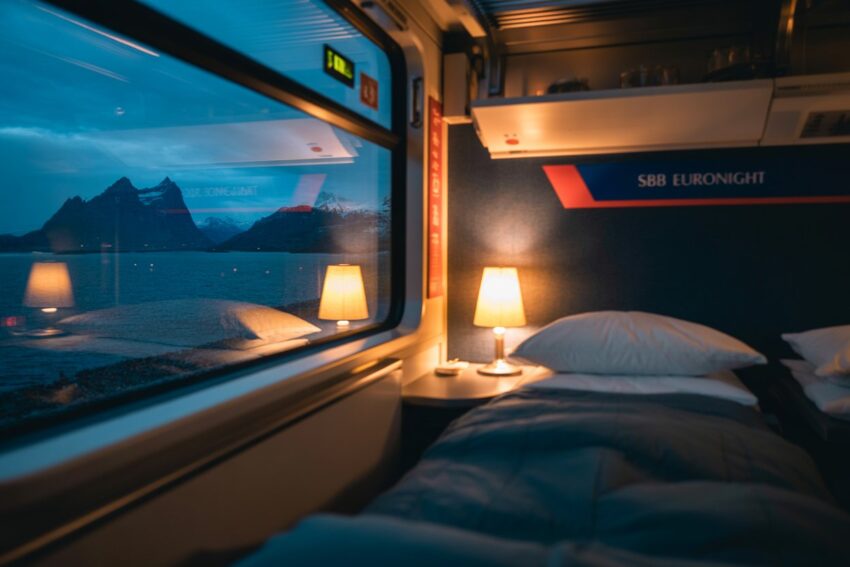
- Imagery: Cabins at dusk, café cars at sunrise, and first-morning cityscapes—evoking slow travel without sacrificing time.
Build rail-first bundles
- Basel-in/Copenhagen-out or Malmö-in/Basel-out packages with two nights at each end and an optional Germany stopover by day train.
- Family value: cabin fares plus city transit cards; pre-booked museum slots for late-morning arrivals.
Lean on policy credibility.y
Public backing through to two thousand thirty is a trust signal. Feature that policy continuity in B2B sales decks and reassure trade partners that the corridor is not a seasonal experiment.
Practical planning for tourists
- Choose the right night: With three departures per week, plan city calendars—markets, concerts, gallery nights—around those fixed days to maximise experiences on arrival.
- Think cabin over seat: For a journey spanning the night, a couchette or sleeper will likely improve rest, particularly for families and early-arrival sightseeing.
- Connect with local passes: In Copenhagen, city and airport links integrate smoothly with local public transport; Malmö connections across Skåne are frequent. (General planning advice; confirm timings locally.)
- Pack for station flow: Keep essentials in a day-bag for easy station-to-hotel transfers on arrival morning.
Risks and what to watch
- Infrastructure works: Cross-border corridors are busy and occasionally subject to maintenance. Build minor slack into onward timings and check operator notices close to travel.
- Seasonality: Summer peaks may tighten cabin availability; shoulder seasons can offer quieter trains and better hotel rates.
- Policy shifts: While Swiss support is signposted through two thousand thirty, always check official updates before publishing fixed-date group offers.
The broader visitor economy picture
Carbon-aware travel choices become mainstream
Government-supported sleepers make it simpler for travellers to substitute flights on medium-haul intra-European legs. As awareness grows, rail-first itineraries can expand average length of stay, raise per-trip spend across multiple regions, and reduce same-day transport stress.
Regional dispersal in Scandinavia and the Alps
By anchoring the link at Malmö as well as Copenhagen, the service naturally encourages day-trips and overnights beyond capital cores. In Switzerland, Basel’s role as a cultural gateway spreads benefits into adjacent regions through regular daytime services.
What officials have published so far?
- The Federal Office of Transport confirms targeted funding for cross-border and night train services, with ten million Swiss francs in two thousand twenty-five and an intent to maintain subsidies to two thousand thirty.
- Swiss Federal Railways confirms a Basel–Copenhagen–Malmö EuroNight beginning spring two thousand twenty-six, operating three times weekly.
These official signals—policy and operator—provide enough clarity for tourism boards, hotels, and tour companies to begin building programmes around overnight rail between Switzerland and Scandinavia.
A sleeper that lets tourism wake up earlier
From Basel’s museums to Copenhagen’s waterfront and Malmö’s parks, the overnight EuroNight corridor compresses distance while expanding choice. Public backing through the end of the decade supports stability; the thrice-weekly pattern offers planning certainty; and the sleep-to-arrive rhythm turns travel time into holiday time. For travellers, this is a gentler way to cross borders. For destinations, it is a chance to welcome visitors earlier in the day, keep them longer, and share the benefits more widely across regions.
The post Basel, Copenhagen and Malmö: New Switzerland–Scandinavia Sleeper Set to Reshape Tourism Flows appeared first on Travel and Tour World














































Comments and Responses
Please login. Only community members can comment.