
















































Italy Is Now Set to Unlock More Adventure Travel as 25 Hidden Experiences Offer Unique Journeys
-
Blogs, Immigration, Nature & Wildlife, Shopping, Travel
-
-
8 mins
-
Travel and Tour World
-
Baydahi Roy
-


Adventure travel across rural Italy can spread income while requiring careful safety planning.
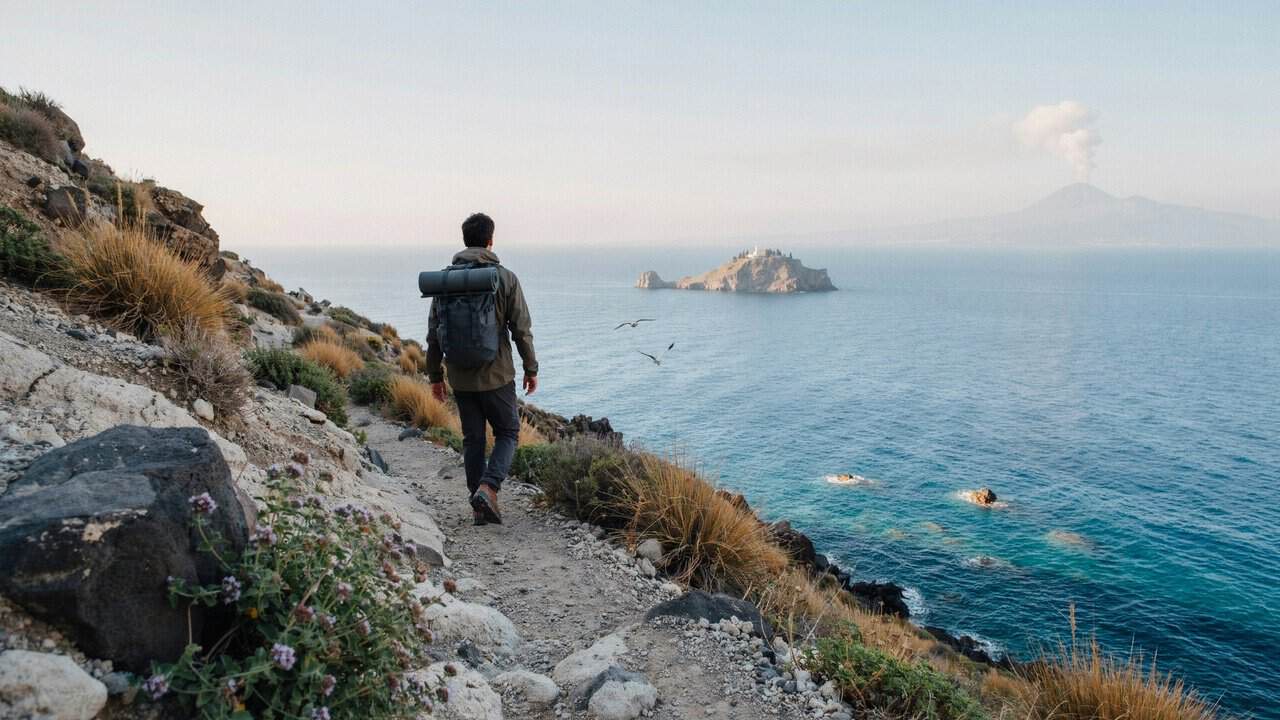
An Italy destination guide from September 2026 shows 25 Adventure Travel experiences beyond Rome, Venice, and Florence. Government tourism, statistical, border and civil protection data all show these locations are established. The guide was not created by government. In the spirit of travel, the list probably helps travelers plan cultural and adventurous travel focusing on Italy’s mountains and seas, especially the islands. The list’s particular importance is traveler’s practical knowledge. Volcanoes Etna and Stromboli both have active yellow alerts as of the publication. Travel to more fragile places may change, and non-EU travelers without a visa now must complete the digital border registration portion of the Entry/Exit System as it is now fully operational.
Verified evidence shows destination inspiration rather than a new policy
The central development is the publication of an inspirational destination list. It does not announce a national tourism programme, transport project, funding decision or immigration change. Its recommendations include Matera’s cave churches, Lake Resia, Tre Cime di Lavaredo, Craco, Grotta della Poesia, Civita di Bagnoregio, Stromboli, Le Castella, Lake Braies, Ponza, Procida, Basilicata’s zipline, the Via Francigena, Arcomagno, Trapani’s salt pans and Etna’s vineyards. Tempio del Valadier, the Path of the Gods, Portofino’s underwater Christ, Vulcano, Lake Iseo, Monte Isola, Rabbit Beach, Madonna della Corona, Saturnia and Cala Goloritzé complete the collection.
The following percentages represent an editorial assessment, not official tourism statistics. They measure the importance of each verified subject within this report. The largest share concerns destination tourism because the story primarily presents places to visit. Safety receives a substantial allocation because active volcanic conditions can alter excursions and flights. Entry requirements provide essential context, but no new visa or passport policy resulted from the destination list.
| News Component | Share of Story | Officially Verified Finding | Relevance to Travellers | Official Source |
|---|---|---|---|---|
| Destination tourism | 45% | The highlighted locations support cultural, mountain, coastal, island and nature-based trips | Italy Adventure Travel Experiences can form longer multi-region itineraries | Italian national and regional tourism authorities |
| Tourism data | 20% | Italy recorded 139.6 million arrivals and 466.2 million overnight stays in 2024 | Strong demand increases the importance of visitor distribution | Italian national statistical office |
| Volcanic safety | 20% | Etna and Stromboli are at yellow alert; Vulcano is at green | Excursion access and transport conditions may change | Italian Civil Protection Department |
| Border procedures | 10% | The Entry/Exit System has been fully operational since 10 April 2026 | Relevant non-EU short-stay visitors face digital registration | European Union migration authorities |
| Airport operations | 5% | Catania’s affected airspace sectors reopened after Etna’s aviation status eased on 15 September | Passengers must continue checking flight status | Catania Airport authority |
| Total | 100% | Editorial allocation based on verified evidence | No new national travel rule was announced | Official sources |
The evidence establishes that Italy offers a geographically broad collection of visitor experiences and that some require additional safety planning. It does not establish that the new coverage has already increased bookings, expenditure or arrivals in the featured destinations. Travellers should understand the list as itinerary inspiration supported by official destination information, not as proof of a new government programme or a guaranteed change in local tourism demand.
Current situation and chronology of the verified developments
The destination feature appeared on 16 September 2026. By that date, official authorities were already monitoring active volcanic conditions in Sicily. Etna and Stromboli were listed at yellow alert, indicating potential volcanic imbalance. Vulcano remained at green alert, although official guidance stated that gas emissions, small earthquakes and unexpected hydrothermal events could still occur. Green therefore does not mean that every hazard has disappeared. Local authorities can restrict routes or introduce safety measures when monitoring data or environmental conditions require action.
Etna’s activity had also affected aviation shortly before publication. Volcanic ash led to restrictions around Catania on 15 September. At 19:00, the airport reported that the aviation warning had moved from red to orange and affected airspace sectors had reopened. This restored operations but did not guarantee that every scheduled flight would operate normally. Ash direction, wind and renewed volcanic activity can change airport conditions quickly. The correct position is therefore that access improved, while continued monitoring remained necessary.
The border context developed separately. The European Entry/Exit System began a progressive introduction in October 2025 and became fully operational across Schengen external borders on 10 April 2026. It replaced routine passport stamping for relevant non-EU short-stay travellers with digital entry and exit records. Travel-document information, facial images and fingerprints are recorded. The system had processed more than 52 million entries and exits when full operation was announced, alongside more than 27,000 entry refusals.
No part of this chronology connects the destination feature to a visa reform. Non-EU travellers still need a passport generally issued within the previous ten years and valid for at least three months after their intended departure from the European Union. A Schengen visa may be required depending on nationality. Short visits are generally limited to 90 days within any 180-day period. ETIAS remains separate from the Entry/Exit System and was not operating on 16 September 2026.
Why Adventure Travel matters for Italy’s visitor economy
Official statistics show why the geographical spread of tourism matters. Italy recorded 139.6 million arrivals and 466.2 million overnight stays in registered accommodation during 2024. Arrivals rose by 4.5% from 2023, while overnight stays increased by 4.2%. International arrivals grew by 8.9%, and foreign overnight stays rose by 8.4%. International visitors generated 54.5% of all recorded nights, demonstrating Italy’s continued importance within the global tourism market.
Demand remained concentrated in leading municipalities. Rome recorded more than 42.7 million overnight stays during 2024. Milan registered approximately 14.1 million and Venice 13.3 million, while Florence received around 9.2 million. Italy’s 50 most visited municipalities accounted for 42.3% of national overnight stays and 50.8% of foreign nights. These figures do not prove that promoting smaller destinations will automatically reduce pressure in major cities, but they show why wider itinerary planning has become relevant.
The tourism-intensity measure increased from 7.6 to 7.9 overnight stays per resident. Tourism density also rose from 1,480.5 to 1,543.2 overnight stays per square kilometre. Mountain, lake, coastal and island municipalities can experience particularly heavy pressure because large visitor volumes are concentrated within small areas. Wider promotion can support local economies, but unmanaged growth can also create congestion, waste, erosion and pressure on transport, water supplies and public services.
For Adventure Travel visitors, the destination collection offers several distinct markets. Tre Cime, Lake Braies and the Path of the Gods support walking holidays. Ponza and Portofino provide diving opportunities. Matera, Craco and Civita di Bagnoregio strengthen cultural itineraries. Procida, Stromboli and Vulcano add island journeys, while Lake Iseo and Monte Isola support cycling, walking and ferry travel. The potential industry benefit covers accommodation, guides, transport providers and activity businesses, but no official data yet measures the list’s direct economic effect.
How Italy Adventure Travel Experiences fit national tourism patterns
The immediate trigger for the story was destination coverage rather than an official decision. However, its focus reflects verified tourism patterns. Italy’s north-east recorded 181.1 million overnight stays in 2024, representing 38.8% of the national total. Central Italy received 115.2 million nights, while the north-west recorded 79.4 million. Southern Italy generated 57.6 million nights, and Sicily and Sardinia together recorded 33 million. The islands achieved the strongest geographical growth, increasing by 7.5% from 2023.
These figures provide background context rather than proof of causation. The official statistics do not say that traveller interest shifted because of any single destination guide. They show that demand is growing across much of Italy and that southern and island regions have recorded notable gains. The strongest verified explanation for the growing relevance of alternative destinations is Italy’s record tourism volume. The main supporting condition is increasing international demand, while the effect of the newly published list remains unmeasured.
Official tourism information confirms that Lake Iseo supports cycling, walking, fishing and boat-based activities. Monte Isola can be reached by ferry and explored on foot or by bicycle. Sicily’s tourism authorities promote Etna, the Aeolian Islands and Trapani’s coastal and natural landscapes. Official heritage information also supports cultural visits to Matera and long-distance walking along the Via Francigena. These references confirm the destinations’ tourism value without guaranteeing permanent access or fixed operating conditions.
The wider European context also supports demand for rural, cultural and nature-based trips, but comparisons require care. Countries record accommodation, day visits and short-term rentals differently. Italy’s 466.2 million registered overnight stays cannot therefore be compared casually with every foreign tourism figure. What can be confirmed is that Italy ranked second in the European Union for registered accommodation nights in 2024, behind Spain. Italy accounted for 15.4% of the EU total recorded through the comparable statistical system.
Safety, traveller impact and practical action
The most immediate confirmed effect concerns travellers visiting volcanic areas or using Catania Airport. Etna can produce lava, ash and sudden local hazards. Ash can affect roads, visibility and aviation. High-altitude conditions also bring lower temperatures, strong winds and rapid weather changes. Official guidance recommends suitable footwear, protective clothing, water and current information. Visitors should use authorised guides unless they possess detailed and continuously updated knowledge of the terrain and volcanic hazards.
Stromboli’s normal activity includes regular explosions involving gas, ash and incandescent material. More powerful explosions, landslides and related sea waves remain recognised hazards. Vulcano’s green status indicates equilibrium, but toxic gases can accumulate in low areas, enclosed spaces and locations near emission points. Authorities have stressed that volcanic risk never disappears completely. Local restrictions, guided-access rules and permitted routes can change independently of the national alert colour.
Travellers planning the featured destinations should take these steps:
- Check official volcanic alerts before visiting Etna, Stromboli or Vulcano.
- Confirm the latest airport and flight information before travelling through Catania.
- Use authorised guides where local rules or volcanic conditions require them.
- Verify ferry services for Procida, Ponza, Monte Isola and the Aeolian Islands.
- Check seasonal access, reservations and local limits for beaches, caves and trails.
- Review insurance terms for outdoor activities, delays and transport disruption.
- Carry valid travel documents and confirm visa requirements through EU authorities.
- Allow time for Entry/Exit System registration at an external Schengen border.
- Avoid unofficial ETIAS websites because the system is not operating.
- Keep flexible arrangements for activities affected by weather or local orders.
Existing trips do not require automatic cancellation. Official sources have not issued a general warning against travel to Italy or Sicily. Travellers should instead monitor the specific attraction, route, ferry or airport connected to their itinerary. The practical risk is local and changeable rather than nationwide. Immediate changes are necessary only when an authority closes an area, changes access rules or confirms a transport disruption.
Future direction and what travellers should watch
No official authority has announced a next phase connected directly to the destination feature. Future tourism effects will become clear only through verified visitor, accommodation and spending data. The future of Italy Adventure Travel Experiences will depend on transport access, accommodation capacity, safety controls and the ability of small destinations to manage additional demand without damaging cultural or environmental assets. Visitor limits, reservations or revised route controls may be introduced locally, but no nationwide measure has been confirmed.
Volcanic monitoring will continue, and alert levels can change without following a gradual sequence. Catania Airport may adjust operations whenever ash affects controlled airspace. EU authorities are also expected to provide separate instructions when ETIAS becomes operational. Until an official start is confirmed, eligible travellers do not need to apply. The most important next step is continued observation of official updates rather than assumptions about future access, tourism growth or regulatory change.
Conclusion
Distributing tourism beyond the major cities of Italy supports local communities and creates more opportunities for visitors to engage on a deeper level during their travels. New evidence shows a greater need for tourism in Italy due to travel demand and volcanic activity, as well as the increasing impacts on the land from more people. However, these factors do not prove that tourism has shifted to new destinations. Seasonality, as well as how quickly the weather changes in the mountains, accessibility and ferry availability, as well as local policies and restrictions, should be considered. Travelers should know that their entry is the same, however, there is now a digital border control system to be used by non-EU citizens on short term trips. The best way to experience responsible adventure travel, in Italy, is to consider the official updates because nothing else will provide accurate information, control access, ensure safety, or pursue conservation.
The post Italy Is Now Set to Unlock More Adventure Travel as 25 Hidden Experiences Offer Unique Journeys appeared first on Travel and Tour World














































Comments and Responses
Please login. Only community members can comment.