


























































Alaska landslide unleashed one of the largest tsunamis ever recorded, new study shows
-
Nature & Wildlife, History & Art, Travel
-
-
4 mins
-
Fox Weather
-

Just last year, a massive landslide in Alaska triggered a megatsunami that researchers have now mapped and analyzed—identifying it as the second-highest tsunami wave ever recorded.
JUNEAU, Alaska – Just last year, a massive landslide in Alaska triggered a megatsunami that researchers have now mapped and analyzed—identifying it as the second-highest tsunami wave ever recorded.
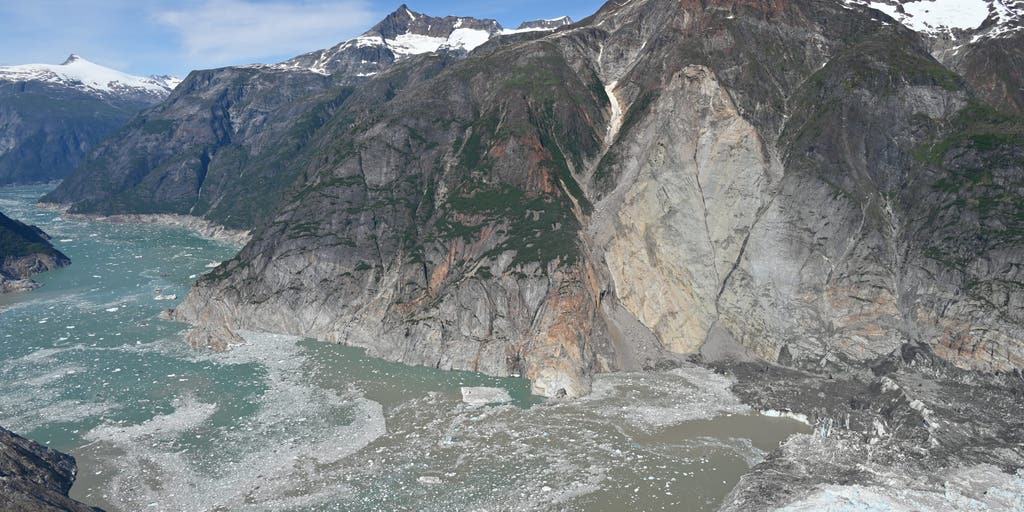
In the early hours of Aug. 10, 2025, a colossal landslide tore from a mountainside above a softening glacier in Alaska’s Tracy Arm fjord, sending debris into the water below and unleashing a massive wave that reached more than 1,500 feet high through the scenic area.
The 481-meter (1,578-foot) megatsunami tore through a scenic Alaskan waterway 45 miles south of Juneau. Now, a new analysis offers a rare glimpse into how the catastrophic landslide and wave unfolded.
The study, published in Science, identified the conditions that led to the landslide and the dangerous megatsunami that reached heights that exceeded New York City's Empire State Building.
"Just an unfathomably large wave was generated. I can't imagine how terrifying it would have been to be a fly on the wall there," Dan Shugar, corresponding author of the study and associate professor in the Department of Earth, Energy and Environment at the University of Calgary, said.
While tsunamis are most often triggered by earthquakes, this one was driven by a massive landslide that hurled 64 million cubic meters of debris—enough to fill the Great Pyramid of Giza about 24 times—into the fjord, generating seismic signals detected worldwide for days.
Shagger likened the displacement of water to jumping into a swimming pool – with water rushing nearly 1,600 feet up the gigantic valley walls of the fjord below.
The colossal debris fall triggered what the study says is the second-largest tsunami wave of all time – narrowly behind the largest tsunami of all time recorded in Lituya Bay, Alaska, on July 9, 1958, that reached a run-up height of 524 meters, or 1,720 feet.
THESE 7 STATES HOLD THE MOST LANDSLIDE-PRONE COUNTIES IN THE US
The jaw-dropping scale of the megatsunami was made possible by its setting, with the narrow fjord amplifying the wave and driving water high up the surrounding mountain walls. A similar effect was observed in the Lituya Bay tsunami, which also occurred in a fjord.
As it turned out, there were no obvious warning signs that the second-largest tsunami in recorded history was going to happen. However, in the days leading up to the collapse, repeated microseismic activity in the Tracy Arm area increased in frequency, continuing until less than an hour before the slope finally failed.
According to the study, one of the main factors that led to the landslide was the retreat of the glacier below the wall, which Shugar said in the year before the slide had retreated 1,800 feet, removing support for the valley wall that eventually tumbled into the water below.
WATCH: 'FOG TSUNAMI' ROLLS OVER LAKE MICHIGAN, MESMERIZING VIDEO SHOWS
The study identified the blazing speed of the skyscraper-sized tsunami – with computer simulations estimating that the Goliath wave traveled over 150 mph, the cruising speed of a high-speed train — except in the form of a deadly 100-meter-high wall of water moving through a narrow fjord.
Understanding the landscape and geography of the Tracy Arm fjord is essential to understanding the landslide and megatsunami.
"The valley walls of that fjord are so steep and so tight, so narrow, that the water really has only one way to go, and that's up," Shugar said.
Tracy Arm is a roughly 30-mile-long, 0.8-mile-wide fjord, about 380 meters deep, surrounded by towering peaks rising up to 2,000 meters.
When the landslide occurred, the powerful tsunami surged through the narrow valley, scouring the landscape and changing the face of the scenic waterway.
20 YEARS LATER: A LOOK AT THE DEADLIEST DISASTER TO STRIKE EARTH IN MODERN HISTORY
The vibrant turquoise glacial tidewaters have popularized the scenic Alaskan landscape in the Tracy Arm area, frequently visited by tourists. During the summer months, more than 20 boats a day visit Tracy Arms and a neighboring fjord, including large cruise vessels that carry up to 6,000 passengers.
Thankfully, although the megatsunami had numerous witnesses across a wide area, no fatalities were reported.
The landslide occurred around 5:30 a.m. local time—well before tourists typically enter the fjord. Had it happened later in the day, the consequences could have been catastrophic.
The study highlighted a critical threat to the popular tourist area: the hazardous nature of tsunami landslides.
"It's important to remember that if this event had happened five or six hours later, it probably would have been a very different situation. A disaster with hundreds of people killed because this fjord is very popular with cruise ship traffic," Shugar said. "If they were up at the head of the fjord to look at the glacier caving, which is what they are there to go look at, I can't see any way that a ship would survive a wave like this."
The post Alaska landslide unleashed one of the largest tsunamis ever recorded, new study shows appeared first on Fox Weather
























































Comments and Responses
Please login. Only community members can comment.