
















































Japan’s Kagoshima Sea of Clouds Turns Yusui Sunrise Into a Golden Autumn Travel Spectacle
-
Blogs, Nature & Wildlife, History & Art, Travel
-
-
5 mins
-
Travel and Tour World
-
Susmita Das
-

Explore Yusui’s sea of clouds in Kagoshima, with verified viewing seasons, weather data, access advice and Kirishima outdoor experiences
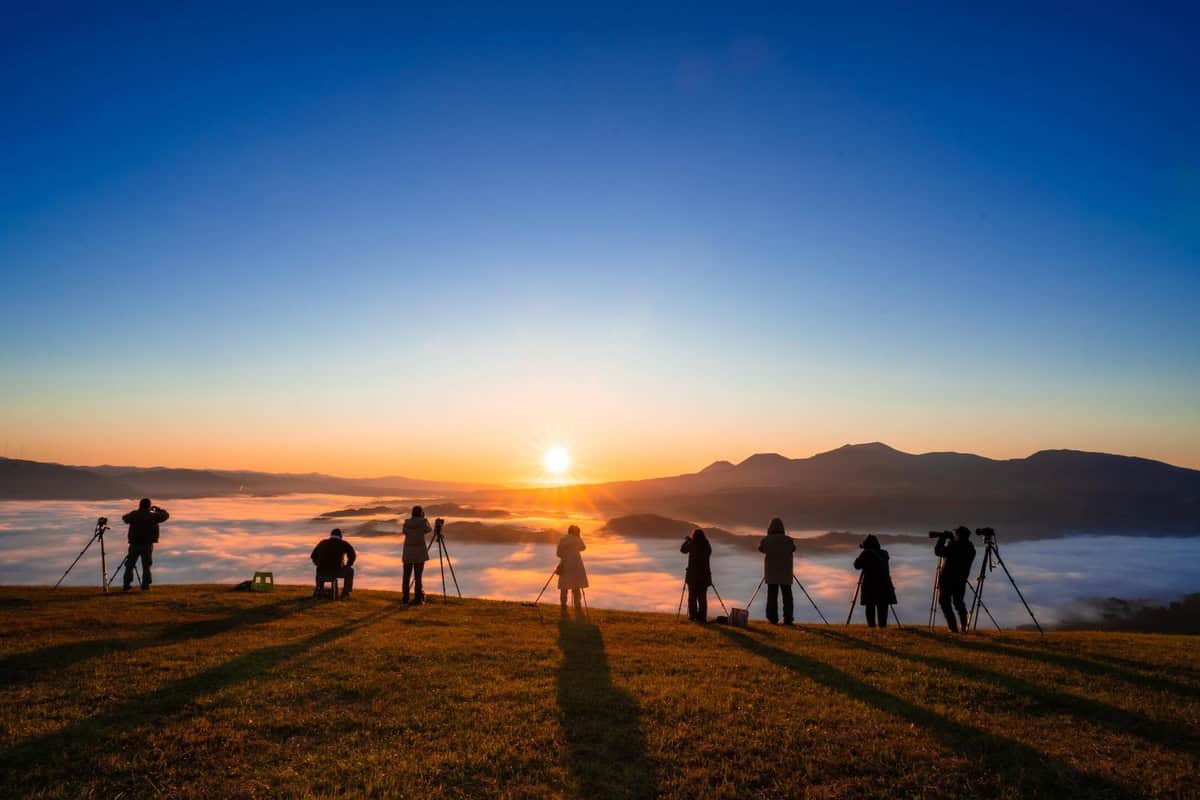
Residents and tourists reportedly gathered at Uono Flight Area in Yusui, Kagoshima Prefecture, Japan, on Thursday, 8 October 2026, to photograph a sea of clouds glowing in the rising sun after a night of sharp cooling. The account, published on 9 October, describes low cloud spreading beneath the elevated paragliding site as morning light illuminated the surrounding mountain landscape.
The report says many places in Kagoshima recorded their lowest temperatures of the autumn so far. It cites the Kagoshima Meteorological Office’s explanation that clear skies and strong overnight cooling helped moisture condense near the ground. No individual temperature readings accompanied the supplied account. For the travel industry, the setting connects a dawn photography experience with established outdoor attractions. Yusui’s municipal tourism information already promotes Uono’s cloud sea alongside mountain viewpoints and springwater sights, creating scope for itineraries that continue long after sunrise.
An Open Hillside Reveals Kagoshima’s Mountain Landscape
Yusui sits near Kagoshima Prefecture’s northern edge, in a landscape of cultivated lowlands, springs and surrounding uplands. Uono’s position gives visitors a different perspective: instead of looking across the basin from ground level, they can look down towards the landscape from an established hillside paragliding launch site.
Kagoshima’s prefectural facility guide describes views towards Yoshimatsu, Ebino and the direction of Kobayashi. The Kirishima mountains form another key part of the sunrise scene. This combination explains the site’s appeal to photographers and nature travellers. Its attraction lies in the relationship between the open hillside, the basin below and changing morning weather.
How a Cold Night Creates a Sea of Clouds
The phenomenon, known in Japanese as unkai, begins near the ground. Under clear skies, the surface loses heat through radiation. With light winds, the air just above it can cool sharply overnight.
Cold, dense air collects in low-lying terrain. When moist air cools sufficiently, water vapour condenses into tiny droplets, creating fog across valleys and basins. From an elevated viewpoint, the layer resembles a cloud-covered sea. Sunrise then illuminates its upper surface. A large difference between daytime and night-time temperatures can favour such conditions, but moisture and wind matter too. Cold weather alone does not guarantee that clouds will form.
Autumn Brings the First Chances, but Winter Defines the Usual Season
The supplied October sighting fits the broader transition towards cooler mornings. However, Kagoshima’s official tourism guide identifies approximately November to January as Uono’s usual cloud-sea viewing period. An appearance before that window does not change the published seasonal guidance.
For travel planners, the distinction is important. Seasonal timing can improve the relevance of an itinerary, but it cannot secure a particular view. The Japan Meteorological Agency explains that radiation fog often follows valleys and basins and can disappear quickly after sunshine begins warming the surface. Cloud viewing therefore requires an early start and flexibility rather than a guaranteed daily schedule.
Official Climate Figures Show Why Autumn Feels Different
Kagoshima’s autumn cooling is visible in the Japan Meteorological Agency’s climate normals. At the Kagoshima observation station, the average temperature falls from 26.3°C in September to 21.6°C in October and 16.2°C in November. Average daily minimum temperatures also decline through those months.
These figures use the 1991–2020 reference period. They describe the long-term climate at the Kagoshima station, not temperatures recorded at Uono on the reported morning. They should not be applied directly to an exposed inland viewpoint. For dawn excursions, the relevant checks are the latest local forecast, overnight conditions and the weather expected during the planned return journey.
| Month | Mean temperature | Average daily maximum | Average daily minimum |
|---|---|---|---|
| September | 26.3°C | 30.2°C | 23.2°C |
| October | 21.6°C | 25.8°C | 18.0°C |
| November | 16.2°C | 20.6°C | 12.2°C |
Japan Meteorological Agency, Kagoshima station, 1991–2020 climate normals. These are historical averages, not October 2026 observations or a forecast for Uono.
Mountain Access Requires Care Before Dawn
Uono is a mountain viewpoint, not a conventional city attraction. The prefectural facility listing identifies free parking but also describes gravel surfaces, narrow approach-road sections and places where vehicles need care when passing. It warns of steep ground beyond the level take-off area.
These details matter for photography groups arriving in darkness. Transport arrangements need to account for the final approach, vehicle suitability and time to reach a safe viewing position. The supplied estimate of a ten-minute drive from Kurino Interchange has not been verified. Operators should confirm the actual route and current access conditions before publishing a transfer time.
Paragliding Gives Uono a Second Tourism Role
The viewpoint’s original sporting purpose remains central to its identity. Yusui’s municipal tourism information describes Uono Pass as a paragliding base where the basin’s rising air supports the activity. It also lists introductory experiences for beginners.
Kagoshima’s official activity guide adds that tandem options pair visitors with experienced pilots. This gives the location relevance beyond passive sightseeing, but a cloud-viewing visit and a paragliding booking are separate arrangements. Conditions suitable for watching the sunrise do not automatically establish suitable flying conditions. Any combined itinerary needs independent confirmation of the activity, booking requirements and the operator’s decision on whether flights proceed.
E-Bikes and Walking Trails Extend the Day
The wider Kirishima area offers ways to continue exploring after the morning cloud layer clears. Kirishima City lists electric-assist bicycle hire around Kirishima Jingu Station and the shrine area, providing a verified cycling option rather than assuming bikes are available at Uono itself.
Within Yusui, the municipality highlights Kurinodake Recreation Village, where a staircase of 561 steps leads to an observation point. Walking paths and a mountain-trail entrance provide further outdoor possibilities. These activities could complement sunrise photography within a broader itinerary. Equipment availability, route difficulty, local restrictions and weather still need separate checks before travellers set out for them.
Kirishima’s Volcanic Geography Adds Depth to the Journey
Uono’s surroundings belong to a wider regional story shaped by volcanic activity. Kirishima Geopark extends across parts of Kagoshima and Miyazaki prefectures. Its official description identifies more than 20 overlapping volcanoes, alongside crater lakes, lava formations and extensive volcanic plateaus.
The geopark’s participating communities include Yusui, linking the town with routes exploring natural scenery and local culture. For specialist operators, this supports a more substantial programme than a single photograph stop. Guides can connect mountain forms, water sources and settlement patterns. The region includes active volcanic terrain, so mountain excursions require attention to official warnings and any applicable access restrictions.
Hot Springs and Autumn Colour Broaden the Stay
Kirishima Onsen provides another established element for a regional itinerary. Kagoshima’s official destination guide describes nine hot-spring areas on the southwestern side of the Kirishima mountains, at elevations between approximately 600 and 850 metres. Hotels, traditional inns, waterfalls and walking routes form part of that visitor offer.
The same guidance highlights autumn foliage, although it does not establish that peak colour coincided with the reported October sighting. Yusui also has hot-spring facilities, including Tsurumaru Onsen and Mori no Yakata Yuttarikan. Bathing, local sightseeing and accommodation could complement a dawn outing, without making the entire stay dependent on cloud visibility alone.
A Southern Perspective on Japan’s Cloud-Sea Tourism
Japan’s cloud-sea tourism reaches from Hokkaido to Kyushu. The Japan National Tourism Organization highlights Unkai Terrace at Tomamu, an elevated viewing area at 1,088 metres with views towards the Hidaka mountains. Its published visitor guidance describes access from mid-May to mid-October.
Uono offers a southern counterpart with a different seasonal emphasis. Here, official tourism promotion centres on colder months, a basin landscape and sunrise over the Kirishima range. For international itinerary designers, the comparison widens the geographical scope of cloud viewing beyond Hokkaido. It also positions Yusui within a southern Japan journey combining rural scenery, outdoor activities and hot springs.
The Travel Opportunity Extends Beyond One Morning
The supplied event report describes residents and tourists gathering to watch and photograph the scene. It does not provide an attendance total, accommodation figures or spending data linked to the event. The sighting therefore cannot substantiate claims of a tourism boom or increased hotel demand.
Its practical relevance is more specific. A dawn excursion could anchor a programme combining mountain scenery, walking, cycling and hot springs. For accommodation providers and tour operators, the planning priorities are early transport, accurate weather expectations and alternatives when cloud fails to form. Yusui’s landscape remains the core attraction; the golden cloud sea is weather-dependent.
The post Japan’s Kagoshima Sea of Clouds Turns Yusui Sunrise Into a Golden Autumn Travel Spectacle appeared first on Travel and Tour World














































Comments and Responses
Please login. Only community members can comment.